

Mastering the Art of Strategic Influence
Golden Hook & Introduction
SECTION
Nova: Alright, Atlas, quick game. I’ll say a famous historical figure, and you give me the title of their self-help book if they’d written one on influence. Ready?
Atlas: Oh, I love this! Hit me.
Nova: Machiavelli.
Atlas: Oh, easy. “Nicely Done: How to Get What You Want Without Anyone Realizing You Just Did It.”
Nova: Perfect! Okay, how about Cleopatra?
Atlas: Hmm, Cleopatra… “Charm Offensive: How to Conquer Empires with a Smile and a Really Good Hair Day.”
Nova: Fantastic. And for our final one, Sun Tzu.
Atlas: Sun Tzu… “The Art of Not Splitting the Difference: Winning Negotiations Before They Even Start.”
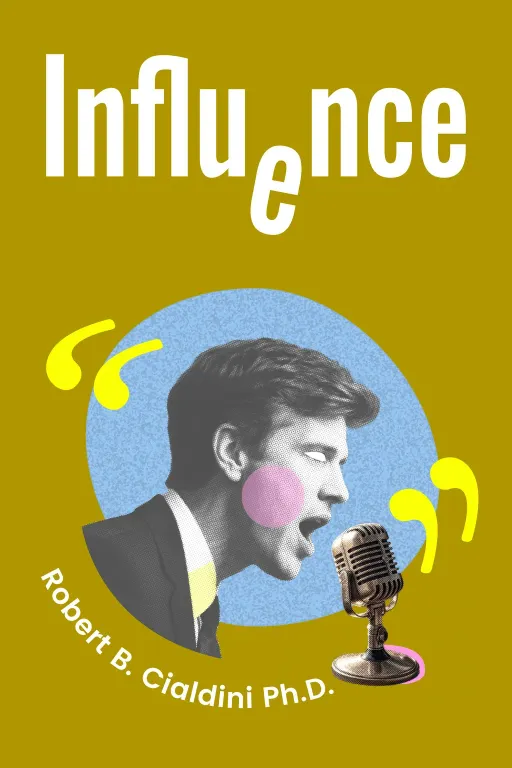
Nova: Nailed it! And that last one is actually closer to home than you might think, because today, we're diving into the fascinating world of strategic influence, specifically through the lenses of two absolute titans: Robert Cialdini’s seminal work, "Influence: The Psychology of Persuasion," and Chris Voss’s game-changing "Never Split the Difference: Negotiating As If Your Life Depended On It."
Atlas: Oh, I like that. Two very different approaches to essentially getting what you want, or, more charitably, helping others see things your way. What’s fascinating is Cialdini’s book, published way back in 1984, wasn’t just an academic text; it became a massive commercial success. It's almost legendary for how it pulled back the curtain on the subtle ways we're all influenced every single day, often without even realizing it.
Nova: Exactly! Cialdini, a social psychologist, spent years going undercover in sales organizations, fundraising groups, and advertising agencies—places where persuasion is the bread and butter. He wasn’t just theorizing in an ivory tower; he was on the front lines, observing, participating, and distilling the universal principles of influence from real-world application. It’s why the book resonated so widely and continues to be highly rated and discussed decades later.
Atlas: That makes me wonder, though, how do those seemingly academic psychological triggers from Cialdini’s work connect with the high-stakes, real-time negotiation tactics of a former FBI hostage negotiator like Chris Voss? They feel almost like different planets.
Nova: That’s a brilliant distinction, because while they approach it from different angles, they both tap into the same fundamental human psychology. Cialdini gives us the foundational principles, the "why" we're influenced, and Voss gives us the "how" to ethically leverage that understanding in the most intense situations imaginable. Both are critical for anyone looking to truly master strategic influence, especially those in leadership roles who need to orchestrate complex initiatives.
Atlas: So you're saying Cialdini is our psychological bedrock, and Voss is our tactical blueprint for applying it?
The Power of Persuasion: Cialdini's Six Principles
SECTION
Nova: Precisely. Let's start with Cialdini. He identified six universal principles of influence. Think of them as shortcuts our brains use to make decisions quickly. The first is Reciprocity: we feel obligated to return favors. If someone does something for us, we feel a need to do something back.
Atlas: Oh, I know that feeling. It’s like when a colleague helps you out with a tight deadline, and suddenly you’re looking for ways to return the favor, even if it’s just bringing them coffee the next day.
Nova: Exactly. Marketers use this constantly. Think about free samples. You’re more likely to buy a product if you’ve accepted a free sample, even a small one. It’s a powerful, almost subconscious urge. Then there's Commitment and Consistency: once we make a public commitment, we feel pressure to behave consistently with that commitment.
Atlas: Wait, like when you tell everyone you’re going to run a marathon, and then you feel compelled to actually train for it, even when you’d rather be on the couch?
Nova: That’s a perfect example. And companies leverage this by getting small "yeses" first. Sign a petition, then donate money. It’s a progression. Social Proof is next: we look to others to determine appropriate behavior, especially when we’re uncertain.
Atlas: Ah, the classic "everyone else is doing it" argument. Like choosing a restaurant because it has a long line outside, or buying a product because it has thousands of five-star reviews.
Nova: Precisely. And then Authority: we tend to obey figures of authority. This isn't just about formal titles; it can be perceived expertise. Doctors, professors, even actors in lab coats endorsing a product.
Atlas: So we're hardwired to trust the experts, or at least people who look like experts. That sounds a bit dangerous, actually, if the authority isn't legitimate.
Nova: That’s where critical thinking comes in, but yes, the principle holds strong. Next, Liking: we're more likely to be influenced by people we like. This could be because they’re attractive, similar to us, or they give us compliments.
Atlas: That makes sense. You’re more likely to buy from a friendly salesperson who shares your hobbies than a pushy one who doesn’t. It’s human nature.
Nova: And finally, Scarcity: opportunities seem more valuable when they are less available. "Limited-time offer!" "Only three left in stock!"
Atlas: That's a classic panic-inducer. I've definitely rushed to buy concert tickets or book a hotel room because of that "scarcity" message. It taps into a fear of missing out.
Nova: It absolutely does. Nova's Take on Cialdini is that understanding these psychological triggers isn't about manipulation; it's about ethical application. For a leader, knowing these principles helps you understand your team might be hesitant to commit, or a stakeholder might respond positively to a certain approach. It’s about building influence consciously and ethically.
Atlas: That’s a great way to put it. It's not about tricking people, but understanding the underlying mechanisms of human decision-making. So, how does Voss, the hostage negotiator, build on this bedrock? Because I imagine in a hostage situation, "liking" might not be the first thing on the hostage-taker's mind.
Tactical Empathy: Voss's Breakthrough Agreements
SECTION
Nova: You’re absolutely right. Voss takes these foundational psychological insights and turns them into high-stakes, practical negotiation techniques. His core philosophy revolves around "tactical empathy" and active listening. He's not about compromise, or "splitting the difference," as his book title suggests. He's about uncovering the underlying needs and desires to achieve breakthrough agreements.
Atlas: Hold on, I thought good negotiation was all about compromise. Getting to a middle ground. "Splitting the difference" is like the ultimate goal, isn't it?
Nova: That’s the conventional wisdom, but Voss argues it often leads to mediocre outcomes where no one is truly satisfied. Instead, he advocates for a win-win where you get what you need, and they feel heard and understood. He learned this in the most extreme environments possible: negotiating with bank robbers, kidnappers, and terrorists. He literally wrote the book on negotiating as if your life depended on it, because for him, and the hostages, it often did.
Atlas: Wow, that’s a pretty intense proving ground for a negotiation strategy. So what does "tactical empathy" actually look like in practice? Is it just being nice?
Nova: Far from it. Tactical empathy is about understanding the other person's perspective and feelings, and then articulating that understanding back to them. It's not about agreeing with them; it's about showing you grasp their worldview. He uses techniques like "mirroring," where you repeat the last few words someone said to encourage them to elaborate.
Atlas: So basically, if someone says, "I'm really frustrated with this proposal," you'd say, "Frustrated with this proposal?"
Nova: Exactly! It sounds simple, almost too simple, but it’s incredibly powerful because it makes the other person feel heard and encourages them to reveal more. Another key technique is "labeling" emotions. You identify and verbalize their feelings, like, "It sounds like you're feeling undervalued," or "It seems like there's some concern about the timeline."
Atlas: That’s actually really inspiring. Instead of reacting defensively, you’re proactively acknowledging their emotional state. I imagine that disarms a lot of tension.
Nova: It absolutely does. It diffuses hostility and builds rapport. He also emphasizes "accusation audits" – starting a conversation by listing all the negative things the other person might be thinking about you. "You probably think I'm pushy, that I don't care about your concerns, and that I'm just trying to close a deal."
Atlas: That sounds a bit out there. You just… list their potential complaints? Why would you do that?
Nova: Because it pre-empts their objections. By saying them out loud, you show you've considered their perspective, and often, it takes the wind out of their sails. It's a psychological jujitsu move. Voss’s ultimate goal is to uncover the "Black Swan"—the hidden, unknown pieces of information that can completely change the negotiation dynamic. This comes from deep listening and asking calibrated questions, not just "yes/no" questions, but open-ended "how" and "what" questions that invite them to problem-solve with you.
Atlas: So, it's not about forcing them into a corner, but about creating an environment where they feel safe enough to reveal their true motivations and where you can both find a solution that works for everyone. That’s a huge shift from traditional negotiation.
Synthesis & Takeaways
SECTION
Nova: It’s a profound shift, and it brings us back to our Efficient Strategist listener. You're someone who seeks practical solutions, values actionable steps, and is driven by impact. You're always optimizing systems. So, how do you integrate Cialdini’s principles and Voss’s tactical empathy into your weekly strategic planning sessions?
Atlas: That’s the real question, isn't it? Because in a high-stakes environment, where you're orchestrating complex initiatives, influencing stakeholders and team members is absolutely critical. I imagine a lot of our listeners feel like they're constantly navigating a minefield of differing opinions and hidden agendas.
Nova: Exactly. Think about it: during a strategic planning session, when you need buy-in for a new initiative, you’re not just presenting data. You’re influencing. You could start by applying Cialdini's "Social Proof" by highlighting successful similar projects or "Authority" by bringing in an expert voice. But then, when resistance emerges, that’s where Voss steps in.
Atlas: So instead of trying to push through resistance, you'd use tactical empathy. You’d mirror their concerns, label their frustrations. "It sounds like you're hesitant about the resource allocation," or "It feels like there's a risk you're seeing that I'm not."
Nova: Precisely. This allows you to uncover the underlying needs and fears. Maybe their "resistance" is actually a valid concern about capacity, or a past negative experience disguised as an objection. By listening actively and empathetically, you build trust, and crucially, you get to the root cause. This isn't about compromising your strategic vision, but about finding a path to it that truly incorporates and respects others, leading to stronger, more sustainable outcomes.
Atlas: That’s such a powerful insight. It transforms strategic planning from a battle of wills into a collaborative discovery process. For anyone who's trying to drive impact, understanding these dynamics means you’re not just managing tasks, you’re mastering the human element of leadership. It’s about being a problem-solver who deeply understands the people involved.
Nova: Absolutely. It's about orchestrating complex initiatives with a deep understanding of human psychology, leading to not just agreements, but breakthrough agreements that truly move the needle.
Atlas: That’s actually really inspiring. It redefines what success in leadership looks like.
Nova: This is Aibrary. Congratulations on your growth!