

The Network Effect: Why Your Connections Are Your Greatest Asset
Golden Hook & Introduction
SECTION
Nova: Atlas, I’ve got a quick challenge for you. Imagine you're at a massive networking event, buzzing with thousands of people. What’s the absolute worst piece of advice you could give someone trying to make a lasting impression?
Atlas: Oh, man. The worst advice? Probably something like, "Go around, collect as many business cards as humanly possible, and then follow up with a generic email blast to everyone you met, asking them for a favor." That's the express train to being forgotten, or worse, annoying.
Nova: Exactly! That transactional, almost predatory approach to networking. It feels like a chore, right? We often see it as this necessary evil, a game of 'what can this person do for me?' But what if that entire premise is fundamentally flawed?
Atlas: I can definitely relate to that. The idea of 'networking' often conjures up images of forced smiles and awkward small talk. It feels... inauthentic.
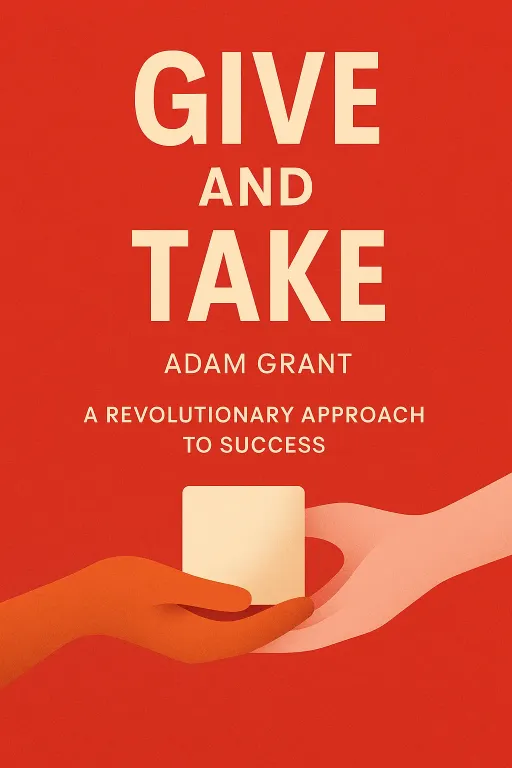
Nova: Well, today, we’re unraveling those very assumptions. We're diving into the profound wisdom of "The Network Effect: Why Your Connections Are Your Greatest Asset." This book challenges us to rethink everything we thought we knew about building relationships, drawing on insights from powerhouses like Adam Grant and Keith Ferrazzi. What’s fascinating is how this book synthesizes decades of research into human connection, showing us that the most successful people aren't just good at what they do; they’re masterful at cultivating genuine, reciprocal relationships. It's not just about collecting contacts; it's about connecting deeply.
Atlas: That makes perfect sense. For anyone trying to navigate a complex career or just build a more fulfilling life, the quality of your connections truly dictates so much. I’m curious to see how they break this down.
The Reciprocal Power of Giving
SECTION
Nova: The book kicks off by challenging our very definition of success in networking, particularly through Adam Grant's groundbreaking work on 'givers,' 'takers,' and 'matchers.' Grant reveals that 'givers'—those who contribute without expecting immediate returns—ultimately achieve greater success and build stronger, more resilient networks than 'takers' or 'matchers.'
Atlas: Wait, hold on. Isn't that just being a doormat in a dog-eat-dog world? For our listeners who are in high-stakes, competitive environments, the idea of just giving without expecting anything back sounds like a recipe for being taken advantage of.
Nova: That’s a common and very valid concern, Atlas. And Grant addresses it head-on. The distinction is crucial. It’s not about being a self-sacrificing martyr; it's about strategic, genuine contribution. Imagine Sarah, a senior software engineer at a bustling tech firm. Instead of guarding her knowledge or only helping when she sees a direct benefit, Sarah consistently offers assistance to junior developers, shares valuable resources, and even dedicates time to mentoring new hires.
Atlas: Okay, so Sarah is investing her time. What’s the immediate payoff for her? Because in many corporate structures, that kind of generosity can go unnoticed, or worse, get exploited.
Nova: Initially, there might not be a direct, measurable payoff. But here’s where the 'network effect' kicks in. Over time, Sarah builds an incredible reservoir of goodwill. When she faces a complex coding challenge, or needs a favor, or even when a promotion opportunity arises, her reputation precedes her. People are eager to help her because she's consistently been there for them. They trust her. Her network isn't just a list of names; it's a living, breathing ecosystem of reciprocity. They've seen her character, her competence, and her commitment to the collective good.
Atlas: That’s actually really inspiring. So you’re saying it's about building social capital, not just transactional capital. It’s like planting seeds, not just harvesting crops.
Nova: Exactly. It's a long-game strategy. The 'takers' might see short-term gains, but their networks are brittle, prone to collapse when trust erodes. The 'matchers' operate on an 'eye for an eye' basis, which is stable but rarely generates the kind of exponential growth and loyalty that givers experience. Givers, by constantly adding value, create a gravitational pull. People want to be in their orbit. They want to collaborate with them. It’s a profound shift in mindset.
Atlas: I can see that. It challenges the purely self-interested view of career progression. It implies that true leadership isn't about hoarding resources, but about empowering others.
From Contacts to Connections: The Art of Genuine Relationship Building
SECTION
Nova: And that naturally leads us to the second key idea we need to talk about, which often builds on this principle of giving: the art of transforming mere contacts into meaningful, strategic allies. This is where Keith Ferrazzi's insights from "Never Eat Alone" come into play. Ferrazzi emphasizes that genuine connection and helping others are the cornerstones of effective networking, transforming casual acquaintances into powerful allies.
Atlas: So, if giving is the fuel, how do we actually build the engine of those connections? Because it’s one thing to be generous, but another to actually forge those deep, lasting ties instead of just being a friendly face.
Nova: Ferrazzi’s approach is incredibly practical. He advocates for what he calls 'pooking'—proactive outreach, not just waiting for opportunities to arise. He shares stories of how he'd identify people he wanted to connect with, research their interests, and then reach out with a genuine offer of help or an interesting piece of information, not a request.
Atlas: Like how? Can you give an example? Because I imagine a lot of our listeners struggle with initiating those kinds of connections without feeling like they're imposing or being disingenuous.
Nova: Absolutely. Imagine Ferrazzi hears that someone he admires is struggling with a particular business challenge, perhaps finding the right speaker for an event. Instead of waiting for an introduction, he might send a thoughtful email saying, "I read your recent article, and it reminded me of a fantastic speaker I saw at a conference last year who might be perfect for your upcoming event. Would you be open to an introduction?" He’s offering value, solving a potential problem, and demonstrating genuine interest, all without asking for anything in return.
Atlas: That makes me wonder, what's the difference between that and just being 'nice'? Because being nice is good, but it doesn't necessarily lead to powerful alliances.
Nova: The difference is intentionality and follow-through. Being 'nice' is passive; genuine connection is active. It's about deep listening, understanding someone's challenges, and then proactively finding ways to add value to their life or work. Ferrazzi talks about 'pinging' your network regularly, not just when you need something. It could be sharing an article you know they'd find interesting, congratulating them on an achievement, or simply checking in. It's about demonstrating consistent care and thought.
Atlas: Right, like those tiny steps. Nova's Take on this really resonates with me: shifting your mindset from 'what can I get?' to 'how can I help?' That unlocks profound opportunities, not just for the person you're helping, but for yourself in unforeseen ways. It's a subtle but powerful reframe.
Nova: It fundamentally changes the energy of the interaction. When your primary intention is to genuinely help, you're not perceived as a threat or a burden. You become a resource, a trusted ally. And that's how those casual acquaintances evolve into powerful, reciprocal relationships that can open doors you never even knew existed. It's about building a web of mutual support, not a ladder of individual ambition.
Synthesis & Takeaways
SECTION
Nova: So, bringing it all together, the cold fact is that we often view networking as a transactional chore. But true, lasting success in leadership and life comes from building deep, reciprocal relationships, not just collecting contacts. It's about embracing the power of giving without immediate expectation, and then actively, genuinely cultivating those connections.
Atlas: It’s a profound shift in perspective. It challenges the idea that success is a zero-sum game. Instead, it suggests that by genuinely lifting others, you inevitably elevate yourself. It’s not just a nice-to-have; it's a strategic imperative for anyone looking to build a resilient and impactful career. The idea that 'givers' finish first, not last, is incredibly counter-intuitive but also deeply hopeful.
Nova: Absolutely. It’s about creating a virtuous cycle. The more you contribute, the more valuable you become to your network, and the more opportunities naturally flow back to you. It's not about being seen; it's about truly seeing others and empowering them. That’s the real network effect.
Atlas: That’s a powerful thought to leave our listeners with. So, for anyone out there feeling like their networking efforts are falling flat, or like they're stuck in that transactional mindset, here's your tiny step: reach out to one person in your network you haven't spoken to recently. Offer a specific piece of help or share valuable information, without asking for anything in return. Just genuinely connect.
Nova: It’s a small action with potentially enormous ripple effects.
Atlas: Indeed. Those small acts of genuine connection are what build the foundation for profound opportunities and lasting impact.
Nova: This is Aibrary. Congratulations on your growth!