

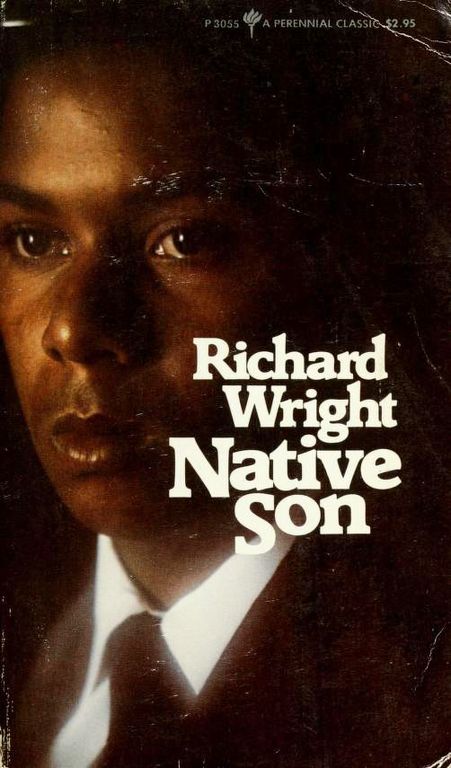
Native Son
Introduction
Nova: In March of 1940, a novel hit American bookstores and sold a staggering 250,000 copies in its first three weeks. It was the first book by a Black author ever selected by the Book-of-the-Month Club. And it was so incendiary, so unflinching in its portrayal of American racism, that it fundamentally changed what literature was allowed to say. That book was Native Son by Richard Wright. I'm Nova.
Nova: : And I'm Orion. So here's what gets me, Nova. A novel this explosive, this successful, and yet its central character is a young Black man who commits murder. Not a hero, not a saint, not someone easy to root for. Wright took an enormous risk.
Nova: He absolutely did. And that risk is exactly what makes Native Son one of the most important American novels of the twentieth century. Richard Wright wasn't interested in writing a comfortable story about a noble victim. He wanted to show how a society built on racial oppression could produce a Bigger Thomas, and then condemn him for being exactly what it made him.
Nova: : That tension between individual responsibility and societal forces, that's the engine of this entire book, isn't it?
Nova: It is. And today we're going to unpack that engine. The plot, the psychology, the controversy, and why Native Son still hits with the force of a freight train more than eighty years after it was published. Let's get into it.
Fear, Chicago, and the Making of a Native Son
The World of Bigger Thomas
Nova: So let's set the stage. Native Son opens in a cramped, rat-infested one-room apartment on the South Side of Chicago. Bigger Thomas, twenty years old, lives there with his mother, his younger sister Vera, and his younger brother Buddy. The very first scene has Bigger killing a rat with a skillet while his mother screams and his sister faints. It's brutal, it's visceral, and it tells you everything you need to know about the world Bigger inhabits.
Nova: : And that rat scene, it's not just gross-out shock value, is it? It's doing symbolic work.
Nova: Exactly. The rat is cornered, desperate, violent because it has no other option. Sound familiar? Wright is drawing a direct parallel between the rat and Bigger himself. Both are trapped by forces beyond their control. Both lash out because the walls are closing in. And both will be destroyed by a system that created the conditions for their desperation in the first place.
Nova: : So Bigger's world is defined by this crushing poverty and segregation. But there's also a psychological dimension here that Wright is exploring, right? It's not just about material conditions.
Nova: That's the key insight. Wright gives us access to Bigger's interior life in a way that was revolutionary for 1940. Bigger experiences what Wright calls a kind of formless, nameless fear. He's afraid of white people, yes, but he's also afraid of his own potential, afraid of the rage inside him, afraid that he'll never be anything more than what society has told him he is. And that fear curdles into something else: a desperate hunger for meaning, for agency, for the simple right to be seen as fully human.
Nova: : There's this moment early in the book where Bigger and his friend Gus play a game called "white." They pretend to be white people, mimicking how they imagine white folks talk and act. It's darkly comic but also devastating.
Nova: It's one of the most revealing scenes in the novel. Bigger says, "I can't do the things white folks do. I can't go into a store and buy what I want. I can't go into a restaurant and eat. I can't go into a movie. I can't even go into a park." The game of "white" is his way of confronting the absolute gulf between his life and the lives of the people who hold power over him. And the bitterness of that awareness is what drives everything that follows.
Nova: : So when Bigger gets a job offer from the wealthy white Dalton family, this should be a good thing, right? A way out?
Nova: You'd think so. But for Bigger, the Dalton household represents everything he fears and resents. Mr. Dalton is a real estate magnate who made his fortune charging Black tenants exorbitant rents for dilapidated housing, while also donating ping-pong tables to Black youth organizations. The hypocrisy is staggering. And Bigger knows it. He can feel the condescension in every interaction. The job isn't an opportunity. It's another form of control.
Accident, Panic, and the Point of No Return
The Death of Mary Dalton
Nova: So here we are at the pivotal moment of the novel. Bigger's first night on the job, he's tasked with driving Mary Dalton, the daughter of the household, to a lecture. But Mary has other plans. She has him drive her to meet her boyfriend Jan, a committed communist who insists on treating Bigger as an equal, shaking his hand, sitting in the front seat, offering to share food. And Bigger hates every second of it.
Nova: : This is one of those moments that really challenges readers. Why does Bigger hate being treated as an equal? Shouldn't he appreciate it?
Nova: Wright's answer is complex and uncomfortable. Bigger doesn't know how to respond to Jan and Mary's overtures because they don't fit any script he's been given. White people are supposed to be the enemy, the oppressor. When Jan shakes his hand, Bigger feels exposed, confused, even more afraid. He says later that Jan and Mary made him feel like he didn't have any skin, like they were seeing something he wasn't ready to show. Their kindness, however genuine, is also a kind of violation because it demands a response Bigger has never been allowed to develop.
Nova: : And then the night takes a terrible turn. Mary gets very drunk. Bigger has to carry her up to her bedroom. And then Mary's blind mother, Mrs. Dalton, comes to the door.
Nova: This is the scene that changes everything. Bigger is in Mary's bedroom. She's drunk, murmuring. He's terrified of being discovered there, a Black man in a white woman's bedroom. The implications are catastrophic regardless of his innocence. So he presses a pillow over Mary's face to keep her quiet. Mrs. Dalton, who can't see, senses something is wrong, calls out, and then leaves. When Bigger removes the pillow, Mary is dead. He has suffocated her.
Nova: : And this is where Wright makes a fascinating narrative choice. He doesn't let us settle on "it was an accident." Because immediately after, Bigger's mind starts racing, and he realizes that in a strange way, this act has made him feel more alive, more real, than anything he's ever done before.
Nova: That's the truly radical move in this novel. Bigger reflects that killing Mary gave him, quote, "a sense of wholeness," a feeling that he was no longer invisible. For the first time in his life, he has acted rather than been acted upon. He has done something that matters, even if that something is horrific. Wright is not asking us to sympathize with murder. He's asking us to confront what kind of society makes murder feel like the only path to selfhood.
Nova: : And then Bigger doesn't stop. He burns Mary's body in the furnace. He tries to frame Jan by writing a ransom note. And when his girlfriend Bessie starts to unravel under the pressure, he rapes and kills her too, throwing her body down an air shaft. The violence escalates and escalates.
Nova: The Bessie murder is often the hardest part of the novel for readers. It's cold, calculated, and utterly devoid of the panic that surrounded Mary's death. Bigger kills Bessie because she's inconvenient. And Wright forces us to see that Bigger, who is a victim of systemic racism, is also capable of being a perpetrator of terrible violence against someone even more vulnerable than himself. It complicates any simple reading of the novel as a straightforward protest against injustice.
Book Two and the Machinery of Justice
Flight, Capture, and the Trial
Nova: Book Two of Native Son is titled "Flight," and it follows Bigger as he goes on the run through Chicago's Black Belt. The city is in an uproar. The newspapers are running sensational headlines about the missing white heiress. And Bigger is navigating a world that is simultaneously hunting him and ignoring him.
Nova: : There's this incredible tension in these chapters. Bigger is hiding in plain sight, moving through Black neighborhoods where white police are conducting raids, beating people, rounding up suspects. The manhunt becomes a pretext for terrorizing an entire community.
Nova: Wright based this on real events. He drew from the history of racial violence in Chicago, including the Red Summer of 1919, when white mobs attacked Black neighborhoods. The police response to Mary's disappearance mirrors the collective punishment that Black communities have faced throughout American history. One Black life is disposable, but one white life, especially a wealthy white woman's life, mobilizes the entire machinery of the state.
Nova: : And then Bigger is captured. There's this dramatic rooftop chase through the snow, and when he's finally caught, the mob wants to lynch him on the spot. But he's taken into custody, and we enter Book Three: "Fate."
Nova: Book Three is where the novel transforms from a thriller into a philosophical argument. Bigger is in jail, and his lawyer, Boris Max, a white communist, takes on his defense. Max doesn't argue that Bigger is innocent. He argues that Bigger never had a chance. His defense is essentially that American society created Bigger Thomas, and now it wants to kill him for being what it made.
Nova: : Max's closing argument is one of the most famous passages in American literature. He tells the court that Bigger's crime is not just his own, it's the crime of a nation. He says, and I'm paraphrasing here, that the hate and fear which white society has injected into Bigger's personality have now erupted in this terrible act. It's a systemic indictment.
Nova: And yet, here's the thing. Wright doesn't let Max's argument be the final word. Even as Max delivers this powerful speech, Bigger is having his own internal reckoning. He's beginning to understand himself, to see his own life with clarity for the first time. He tells Max, "What I killed for, I am." It's an existential declaration. Bigger is claiming his actions, however monstrous, as his own. He's refusing to be reduced to a mere product of his environment.
Nova: : That tension between Max's sociological argument and Bigger's existential awakening, that's the philosophical heart of the novel, isn't it? Wright refuses to resolve it neatly.
Nova: Exactly. The jury sentences Bigger to death. And in the final pages, Bigger has one last conversation with Max. He tries to explain what he's come to understand about himself, and Max, the man who defended him, can't fully hear it. He's too caught up in his own framework. The novel ends with Bigger alone in his cell, awaiting execution, having achieved a terrible kind of self-knowledge that no one else can share.
Controversy, Criticism, and Enduring Power
The Firestorm and the Legacy
Nova: When Native Son was published, the reaction was immediate and explosive. Irving Howe called it a novel that "burst on the American scene like a clap of thunder." It was a sensation. But not everyone celebrated it.
Nova: : Right. And the most famous critique came from another towering figure in American letters: James Baldwin. In his 1949 essay "Everybody's Protest Novel," Baldwin took direct aim at Native Son. What was his core argument?
Nova: Baldwin's critique was that protest novels, including Native Son, reduce Black characters to categories rather than fully realized human beings. He argued that Bigger Thomas is not a person but a sociological case study, a vehicle for Wright's political argument. Baldwin wrote that the failure of the protest novel lies in its rejection of life, the human being, the denial of his beauty, dread, and power. For Baldwin, Bigger was a stereotype dressed up as a symbol.
Nova: : That's a pretty devastating critique. And Baldwin and Wright had a complicated relationship. Wright had been a mentor to the young Baldwin, and this essay essentially amounted to a public break.
Nova: It did. And the debate between their positions has shaped African American literature ever since. Wright believed that art had to serve a political purpose, that in the face of American racism, the novelist had an obligation to expose the truth, however ugly. Baldwin came to believe that the novelist's first obligation was to the full complexity of human experience, that reducing characters to political symbols was its own form of violence.
Nova: : But here's what's fascinating. Despite Baldwin's critique, Native Son has never gone away. It's been adapted multiple times. Orson Welles directed a stage version in 1941. There was a film in 1951 with Richard Wright himself playing Bigger, though he was fifty-two years old playing a twenty-year-old. A 1986 film with Victor Love and Oprah Winfrey. And most recently, a 2019 HBO film adaptation directed by Rashid Johnson, with a screenplay by Suzan-Lori Parks.
Nova: The 2019 adaptation is particularly interesting because it reframes the story for a contemporary audience. It leans into the surreal, the psychological, giving us Bigger's interior world in visual terms. And it sparked a whole new round of conversations about whether Native Son still speaks to the present moment.
Nova: : I think the answer is clearly yes. When you look at the statistics on mass incarceration, on police violence, on housing segregation, the structural conditions Wright was writing about in 1940 have not disappeared. They've evolved, but they haven't vanished.
Nova: And that's both the power and the tragedy of Native Son. It remains relevant because the conditions it describes remain real. Wright once said that he wrote Native Son because he wanted to make readers feel the heat of Bigger's life, to experience the pressure and the fear and the rage. He wanted to make white America uncomfortable. And more than eight decades later, the novel still does exactly that.
Conclusion
Nova: So what do we take away from Native Son? First, it's a novel that refuses easy answers. Bigger Thomas is a victim and a perpetrator, a product of his environment and an individual who makes choices. Wright doesn't let us off the hook with a simple morality tale.
Nova: : Second, the novel is a masterclass in using fiction to make a political argument without sacrificing narrative momentum. The three-book structure, Fear, Flight, and Fate, gives the story the propulsion of a thriller while carrying the weight of a philosophical treatise.
Nova: Third, Native Son changed what American literature could do. Before Wright, few novels had looked so directly at the psychological effects of racism, at the interior damage done by systemic oppression. Wright opened a door that writers like Baldwin, Toni Morrison, and countless others would walk through.
Nova: : And finally, I think the novel asks us a question that remains urgent: what does a society owe to the people it has systematically excluded and dehumanized? And what happens when that debt goes unpaid for generations?
Nova: Bigger Thomas's story ends in a death cell, but the questions Wright raised are very much alive. If you haven't read Native Son, or if you read it years ago and haven't returned to it, it's worth picking up again. It's not a comfortable read. It's not supposed to be. But it is an essential one.
Nova: : This is Aibrary. Congratulations on your growth!