

Mastering the Art of Statistical Storytelling
Golden Hook & Introduction
SECTION
Nova: Alright, Atlas, quick challenge for you. Five words. Describe Charles Wheelan's "Naked Statistics" for our listeners. Go.
Atlas: Oh, that's a good one. Hmm… "Data secrets, humor, accessible, essential." Boom.
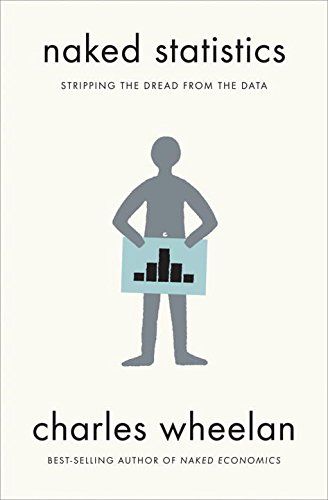
Nova: Nailed it! And you know, "accessible" is key because today we're diving into the absolute art of statistical storytelling, pulling wisdom from two incredible books. First up, the one you just five-worded: "Naked Statistics: Stripping the Dread from the Data" by Charles Wheelan. He’s not your typical dry statistician, you know? Wheelan is an economics journalist, a policy expert, and that background allows him to cut through the academic jargon and make concepts like correlation and probability shockingly clear, often with a good laugh.
Atlas: And then we pair that with "Storytelling with Data: A Data Visualization Guide for Business Professionals" by Cole Nussbaumer Knaflic. Her insights are gold, especially coming from her time at Google. She really understands how data lives and breathes in the real world, in boardrooms and presentations, not just in spreadsheets.
Nova: Exactly. Because effective data storytelling isn't just about pretty charts or crunching numbers. It's about deeply understanding the statistical implications of that data and then communicating them with surgical clarity and genuine impact. It's about turning raw information into strategic foresight.
Atlas: That emphasis on "impact" and "strategic foresight" really resonates. It's not just about being fluent in data, but about using that fluency to build something, to predict, to innovate.
The Unseen Language of Data: Demystifying Statistical Foundations
SECTION
Nova: Absolutely. And that strategic foundation, that ability to predict, starts with demystifying the numbers themselves. So many people freeze up at the word "statistics." They think it's this arcane language only for mathematicians.
Atlas: I mean, I can definitely see how that would be the case. You hear "regression analysis" or "p-value," and suddenly you're back in a college lecture hall, feeling a little overwhelmed. It feels like a barrier.
Nova: It does! But Wheelan's whole point in "Naked Statistics" is that these concepts are actually intuitive once you strip away the dread. Take correlation versus causation. It’s a classic, right? We’ve all heard the joke about ice cream sales and shark attacks. They’re correlated, but one doesn’t the other.
Atlas: Oh, I love that one! More ice cream doesn't make sharks hungrier. It's just that both increase in summer.
Nova: Exactly! And that simple distinction is profound when you're looking at business data. Are your marketing efforts increased sales, or are both just happening because of a seasonal trend or a broader economic shift? Misinterpreting that can lead to disastrous strategic decisions.
Atlas: So you're saying it's not just about seeing two lines go up together, but understanding they're moving, or if they're even connected at all beyond mere coincidence. That makes me wonder, what about something like regression? That sounds even more intimidating.
Nova: It sounds fancy, but at its heart, regression is just about finding patterns and making predictions. Think about predicting housing prices. A simple regression model might look at square footage. A house with more square footage generally costs more.
Atlas: Right, like a basic trend.
Nova: But then you add more variables: number of bedrooms, location, school district, age of the house. Suddenly, your model gets more sophisticated, giving you a much more accurate prediction. It’s taking multiple factors and figuring out how they each contribute to the outcome. For a strategic mind, understanding this means you can start to model future outcomes, to see the levers you can pull.
Atlas: That’s fascinating. So, it's not just about understanding the past, but using that understanding to project into the future. That aligns perfectly with wanting to build and forge ahead. How does probability fit into this? That feels even more abstract.
Nova: Probability is about quantifying uncertainty, which is crucial for any strategic decision-maker. Think about A/B testing a new product feature. You're not just guessing if one version will perform better; you're using probability to say, "There's a 95% chance this new feature will increase engagement." It gives you confidence in your innovation.
Atlas: That’s a great way to put it. It’s moving from "I hope this works" to "I have a statistically significant reason to believe this will work." It adds a layer of robustness to innovation, makes it less of a gamble and more of a calculated risk. It really feels like these statistical foundations are the bedrock for making truly informed, impactful decisions.
Nova: Precisely. It's the unseen language that data speaks, and once you understand it, you unlock a whole new level of insight.
From Numbers to Narrative: Crafting Impactful Data Stories
SECTION
Atlas: So once we've stripped the dread from the data, as Wheelan puts it, and we understand its underlying language, how do we make it sing? How do we take that robust statistical understanding and turn it into something compelling for a broader audience, for those strategic stakeholders?
Nova: That's where Knaflic's "Storytelling with Data" comes in like a superhero. She argues that simply presenting charts isn't enough. You have to tell a story. It's about transforming raw information into a clear, persuasive narrative.
Atlas: I’ve definitely seen those presentations where someone just throws up a spreadsheet or a dashboard with 20 different metrics, and you just get lost in the sea of numbers. It’s overwhelming.
Nova: Exactly! Knaflic's core message is about clarity and impact. She emphasizes understanding your audience and designing your visualization not just to display data, but to highlight the key message you want them to take away. Think about pre-attentive attributes.
Atlas: Pre-attentive attributes? That sounds like something from a spy movie.
Nova: It's almost as cool! It's about the things your brain processes you're even consciously aware of them. Like if I show you a scatter plot and one dot is bright red, your eye goes straight to it. Knaflic teaches you to leverage these natural human processing tendencies to guide your audience's attention to what matters most in your data story. It's about intentional design.
Atlas: That’s brilliant. So instead of just hoping people find the important part, you're literally directing their gaze. That's a huge shift from just making a graph because "it looks good." It's about strategic visualization.
Nova: It is. She also talks about the importance of reducing clutter. Every line, every color, every label should serve a purpose. If it doesn't, it’s visual noise. And noise distracts from your message. It’s about ruthless editing to make your data speak with a clear, resonant voice.
Atlas: I can see how that would be critical for someone trying to influence a decision or predict a market shift. You don't want your key insight buried under extraneous detail. It needs to be punchy, clear, and actionable. So, practically, what's a tiny step someone could take to start telling better data stories?
Nova: A tiny step would be to pick a recent chart or report you’ve created. Now, identify the single most important message you want your audience to take away from it. Then, ruthlessly strip away everything that doesn't support that message. No distracting gridlines, no unnecessary colors. Make it clear, concise, and focused.
Atlas: That’s a powerful exercise. It’s about finding the core narrative in the numbers and then shining a spotlight on it. It’s not just about showing the data, it’s about showing what the data for the future, for the strategy.
Nova: Exactly. It's moving from data presentation to data persuasion. It's about empowering your audience to make better decisions by giving them not just numbers, but understanding and insight.
Synthesis & Takeaways
SECTION
Nova: So, what we've really been talking about today, Atlas, is this incredible synergy. It's understanding the fundamental statistical language that underpins all data, thanks to insights from Wheelan, and then taking that deep understanding and crafting it into a compelling, impactful narrative using Knaflic's principles.
Atlas: It's about going beyond merely reporting data to actually statistical storytelling. It’s about transforming raw numbers into strategic foresight, into stories that inspire action and drive innovation. It’s not just about what the data, but what it.
Nova: Absolutely. It's the difference between showing someone a map and actually guiding them on a journey. The core message is that without the statistical nuance, your story might be pretty, but it lacks depth. And without the storytelling, your statistical insights might be brilliant, but they'll remain unheard.
Atlas: That’s a profound thought. It means that the true power of data isn't just in its existence, but in our ability to translate its complex truths into clear, compelling narratives that can actually shape our future. It’s about embracing that journey of curiosity and building momentum, as our listeners often seek.
Nova: Exactly. So, for our listeners, how might a deeper understanding of statistical nuances fundamentally change the way you frame your next data-driven argument or presentation? Think about that.
Atlas: That’s a fantastic challenge. It forces you to consider not just you're presenting, but you're presenting it, and what impact you want it to have.
Nova: This is Aibrary. Congratulations on your growth!