

The Symphony of the Brain: Decoding Music's Impact on Mindset and Learning
Golden Hook & Introduction
SECTION
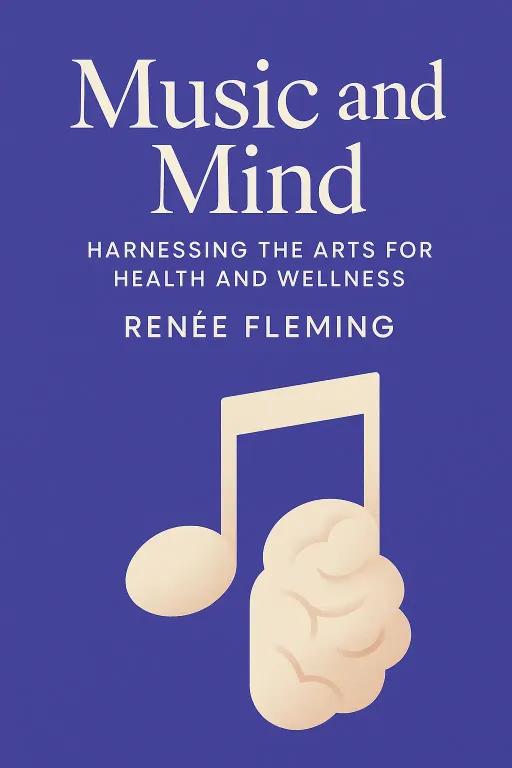
Nova: What if I told you that you're singing a song can light up more of your brain than actually singing it out loud? It’s a wild thought, right? That’s a real finding from an MRI study done on the world-renowned soprano Renée Fleming, the editor of the incredible book we're diving into today, "Music and Mind." It perfectly captures the book's core message: music isn't just a 'soft' art; it's a powerful, measurable force that physically shapes and even heals our brains. And Jackson, with your background in education and data analysis, I can't wait to unpack this with you.
Jackson: That's fascinating, Nova. Because in education and data analysis, we're always looking for evidence-based interventions. The idea that we can see a measurable neurological impact from something like music completely reframes the conversation about its value in our schools and our lives. It moves it from the 'nice-to-have' column firmly into the 'must-have.'
Nova: Exactly! And that's why this book is so groundbreaking. It's a collection of voices—neuroscientists, artists, doctors, therapists—all pointing to the same conclusion. Today we'll dive deep into this from two powerful perspectives. First, we'll explore the hard data behind music as a measurable brain-builder in education. Then, we'll shift to the incredible stories of music as an 'algorithm of healing' for neurological recovery and resilience.
Jackson: I'm ready. Let's look at the data.
Deep Dive into Core Topic 1: Music as a Measurable Brain-Builder
SECTION
Nova: Perfect. And that's our first big idea today: music as a measurable brain-builder. The book is packed with data that would make any analyst's heart sing. Let's start with a landmark study from the Harmony Project in Los Angeles. This program provides high-quality, intensive music education to kids in low-income communities.
Jackson: So, a great setting for a longitudinal study.
Nova: Precisely. Researchers, including some of the book's contributors, tracked these kids for years. They found that after just two years of music instruction, the children's brains showed significant changes. Specifically, their brains became more efficient at processing sound. This wasn't just a small effect; it had a direct, measurable impact on their language skills and academic performance.
Jackson: And the methodology here is key. The book mentions they compared the students to a wait-listed control group, right? That’s so important. It means the kids in both groups were equally motivated, but only one group got the intervention. It isolates the music training as the primary variable.
Nova: Exactly. It’s not just that kids from privileged backgrounds who take music lessons do better in school. This shows that the music training itself is a powerful driver of cognitive development. Neuroscientist Nina Kraus, another contributor, found that musically trained kids develop a kind of superpower: their brains get better at distinguishing meaningful sound, like a teacher's voice, from background noise.
Jackson: That’s a huge advantage in a typical, often chaotic, classroom. It’s a direct link between an arts program and a core learning competency. From a data perspective, this is exactly the kind of evidence needed to argue for policy changes. We're talking about a tool that can help close achievement gaps. The implications for educational equity are enormous.
Nova: They really are. And the book pairs this with another powerful, real-world example that shows the flip side. There was an elementary school in New York City located right next to a noisy, elevated subway track. Researchers noticed a strange pattern: kids in the classrooms on the noisy side of the building were lagging behind their peers on the quiet side by as much as eleven months in reading scores.
Jackson: That’s a perfect natural experiment. It shows the inverse: just as music builds the 'sound mind,' noise pollution actively degrades it. The constant, meaningless sound was compromising their ability to process meaningful auditory information, which is the foundation of learning to read.
Nova: You've got it. And the story has a great ending. They installed noise-abatement materials in the classrooms and rubber padding on the tracks, and the learning gap completely disappeared.
Jackson: That provides such a clear return on investment for infrastructure spending around schools. It's not about comfort; it's about cognitive development. That's a data point you can take to a school board or a city council. It makes the intangible, tangible.
Deep Dive into Core Topic 2: The Algorithm of Healing
SECTION
Nova: I love that, the ROI of quiet! And that idea of a direct input leading to a clear output brings us perfectly to our second topic: music as an 'algorithm of healing.' We've seen how it builds the brain, but the stories of how it it are just staggering. The book features a story from music therapist Tom Sweitzer about a young man named Forrest.
Jackson: I was really struck by this one.
Nova: It’s unforgettable. Forrest was seventeen, a charismatic, athletic kid. He had a devastating snowboarding accident—no helmet—and slammed his head into a fence. The injury was catastrophic. He was in a coma, and the prognosis was bleak. When he finally woke up, he was severely physically damaged, but his eyes were open and could track movement.
Jackson: So the therapist, Tom, starts visiting him in the hospital.
Nova: Yes, and he brings his guitar. At first, he just sings softly. Then, during one session, a small miracle: Forrest’s pinky finger starts keeping rhythm to The Beatles' 'Let It Be.' It was the first sign of intentional movement. But the real challenge was speech. Forrest couldn't talk. So Tom began using a technique called Melodic Intonation Therapy, or MIT.
Jackson: The structure of that is incredible. From what I read, MIT is essentially using the brain's undamaged musical pathways—the parts that process melody and rhythm—to create a 'detour' around the damaged speech centers in the left hemisphere. It's like a biological workaround.
Nova: A perfect description. For ten months, Tom would hum short phrases, and Forrest could only produce faint hums back. It was a slow, painstaking process. Then one day, Tom sang the phrase, 'Good morning.' And Forrest, in what Tom described as the most fragile, quietest voice, sang it back: 'Good morning.'
Jackson: That moment must have been electric. It's a system, a process. It’s not just 'magic,' even though it feels like it. It's a repeatable, therapeutic algorithm. You're leveraging one system—music processing—to reboot another.
Nova: An algorithm of healing! I love that. And Forrest went on to regain his voice, go to college, and live a full life. But what about when the healing is less... structured? The book also shares the deeply personal story of singer-songwriter Rosanne Cash.
Jackson: Right, her battle with Chiari malformation. That was a very different kind of story.
Nova: Completely. She suffered for years with chronic pain, migraines, and a host of neurological symptoms that were constantly misdiagnosed. After finally getting the right diagnosis, she had major brain surgery. Her recovery was brutal. She couldn't even listen to music with lyrics because it was too overwhelming.
Jackson: So music wasn't a direct, structured therapy for her in the same way it was for Forrest.
Nova: No, it was more of a lifeline. She found solace in relearning simple piano pieces from her childhood, which she said helped piece together 'memory and spatial recognition, sound and rhythm, fear and frustration.' And later, even when she was in immense physical pain, she found the strength to collaborate with friends like Elvis Costello. The act of creating music gave her, in her words, a 'tiny peek into a possible future of recovery and inspiration.'
Jackson: That's the other side of the coin. It's not a direct 'input-output' algorithm like MIT. It's about mindset and resilience. Music here acts as a catalyst for emotional regulation and self-reflection. It's harder to quantify, but no less powerful. It speaks to the 'habit' of turning to a constructive coping mechanism. For leaders, or for anyone, building that habit of engaging with something creative during adversity is critical.
Nova: It’s that triangulation Christopher Bailey talks about in the book—between the artist, the art, and your own imagination—that creates an 'emotional safe harbor.'
Jackson: Exactly. It's a different kind of data. It’s not a clinical trial, but a pattern of powerful anecdotal evidence that is just as compelling.
Synthesis & Takeaways
SECTION
Nova: So we have these two incredible sides of music's power: the measurable, architectural force that builds better brains for learning, and this profound, almost spiritual force that rebuilds lives and fosters resilience.
Jackson: Exactly. One is about optimizing the system, the other is about rebooting it when it crashes. Both are supported by evidence, whether it's neurological data from fMRI scans or the powerful, repeated case studies in this book that form a clear and undeniable pattern.
Nova: It really makes you see the world differently. So, for our listeners, especially for analytical thinkers like you, Jackson, the challenge isn't just to appreciate music more.
Jackson: Right. The challenge is to see it as a powerful, underutilized tool. As you go about your week, look at the systems around you—your workplace, your community, your own habits. Ask yourself: where are we missing the opportunity to apply this 'symphony of the brain'?
Nova: I love that. It’s a call to action for the inner data analyst in all of us.
Jackson: It is. Where could a little more music, a little more art, generate a massive, measurable return on human potential? This book makes it clear that the evidence is there. The question is what we're going to do with it.