

The Unseen Power of Movement: Building Resilience from the Ground Up
Golden Hook & Introduction
SECTION
Nova: What if I told you that your dedicated hour at the gym might actually be making you weaker, not stronger, in the grand scheme of your life?
Atlas: Whoa, weaker? That’s a bold claim, Nova. Most of us hit the gym precisely to feel. Are you saying we're doing it all wrong?
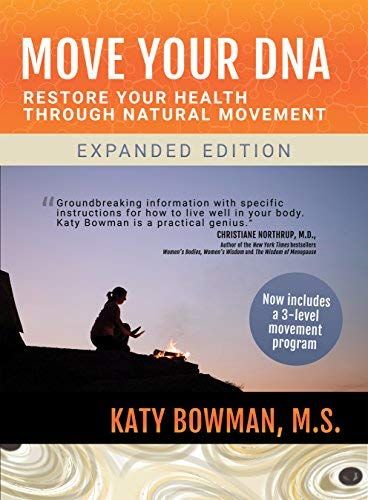
Nova: Not wrong, perhaps, but certainly incomplete. Today we're dissecting a revolutionary idea, inspired by two truly pivotal books: Katy Bowman's and Kelly Starrett's. Bowman, a brilliant biomechanist, really challenges the entire mainstream fitness industry. She argues our bodies aren't just suffering from a lack of "exercise" but from something far more fundamental: 'movement malnutrition.'
Atlas: Movement malnutrition? That's a provocative term. So, what does that even mean, and how does it apply to someone trying to stay sharp and effective in a high-stakes, often sedentary environment?
The Paradigm Shift: From Exercise to Movement Malnutrition
SECTION
Nova: Exactly. It's the core of our first deep dive. Think of it like this: you wouldn't expect to thrive on a diet of just one superfood, no matter how good it is. Your body needs a diverse array of nutrients. Bowman’s point is that movement is a nutrient. Our bodies are incredibly adaptive, yes, but they adapt to the movements we and, crucially, the movements we do.
Atlas: Right, like if all you ever do is sit, your body gets really good at sitting.
Nova: Precisely! Modern life has engineered out so much natural movement. We sit for hours, commute in cars, wear shoes that restrict our feet, and then we try to "fix" it with an intense, hour-long gym session. That hour is great for specific muscle groups, but it doesn't compensate for the eight to ten hours of static, repetitive postures that precede and follow it. Our bodies develop what Bowman calls 'movement deficiencies' – specific areas become weak, stiff, or underused.
Atlas: But for professionals constantly in meetings, at a desk, or strategizing for hours, isn't that just a reality we have to accept? How can we possibly 'move our DNA' when our daily lives demand so much stillness? It sounds like we're being asked to fundamentally redesign our work lives.
Nova: It's less about a radical redesign and more about a radical re-evaluation of what movement. Consider foot health, for example. Our feet have 33 joints, over 100 muscles, tendons, and ligaments. They're designed for complex, varied movement. Yet, we encase them in rigid, often elevated, shoes all day. This isn't just about comfort; it's about depriving a critical part of our kinetic chain of the natural stimuli it needs to stay strong and mobile. After years, those muscles atrophy, those joints stiffen, and suddenly, we have knee, hip, or back pain, and we wonder why. Our bodies adapted to the confined environment, but at a cost to overall resilience.
Atlas: So, the blind spot isn't just about, it's about in our daily lives, and our bodies are slowly degrading in response. It's a subtle, insidious form of decline.
Nova: Exactly. It's a foundational understanding that shifts movement from a separate activity to an integral, continuous practice. And that brings us beautifully to the 'how-to' – the practical architecture for rebuilding this resilience, which is where Kelly Starrett's steps in.
Rebuilding Resilience: Practical Strategies for Integrated Movement
SECTION
Atlas: Okay, so we've identified the problem: movement malnutrition. Now, for someone who's wired to break down complex problems and build solutions, what's step one? Is it a radical overhaul, or are there small, strategic interventions that can make a big difference without disrupting an already packed schedule?
Nova: That's the perfect question, and Starrett delivers compellingly on that front. He emphasizes foundational movements and daily practices. It's not about adding another hour to your gym routine, but about integrating micro-movements and varied postures throughout your day. Imagine your body is a complex system. Starrett provides the daily maintenance checklist to keep that system operating at peak capacity.
Atlas: Give me an example. What's a 'foundational movement' that most of us are probably neglecting?
Nova: One simple example is the deep squat. Many cultures naturally squat throughout the day – to eat, to rest, to socialize. In our society, we lose the ability to comfortably get into a full, deep squat as we age because we rarely do it. Starrett would argue that regaining that basic range of motion is foundational. It improves hip, knee, and ankle mobility, and strengthens core muscles in a way sitting on a chair never will. It's about restoring movement patterns.
Atlas: So it's not about doing a perfect olympic squat, but simply being able to get into a deep squat position comfortably as a natural resting posture? Like a child does?
Nova: Precisely. Another practical strategy is simply changing your sitting position throughout the day. If you have a standing desk, don't just stand there rigidly. Shift your weight, do some calf raises, stretch your hamstrings. If you're on a call, take it walking. Even five minutes of walking every hour can significantly counteract the negative effects of prolonged sitting. It's about finding opportunities for varied input, rather than just static output.
Atlas: It sounds like we're talking about optimizing our physical hardware to better run our mental software. Is that the underlying strategic advantage here? That physical resilience directly impacts our cognitive capabilities and decision-making?
Nova: Absolutely. When your body is in pain, stiff, or constantly battling the effects of poor movement, that's a drain on your cognitive resources. It's like having background processes constantly eating up your CPU. When your body moves freely, when your tissues are hydrated and mobile, when your nervous system isn't constantly sending "alert" signals from restricted joints, your mind is clearer, more focused, and more capable of complex strategic thought. It enhances your long-term strategic capabilities and overall well-being because you're building a more capable, adaptable physical foundation.
Synthesis & Takeaways
SECTION
Atlas: So, it's not just about looking good or avoiding injury, it's about unlocking a higher level of performance for our entire being. For our listeners who are constantly seeking to build stronger, more resilient systems – whether in business or personal life – what's the single most powerful shift they can make starting today?
Nova: The most powerful shift is recognizing that movement isn't a performance; it's a nutrient, essential for every system, from cellular repair to cognitive function. It's not something you for an hour and forget about. It's something you throughout your day, like breathing. Ignoring it is like trying to run a complex operation on half-power, ultimately undermining long-term strategic capabilities and well-being. Start small, but start with awareness: how are you moving, or not moving, right now?
Atlas: That's a profound way to put it – movement as a nutrient. It changes everything. And we'd love to hear from you. How are you integrating more natural movement into your daily life? Share your strategies with us on social media.
Nova: This is Aibrary. Congratulations on your growth!