

The Hidden Power of Movement: Unlocking Your Body's Natural Intelligence
Golden Hook & Introduction
SECTION
Nova: What if I told you that your carefully planned workout routine, the one you diligently carve time out for, might actually be making you healthy in the long run?
Atlas: Whoa, hold on a second, Nova. That’s a bold claim. Everything I’ve been taught says exercise is the cornerstone of health. Are you saying my morning run is secretly sabotaging me?
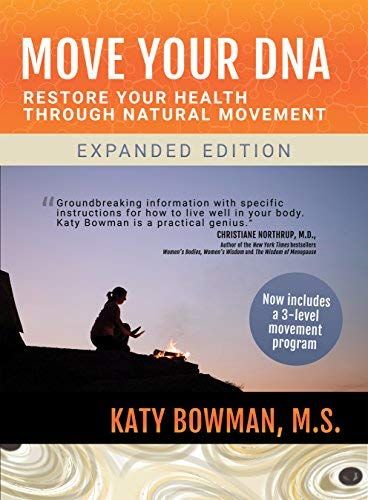
Nova: Not sabotaging in the way you might think, Atlas. We’re diving into a fascinating book today, by biomechanist Katy Bowman. What’s so compelling about Bowman’s work is that she started her career in a very traditional scientific path, but her observations led her to radically question conventional fitness wisdom. She realized there’s this profound disconnect between how we live and how our bodies are biologically designed to move.
Atlas: So, she's not just another fitness guru. She’s coming at this from a deeper, more fundamental place.
Nova: Exactly. And her insights expose what she calls a massive blind spot, a fundamental misunderstanding about movement that affects us all.
The Blind Spot: Redefining Movement Beyond Exercise
SECTION
Nova: This blind spot is the idea that movement is a separate, scheduled activity—something we "do" for an hour and then forget about. We treat exercise like a chore, a box to check off. But Bowman argues that this fragmented view completely misses the profound truth: movement isn't just about burning calories; it's fundamental to our biology, to every single cell in our body.
Atlas: Oh, I totally do that! "Okay, I got my workout in, now I can sit for eight hours." So why is that fragmented view problematic? What's the real issue?
Nova: Think of it like nutrition, Atlas. You wouldn't expect to be optimally healthy by eating one superfood meal a day and then snacking on junk the rest of the time, right? Your body needs a of nutrients constantly. Bowman says the same applies to movement. Our modern sedentary lifestyles create a 'movement deficiency' that's just as detrimental as a nutrient deficiency. Our bodies are designed for constant, varied mechanical input.
Atlas: Okay, that makes sense. Like, you can't just eat spinach once a day and call it a balanced diet. But how does this movement deficiency actually manifest physically? Give me a concrete example that listeners can relate to.
Nova: Consider our modern environments. We sit in chairs for hours, wear shoes with thick, supportive soles, and walk on perfectly flat, smooth surfaces. This drastically reduces the of muscle engagement our bodies experience. Many people who "exercise" regularly—they run, they lift weights—still suffer from issues like tight hips, weak glutes, or foot problems. Why? Because their structured workouts use a limited range of motion, while their daily lives offer almost no natural variation. They might be strong in some planes of motion, but completely weak and stiff in others.
Atlas: Wow, that’s actually really insightful. So it’s not just about I move, but and I move. That makes me wonder if our bodies are actually "dumbing down" because we're not asking them to do enough different things.
Nova: That’s a fantastic way to put it, Atlas. Our bodies are incredibly adaptive, and if we only ever ask them to do a few specific motions, they become incredibly good at motions, but lose capacity for everything else. It's like having a brilliant specialist who can't perform basic tasks. This leads to a body that's less resilient, more prone to injury, and ultimately, less intelligently connected to its environment.
The Shift: Embracing 'Movement Diversity' for Holistic Well-being
SECTION
Nova: That’s exactly it, Atlas. And this leads us to Bowman’s profound solution: cultivating 'movement diversity.' It’s about understanding that every single cell in your body, from your bones to your fascia, responds to mechanical stress. If you only move in limited ways, those cells are getting a very narrow message. The shift is about moving throughout the day, not just adding more structured exercise.
Atlas: Okay, so how do I actually achieve this without completely overhauling my life? Like, how do I 'rewild' my office or my home without looking completely ridiculous?
Nova: It's surprisingly simple, and it's about small, consistent actions. Instead of always sitting in a chair, try spending 15-30 minutes sitting on the floor while you read or work. Incorporate a deep squat into your day – maybe while waiting for the kettle to boil. Walk barefoot when it's safe, even just around the house, to wake up the muscles in your feet. Use stairs creatively, taking two steps at a time, or even sideways. These small, frequent movements stimulate different muscles and tissues, improving circulation, lymphatic flow, and cellular health in ways a single workout never could.
Atlas: That makes perfect sense for someone like me, a 'Nurturing Strategist' who values building a strong foundation. So it’s about foundational strength and resilience, not just a flashy facade. It's like building muscle memory for natural movement, allowing your body to be more prepared for anything. What are the long-term benefits beyond just feeling good in the moment?
Nova: The long-term benefits are profound. We're talking improved joint longevity, better balance as you age, significantly reduced chronic pain, and even enhanced cognitive function. When you move your body in diverse ways, you're sending richer, more complex signals to your brain, which in turn can improve focus, problem-solving, and even creativity. Our bodies are designed to respond to varied mechanical inputs, and when we provide those, we unlock a cascade of benefits that go far beyond surface-level fitness. It’s about creating a more robust, adaptable, and intelligent human.
Atlas: That gives me chills. So it’s not just about exercise anymore; it’s about a lifestyle of movement. It’s about respecting our biological design. I mean, it's such a simple concept, yet so revolutionary when you consider how we live today.
Nova: Exactly. It's about remembering that our bodies are living sculptures, constantly being shaped by the inputs we give them daily.
Synthesis & Takeaways
SECTION
Nova: So, to synthesize our discussion, the blind spot we often have is thinking of movement as a separate, scheduled task. The profound shift Bowman encourages is understanding that movement is an inherent, continuous part of being human, as vital as breathing or eating. Our bodies are not static machines; they are dynamic, responsive organisms that thrive on varied mechanical inputs.
Atlas: That’s a powerful distinction. So, the deep question for our listeners, and for me, is: how can we naturally weave more varied, less structured movement into our daily lives, beyond our planned workouts? What’s one actionable step we can take today?
Nova: Start small, but start with intent. Today, try spending 15 minutes sitting on the floor instead of a chair while you read or watch TV. Or, if it's safe, take a short walk barefoot in your yard to reconnect with varied ground textures. It's about listening to your body and giving it the diverse movement nourishment it craves.
Atlas: I love that. Small, consistent actions to build a stronger, more resilient foundation. It's about empowering ourselves to move naturally, one diverse movement at a time. I’m going to try that floor sitting today. I invite our listeners to share their small movement shifts with the Aibrary community. What little changes are you making to re-wild your movement?
Nova: Fantastic call to action, Atlas! It’s about evolving our relationship with our bodies.
Nova: This is Aibrary. Congratulations on your growth!