

The Hidden Power of Movement: Unlocking Your Body's Natural Intelligence
Golden Hook & Introduction
SECTION
Nova: You know, we talk a lot about healthy eating, about getting enough sleep. But what if I told you there's a third pillar of health, just as fundamental, that most of us are completely missing? And it’s not what you think.
Atlas: Oh, I'm intrigued. My first thought is "exercise," but you said it's not what I think. So, are we uncovering some secret ancient breathing technique, or is it a new superfood that only grows on Mount Everest? Lay it on me.
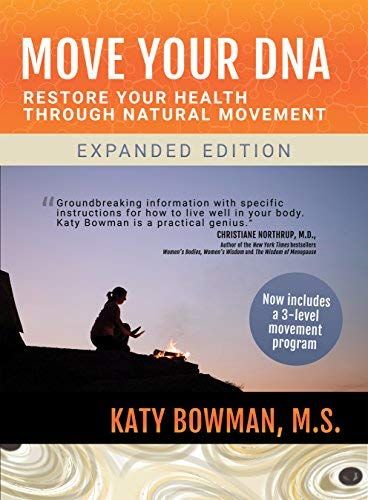
Nova: Not quite Mount Everest, though it does involve the ground beneath your feet. We're talking about movement, but not just the scheduled, gym-bound kind. We're diving into the profound insights of biomechanist Katy Bowman, specifically her groundbreaking book,.
Atlas: Ah, Katy Bowman! I've heard her name mentioned in whispers among the movement gurus. What makes her perspective so unique?
Nova: Well, Bowman, with her deep background in biomechanics, really challenges our fundamental understanding. She coined the term "movement nutrition," arguing that just as we need diverse nutrients from food, our bodies need a diverse "diet" of movement. It's a radical departure from just counting reps or calories burned. She's essentially telling us that our modern sedentary lives are 'movement-deficient,' and that's a huge problem.
Atlas: Movement-deficient. That's a powerful phrase. I feel like it hits home for so many of us who consider ourselves "active" because we hit the gym a few times a week.
The Blind Spot – Beyond Structured Exercise
SECTION
Nova: Exactly. That’s our collective blind spot. We often compartmentalize movement into "exercise"—this thing we to burn off yesterday's pizza or to look good. We see it as a chore, something to fit into an already overflowing schedule. But that fragmented view misses a profound truth: movement isn't just about burning calories; it's fundamental to our biology, to every single cell in our bodies.
Atlas: So, you're saying my hour at the gym isn't solving everything? Because I thought I was doing pretty well, you know, hitting my steps, getting my workout in.
Nova: You're doing, which is better than nothing, but it’s like eating only one type of vegetable for all your nutritional needs. Your body is designed for a symphony of movements—squatting, hanging, climbing, carrying, walking on varied terrains, twisting, reaching. When we replace that rich tapestry with repetitive, predictable movements, even if they're intense, we create what Bowman calls "cast-like bodies."
Atlas: Cast-like bodies? That sounds… restrictive. Like we're living in a full-body cast, even if we don't realize it. What parts of our body are suffering the most from this lack of natural movement?
Nova: Think of your joints, your circulation, even your bone density. Our cells communicate through mechanical signals. When we sit for hours, then stand for an hour, then sit again, we're not sending those diverse signals. Take our feet, for example. We encase them in rigid shoes on flat, predictable surfaces. Our feet have 26 bones, 33 joints, and over a hundred muscles, tendons, and ligaments designed to adapt to uneven terrain. When they don't get that varied input, those tiny muscles weaken, affecting everything up the kinetic chain—your ankles, knees, hips, even your back.
Atlas: Wow, that’s quite the domino effect. I honestly never considered my feet as being "movement-deficient." It's like we've optimized our lives for convenience, and in doing so, we've stripped away the very movements our bodies evolved to perform.
Nova: Precisely. It's a design flaw in modern living. We've created environments that make it easy to be stationary, easy to move in only one plane, easy to outsource physical tasks. And our bodies, being incredibly adaptable, respond by literally changing their structure to accommodate this lack of input. Our tissues shorten, our muscles weaken, our range of motion diminishes.
Atlas: So, it's not just about getting stronger or faster; it's about maintaining the of our biological design. That makes me wonder, if movement is as vital as food and sleep—and you've made a compelling case that it is—how can we possibly weave more varied, less structured movement into our daily lives, beyond our planned workouts? Especially for someone like our "Nurturing Strategist" listener, who's probably juggling a newborn, work, and a million other things.
The Shift – Redefining Movement for Daily Life
SECTION
Nova: That’s where Bowman’s "shift" comes in. It’s about changing we move, not just how much. It's moving beyond 'exercise' to a holistic understanding of how your body is designed to interact with the world. Imagine a child playing—they squat, they climb, they hang, they roll. They’re constantly shifting their body weight, using different muscle groups. That's natural movement.
Atlas: Right, like my toddler who can squat for five minutes picking up toys without even thinking about it, while I need a yoga class to even attempt a proper squat.
Nova: Exactly! That's the intelligence we've lost. Bowman argues we need to bring that back. It's about creating a "movement-rich environment." Instead of sitting on a couch, maybe you sit on the floor. Instead of always taking the elevator, take the stairs. Instead of carrying your groceries by the handles, hug the bag to your chest, shifting the weight.
Atlas: Okay, but how does a busy parent like our listener actually "move their DNA" when they're juggling a newborn and work? Are we talking about climbing trees with our kids, literally? Because that sounds like a great idea, but maybe not every day.
Nova: It’s not about grand gestures, Atlas, it’s about micro-changes. Think of it as "movement snacks." Can you squat down to pick up your child instead of bending at the waist? Can you breastfeed or bottle-feed in different positions on the floor instead of always in a chair? Can you get down and play with your child on the floor more often? Can you walk barefoot in the grass when you're in the backyard? Even just five extra minutes of walking on an uneven surface, or hanging from a sturdy branch for 30 seconds, starts sending those crucial signals to your body.
Atlas: That's a much more achievable picture. It's like, instead of trying to add more to an already full plate, we're just changing the ingredients of what's already there. So, instead of thinking "I need to go for a run," it's "How can I make my daily tasks more movement-rich?"
Nova: Precisely. It's about integrating movement into the fabric of your day. It’s about being mindful of your body’s needs for varied input. Bowman’s work reminds us that our bodies are incredible, self-optimizing machines, but they need the right "inputs" to function optimally. Neglecting diverse, natural movement in favor of structured workouts is like trying to fuel a high-performance car with only one type of fuel. It might run, but it won't thrive.
Synthesis & Takeaways
SECTION
Nova: So, the deep insight here is that we've been operating with an incredibly narrow definition of what healthy movement looks like, and it's been costing us dearly. Our bodies, designed over millennia for a vast array of natural movements, are literally atrophying from a lack of diverse input. It's a foundational biological need, as critical as the food we eat or the sleep we get. By consciously re-introducing varied, natural movements—even small ones—into our daily lives, we're not just "exercising"; we're literally nourishing our bodies at a cellular level, building a more resilient, capable self.
Atlas: That's actually really inspiring. It redefines what it means to be active. It’s not just about the big, sweaty workouts, but about the thousands of tiny movements we make—or don't make—every single day. For our "Nurturing Strategist" listeners, who are always looking to build a strong foundation for their family's well-being, this is gold. It’s about building that strong foundation for first, through movement.
Nova: Absolutely. My challenge for our listeners, especially those busy parents, is this: today, try one "movement snack." It could be sitting on the floor for ten minutes while you play with your child, or walking barefoot in your garden, or simply taking the stairs instead of the elevator. Just one tiny shift to begin reclaiming your body's natural intelligence.
Atlas: I love that. Small acts of self-care, building that well-being from the ground up, literally.
Nova: This is Aibrary. Congratulations on your growth!