

Chemistry of Emotion: Decoding the Body's Dance with Feelings
Golden Hook & Introduction
SECTION
Nova: Most of us think of emotions as these fleeting, ethereal things, right? They're "in our heads," or maybe "in our hearts." But what if I told you your deepest feelings aren't just mental states, but are literally a biochemical ballet happening throughout your entire body?
Atlas: A biochemical ballet? That sounds… intense. You mean my grumpy Monday morning feeling isn't just a mood, it's a full-on chemical production in my cells? Because that feels a little dramatic for my coffee craving.
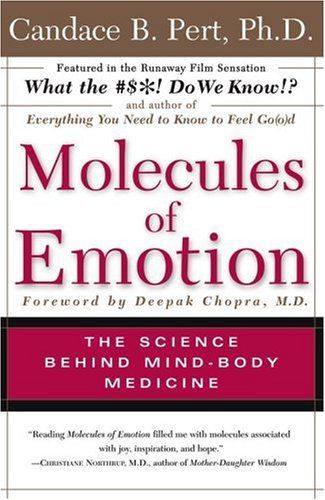
Nova: Exactly! And it's far more profound than just a coffee craving. Today, we're diving into the groundbreaking work of Dr. Candace Pert, specifically her revolutionary book, "Molecules of Emotion: The Science Behind Mind-Body Medicine." Pert's work wasn't just a book; it was a seismic shift in how we understood ourselves. She was a pioneering neuroscientist who, in the 1970s and 80s, started uncovering the actual chemical messengers—neuropeptides and their receptors—that link our thoughts, feelings, and even our immune system. It absolutely blew apart the old idea that the mind and body were separate entities.
Atlas: So, she wasn't just theorizing about "mind-body connection." She found the actual, physical communication system. That’s a huge leap from just saying, "Oh, stress gives you an ulcer," to "Here are the molecules causing it."
Nova: Precisely. And it leads us to an incredible realization: our emotional landscape is fundamentally a chemical one. And that chemical dance, Atlas, has a powerful, physical language.
The Biochemical Ballet of Emotion: Candace Pert's Paradigm Shift
SECTION
Atlas: So, let's unpack this "biochemical ballet" then. What exactly did Pert discover that changed everything? Because for a long time, emotions were kind of seen as this squishy, unscientific realm, weren't they?
Nova: Absolutely. Traditional science often kept the brain separate from the body, and emotions were largely relegated to psychology or even philosophy. But Pert, through her research, identified these 'molecules of emotion' – primarily neuropeptides – as the actual information carriers that communicate between our brain, our endocrine system, and our immune system. Think of them as tiny biological messengers, floating through our bloodstream and nervous system, attaching to specific receptors on cells throughout our entire body.
Atlas: Hold on. So, these "molecules of emotion" aren't just in the brain? My stomach, my skin, my immune cells—they all have receptors for these emotional messengers?
Nova: That's the mind-blowing part! Yes. Her research showed that these neuropeptide receptors are not exclusive to the brain. They are found on cells all over the body, including vital organs, skin, and immune cells. So, when you experience an emotion, say, joy or fear, it's not just a thought in your head; it's a cascade of these molecules initiating a biological conversation across your entire system. It's truly a whole-body experience.
Atlas: That's incredible. So, when I get that 'gut feeling' about something, it’s not just a poetic phrase; my gut is literally receiving and processing emotional information chemically?
Nova: Exactly! That 'gut feeling' is your enteric nervous system, often called your 'second brain,' responding to those neuropeptide messages. It's a prime example of the mind-body connection in action. For instance, when you're under chronic stress, your body releases stress hormones like cortisol. These aren't just affecting your mood; they're dampening your immune response, altering your digestion, and even impacting your sleep cycles. The emotion of stress, mediated by these molecules, is having a concrete, measurable physical effect throughout your body. The cause, the process, the outcome—it's all chemical communication.
Atlas: Wow. That really reframes how I think about emotions. It makes them feel less abstract and more like a tangible, powerful force within us. It’s not just 'I feel anxious,' it's 'my body is flooded with these anxiety-producing molecules, and here's how they're affecting my digestion and my muscles.'
Nova: Precisely. Pert essentially gave us the scientific vocabulary to understand why our emotional states have such profound physical expressions and health implications. It’s a unified system, a single communication network.
Feeling Through Form: Translating Chemistry into Physical Expression
SECTION
Nova: And that chemical conversation doesn't stay hidden inside our heads; it dances its way out. This brings us to how these internal biochemical ballets translate into observable physical forms.
Atlas: So, like a dancer expressing joy or sorrow – that's not just acting, it's a mirror of their internal chemistry? I mean, we instinctively emotions in movement. A slumped posture, a tense jaw, a joyful leap. But are these direct reflections of those 'molecules of emotion'?
Nova: They absolutely are, Atlas. Think about it: when you feel fear, your body tenses, your breath becomes shallow, your muscles prepare for fight or flight. That's not a conscious decision; it's the direct result of a flood of adrenaline and other neuropeptides. Conversely, when you feel joy, your body might expand, your movements become fluid, your posture opens up. These are all physical manifestations of distinct biochemical states. Dance, in particular, is a powerful physical language for these internal states because it consciously or unconsciously taps into and amplifies these natural physical expressions of emotion.
Atlas: So, it's like our emotional chemistry is constantly choreographing our bodies, even when we're not aware of it. But if a dancer understands the neurochemistry behind, say, longing or excitement, how would that enhance their performance? Wouldn't they just 'feel' it anyway?
Nova: That's a deep question, and it really gets to the core of integration for someone like our interdisciplinary listener. Understanding the neurochemistry isn't about replacing the feeling; it's about deepening it and making its expression more authentic and nuanced. Imagine a dancer trying to convey sadness. If they understand that sadness involves a specific slowing of neural pathways, a certain type of muscular tension or release, a particular breathing pattern linked to specific neuropeptides, they can embody that emotion with incredible precision. They're not just mimicking sadness; they're understanding its biological blueprint, which allows for a more profound and truthful portrayal.
Atlas: That's fascinating. It’s like having the sheet music for the emotional ballet. You can perform it with more depth and intention. For anyone, not just dancers, trying to connect with their own body’s signals, this is huge. How might understanding this neurochemistry help an artist, or even just a person trying to understand their own body's signals, to express themselves more authentically?
Nova: It empowers them. For an artist, it means moving beyond surface-level portrayal to a biologically informed embodiment. For anyone, it means recognizing that the knot in your stomach isn't just a random ache; it's a message from your emotional chemistry. It allows you to observe how different emotions manifest physically in your own body – those 'chemical sensations' that accompany feelings. This awareness can lead to greater self-regulation, more authentic communication, and ultimately, a more integrated sense of self. It's about listening to the body's wisdom, which is constantly speaking in a language of molecules and movement.
Synthesis & Takeaways
SECTION
Nova: So, what we've really explored today is that our emotions are not some abstract concept; they are a tangible, dynamic, biochemical language spoken throughout our entire being. From the neuropeptides in our brain to the receptors on our immune cells, our feelings are literally molecules in motion, orchestrating a constant, complex dance within us.
Atlas: And that dance doesn't stay hidden. It translates into every subtle shift in our posture, every gesture, every expression. It’s a profound realization that our physical being is constantly reflecting—and influencing—our emotional state. Embracing this complexity isn't just about science; it's about a richer, more integrated way of being human, understanding the deep connections between our inner and outer worlds.
Nova: It is. It’s about recognizing the incredible intelligence of our bodies and the power of our emotional chemistry. And with that understanding, we can approach our feelings, our health, and our expressions with a whole new level of awareness and intention.
Atlas: So, the next time you feel a strong emotion, take a moment. Don't just dismiss it as 'a feeling.' Instead, observe where it manifests in your body. What are those 'chemical sensations' telling you? It might just be the most profound conversation you have with yourself all day.
Nova: A powerful invitation to listen to your body's wisdom. This is Aibrary. Congratulations on your growth!