

Deep Dive into the Kernel: Advanced Operating System Internals.
Golden Hook & Introduction
SECTION
Nova: Atlas, imagine you're a master locksmith, but instead of picking a lock, you're building a key from scratch that can open any door in the city. What's the first thing you need to know?
Atlas: Oh, I love that! Clearly, you’d need the blueprints of the entire city's locking system, not just how to turn a tumbler. You'd need to understand the metallurgy, the engineering, the whole nine yards.
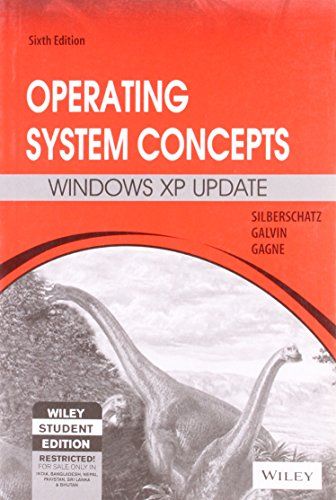
Nova: Exactly! And that's precisely the mindset we're diving into today with a deep look at operating system internals. We're drawing heavily from foundational texts like "Operating System Concepts" by Abraham Silberschatz, Peter Baer Galvin, and Greg Gagne—affectionately known as the 'dinosaur book'—and "Modern Operating Systems" by Andrew S. Tanenbaum and Herbert Bos.
Atlas: Those are some heavy hitters. I know Tanenbaum, in particular, is famous not just for his academic work but for his legendary, often fiery debates with Linux creator Linus Torvalds, which really hammered out different OS design philosophies. That's some serious intellectual sparring!
Nova: Absolutely! And that historical context is key because these aren't just textbooks; they're the bibles for anyone serious about understanding the digital world's plumbing, especially if you want to move beyond being a user of tools to a creator of them. It’s about that deep understanding that transforms you.
Atlas: So, you're saying if I want to build that master key, I need to know the entire city’s infrastructure, right down to the rebar?
Nova: Precisely. The kernel, this hidden core, is the ultimate canvas for someone looking to truly master system control.
The Kernel as the Exploit Canvas
SECTION
Atlas: Okay, so the kernel is the target. For our listeners who are architects and strategists in their own fields, that sounds like a massive undertaking. Why is it the canvas? Isn't finding a bug enough?
Nova: That's a great question, and it's where the real insight lies. Finding a bug is like noticing a loose brick in a wall. Anyone can point it out. But understanding that brick is loose, how it's integrated into the entire structure, and how you could use that weakness to bring down the whole wall—that's kernel-level thinking.
Atlas: So, it's not just about the vulnerability itself, but its context within the entire system?
Nova: Exactly. Exploiting a vulnerability isn't just about code; it's about manipulating the underlying kernel and its resource management. Imagine a puppeteer. A novice might just pull on a puppet's limbs. But a master puppeteer understands the internal strings, the joints, the weight distribution. They know how to make the puppet dance in ways no one thought possible by manipulating its core mechanics.
Atlas: That's a vivid analogy. So, the kernel is essentially the "internal strings" of the operating system.
Nova: It is. The kernel manages everything: processes, memory, files, I/O. It’s the single point of control, the ultimate authority. If you can influence the kernel, you can influence everything running on that system. Let's say a userland application tries to access a protected memory region. The kernel acts like a strict bouncer at an exclusive club, enforcing the rules. An exploit, however, seeks to trick this bouncer. It doesn't ask nicely; it understands the bouncer's rules so intimately that it finds a flaw in their implementation to gain unauthorized access.
Atlas: That’s fascinating. For someone who's constantly thinking about robust security, this feels like moving from perimeter defense to understanding the very foundation of the building. But that sounds incredibly complex. How do you even begin to map out this 'canvas'?
Nova: That’s where these foundational books come in. They provide the theoretical framework, the 'map,' to navigate this complexity. They teach you the underlying principles, which are often timeless, even as the specific implementations evolve.
Architectural Deep Dive: Process, Memory, and I/O Management
SECTION
Atlas: Okay, so the kernel is the target. What are the main 'vitals' or 'systems' within this kernel that an aspiring architect of security needs to understand inside out? Where should they start digging?
Nova: Excellent next step. You need to understand the core architectural components. Think of the operating system as a meticulously designed city. You need to know its city planning, its infrastructure, its communication systems.
Atlas: Makes sense. So, what are those key components?
Nova: First,. This is how the OS juggles multiple programs, giving each its fair share of CPU time. It's like a highly efficient traffic controller managing rush hour, ensuring no single car hogs the road and everyone gets to their destination. Understanding how processes are created, scheduled, and terminated is critical. If you can interfere with that traffic controller, you can cause chaos, or worse, redirect traffic to your own advantage.
Atlas: So, understanding the traffic flow allows you to create a diversion?
Nova: Exactly. Next,. This is how the OS allocates and protects memory for different programs. It’s like a meticulous librarian assigning unique shelf space to each book, ensuring no two books overwrite each other and that private information stays private. The 'dinosaur book,' "Operating System Concepts," covers this in incredible detail.
Atlas: So basically, if you understand how the 'librarian' organizes the books, you can figure out how to sneak a message into a protected section? That sounds like a fundamental weakness in the design, not just a bug in the code.
Nova: It's a constant arms race between design robustness and creative exploitation. A common memory corruption vulnerability, like a buffer overflow, isn't just about overwriting data. It's about exploiting the kernel's rules about memory boundaries. If you know how the kernel expects memory to be laid out on the stack or the heap, you can craft an input that overflows its intended buffer and overwrites adjacent critical data, potentially redirecting program execution.
Atlas: That’s profound. And the third vital system?
Nova: . How the OS handles communication with external devices – your keyboard, mouse, network card, disk drives. This is like the central post office for all incoming and outgoing data. Understanding how data moves in and out of the system, and how the kernel mediates that, is another crucial area for identifying vulnerabilities. These books really lay out the blueprints for how all these systems interact, which is essential context for understanding exploit targets.
From Userland to Kernel Space: Tracing System Calls
SECTION
Nova: Let's take this a step further. We've talked about the architecture. But how does a simple command from a user actually interact with these deep kernel functions? How does it cross that crucial barrier between 'userland' and 'kernel space'?
Atlas: I've heard those terms, 'userland' and 'kernel space', but I think a lot of our listeners would appreciate a clearer picture. Is it like a secure border crossing?
Nova: That’s a great analogy. System calls are those "gateways" between user applications and the kernel. When your application needs to do something privileged, like open a file or create a new process, it can't just do it directly. It has to ask the kernel.
Atlas: So, the application sends a request to the kernel, and the kernel decides if it's allowed?
Nova: Precisely. Let's trace a specific example: the execve system call on Linux, which is used to execute a new program. Your shell, for instance, calls execve to launch a program. When that call is made, the CPU switches from 'user mode' – where your applications run with limited privileges – to 'kernel mode,' which has full control over the hardware.
Atlas: Wow, that's a fundamental shift in power.
Nova: It is. In kernel mode, the kernel verifies permissions, sets up the new process's memory space, loads the program, and then, if everything is in order, switches back to user mode to let the new program run. "Modern Operating Systems" by Tanenbaum and Bos delves into topics like system calls and interrupt handling, which are directly relevant to understanding these transitions.
Atlas: So, for someone driven by robust security, understanding this journey from userland to kernel space is like understanding the exact points of entry and exit in a fortress. It's not just about knowing the walls, but how the gates open and close?
Nova: Exactly! And that’s where the 'tiny step' recommendation comes in. Investigate how a specific system call like execve is handled by the kernel. Trace its flow. An advanced exploit might inject malicious code during this execve transition. By understanding the kernel's interrupt handling and system call tables, an attacker can hook into this process, effectively taking control of new programs launched on the system. It's a surgical strike at the core of the system's operations.
Synthesis & Takeaways
SECTION
Nova: So, what we've really been talking about today is that the path to advanced exploit development, or conversely, to truly robust security, isn't about memorizing lists of vulnerabilities. It's about an intimate, almost philosophical, understanding of the operating system's very soul – its kernel.
Atlas: For our listeners who are architects and strategists in security, seeking mastery and impact, this isn't just academic theory. This is about building solutions that truly withstand attacks, because you understand the very fabric they're trying to tear. It's about anticipating the moves of the most sophisticated adversaries.
Nova: That's right. This deep dive into the kernel is what truly differentiates a 'guardian' of systems from someone just patching holes. It’s about being a creator of tools, not just a user.
Atlas: It’s empowering to think of it that way. Instead of just reacting to threats, you're understanding the fundamental mechanisms, allowing you to design with foresight.
Nova: Absolutely. So, for our listeners, pick up one of these foundational books, whether it’s the 'dinosaur book' or Tanenbaum's work. And then, as a tiny but mighty step, investigate how a specific system call, like execve, is handled by the kernel. Trace its flow from userland to kernel space. That journey alone will illuminate so much.
Atlas: That’s a powerful challenge. It sounds like the first step to true mastery.
Nova: This is Aibrary. Congratulations on your growth!