

The 'Sonic Architect's Dilemma': Elevating Your Audio Craft
Golden Hook & Introduction
SECTION
Nova: Atlas, if I were to ask you about the 'Sonic Architect's Dilemma,' what comes to mind?
Atlas: Oh, the Sonic Architect's Dilemma. That's easy. It's when you've just spent a small fortune on a fancy new microphone, convinced it's finally going to make your home recordings sound like a Grammy winner, only to realize your untreated bedroom still sounds like a wet cardboard box. It's the eternal struggle between gear lust and acoustic reality.
Nova: Exactly! A beautifully witty and painfully accurate summary. Because today we are diving into that very dilemma, stemming from the cold, hard fact that achieving truly professional-grade audio in a home studio demands far more than just good gear. It requires a deep understanding of sonic principles and meticulous technique.
Atlas: That resonates. As someone who appreciates precision and the intricate workings of complex systems, I've always found that the sheer volume of information around audio production can be overwhelming, making it hard to know where to even begin. There's a real hunger for fundamental understanding.
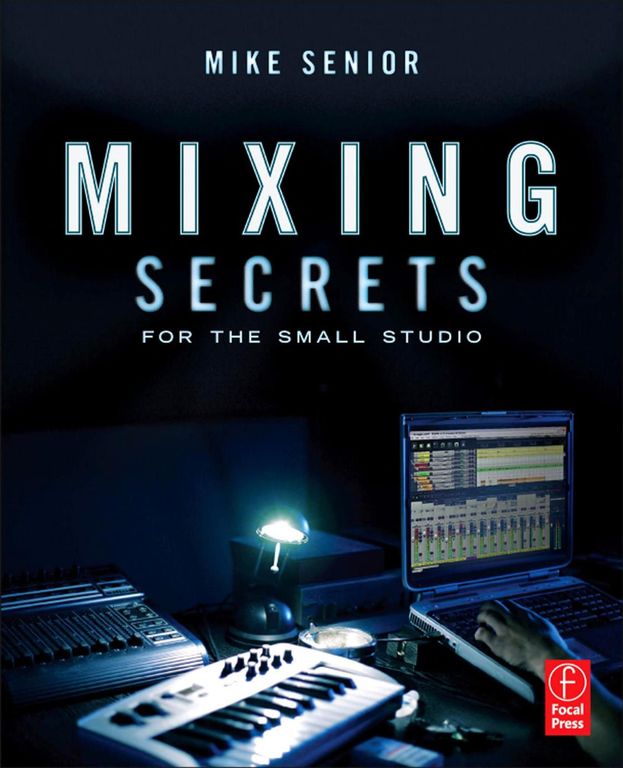
Nova: Absolutely. And that's where two incredible books come in: by Mike Senior, and by David Gibson. What makes Senior's work so vital is his background as a practical, hands-on engineer. He didn't just write for people in million-dollar studios; he wrote for you, for me, for anyone battling the realities of an untreated spare room or a noisy apartment. He specifically tailored his advice for less-than-ideal acoustic environments, making professional techniques accessible.
Atlas: That's a crucial distinction. It's not about having perfect conditions; it's about making the most of what you have.
Beyond Gear: The Foundations of Professional Home Studio Audio
SECTION
Nova: Precisely. And this leads us to our first core idea: the foundational truth that sonic principles and technique trump gear. Think of it like this: a master chef doesn't just buy the most expensive pots and pans. They understand the ingredients, the chemistry of cooking, the subtle nuances of heat and flavor. Without that knowledge, even the finest copper pot won't make a Michelin-star meal.
Atlas: I get the analogy, but it's still hard for many to truly internalize. I mean, isn't a better microphone just inherently? What's the real, tangible difference if you don't know how to use either a $100 mic or a $1000 mic effectively? Where does that "cold fact" really hit home?
Nova: It hits home in the acoustic environment. Mike Senior dives deep into this, showing how you have to work your room, not just in it. Let's imagine a scenario: We have a wonderfully talented vocalist, a true bard, with a $2,000 condenser microphone. They're recording in their untreated bedroom, full of hard walls and parallel surfaces. Every vocal nuance, every subtle breath, is being captured. But what else is being captured?
Atlas: The echo. The flutter. The sound of the room itself, bouncing everywhere.
Nova: Exactly! That expensive microphone, designed to capture every detail, is now capturing all those unwanted reflections and resonances. It's essentially magnifying the flaws of the room. Now, picture another scenario: a vocalist with a $200 dynamic microphone, but they've taken the time to set up some basic acoustic treatment—a few blankets, a duvet fort, maybe even recording under a heavy quilt.
Atlas: Oh man, the duvet fort! The classic home studio move.
Nova: The classic! And in that improvised, acoustically managed space, that $200 mic will likely yield a far more professional, usable vocal track than the $2,000 mic in the untreated room. The expensive gear was literally by the environment. It highlights that the acoustic environment is a foundational "ingredient" that can make or break any recording, regardless of your equipment budget.
Atlas: So you're saying a bad room can literally the quality of good gear? That sounds rough for anyone starting out in a spare bedroom, or even those who thought they were upgrading their sound just by buying something shiny. What's the absolute first, concrete step someone should take then, if not just buying more gear? What’s the most precise insight from Senior for managing this acoustic reality?
Demystifying Mixing: EQ, Compression, and the Art of Sonic Space
SECTION
Nova: That's the perfect question, Atlas. Because once you've got your sound captured as best as possible, then comes the magic: mixing. This is where those 'dark arts' like EQ and compression truly shine, especially with insights from Senior and David Gibson, who famously teaches you to 'see' sound.
Atlas: "Seeing sound" – that's intriguing. For many, EQ and compression just feel like a bewildering array of knobs and sliders. You push them until it sounds 'better,' or often, worse, without really knowing. What exactly are we supposed to be 'seeing' with Gibson, and how does Senior help us actually it without getting lost in the technical weeds? I'm thinking about our listeners who love dissecting complex systems and finding joy in precision; they want to understand the.
Nova: You've hit on the core of the challenge. Gibson's approach helps you visualize the spatial relationships within a mix – where each instrument sits in terms of width, depth, and height. It's like imagining a three-dimensional soundstage. Then Senior comes in and gives you the surgical tools to that space. Think of EQ, or equalization, not just as making things brighter or darker, but as carving out specific frequency ranges. It's like a sculptor shaping clay, removing excess material to reveal the form within.
Atlas: That's a great analogy, the sculptor. So, instead of just boosting the treble because a vocal sounds dull, we're actually something else that might be clashing with it?
Nova: Exactly! And this brings us to Senior's incredibly practical advice, especially for vocals. He suggests a subtle EQ cut, not a boost, at around 200-250 Hz. This frequency range is often where a lot of "muddiness" or "boxiness" resides, especially in home studio recordings. By gently reducing frequencies in that area, you're not making the vocal louder, but you're removing a veil, allowing it to breathe, making it clearer and more present. It’s a precise, targeted action with a clear, audible outcome.
Atlas: Wow. So the tiny step from the book—taking an existing vocal track and doing that 200-250 Hz cut—that's not just a random tweak. It's about consciously and. It's about precision, not just guesswork. It's a fundamental principle of how sound occupies a mix. That’s a revelation for someone trying to get a handle on this. What's the mistake people make when they first try these techniques, especially with something like compression? Because that one feels like a total mystery.
Nova: Compression often feels like a mystery because people equate it with "making things loud." But that's a common trap. Compression is about managing dynamics. Imagine an orchestra where the violins are sometimes too loud, sometimes too quiet. A good conductor balances them, gently bringing up the quiet parts and subtly taming the loud ones, so they sit perfectly within the overall soundscape. That's what a compressor does: it reduces the dynamic range, making the track more consistent and allowing it to sit better in the mix without suddenly jumping out or disappearing. The mistake is overdoing it, squashing the life out of the sound, making everything sound flat and lifeless. It's about subtle control, not brute force.
Synthesis & Takeaways
SECTION
Nova: So, what we're really talking about here, Atlas, is the power of intentionality and understanding the behind every knob turn, every fader move. It's the difference between randomly pushing buttons and meticulously sculpting a sonic experience. Mastering the art of mixing, as Gibson and Senior teach us, is about understanding how each element contributes to the overall sonic landscape, transforming raw tracks into polished, immersive experiences. It’s a quest for mastery that rewards precision and deep insight.
Atlas: That’s such a powerful reframe. For anyone who loves diving deep into complex systems, who finds joy in precision, and who seeks mastery in their craft, this isn't just about making better music or podcasts. It's about understanding the architecture of sound itself. It's truly a quest for mastery in a very tangible and audible way. The tiny step we discussed earlier, that specific EQ cut, becomes an entry point into a whole new world of understanding.
Nova: Exactly. So, for our listeners, here's that tiny step, the tactile insight: take one of your existing home studio recordings. Find that vocal track. Apply a subtle EQ cut at 200-250 Hz to reduce perceived muddiness. Then, listen. Truly listen for the difference. It's a small, precise action, but it's a giant leap in understanding how you can shape your sound.
Atlas: And share your revelations with us! We love hearing about your sonic breakthroughs and how these insights change your creative process.
Nova: This is Aibrary. Congratulations on your growth!