

Stop Guessing, Start Building: The Guide to Accessible Design.
Golden Hook & Introduction
SECTION
Nova: What if I told you that designing for the 'average' person is not just inefficient, but actively harmful?
Atlas: Harmful? That sounds strong. Aren't we always trying to hit the biggest demographic, the middle ground?
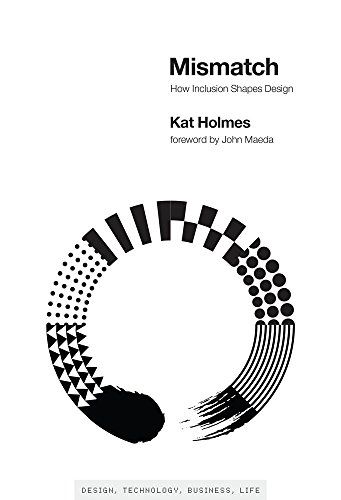
Nova: It’s counter-intuitive, isn’t it? But that's precisely the provocative core of what we’re exploring today. We’re dissecting an idea that's reshaping industries, primarily drawn from two pivotal works: "Mismatch: How Inclusion Shapes Design" by Kat Holmes, a visionary who led inclusive design at tech giants like Microsoft and Google, and "Designing for Accessibility" by Srinivasu Chakravarthula and Anil Kumar Singh, which offers the practical blueprints.
Atlas: So, this isn't just about checking off a box for compliance, then? It's something bigger, more fundamental?
Nova: Exactly. It's about a fundamental shift in mindset: moving from reactive accommodation to proactive, innovative inclusion. Kat Holmes, with her deep background in human-centered design in the tech world, really challenges us to see accessibility not as a charitable act or an obligation, but as a spring of innovation. And then Chakravarthula and Singh give us the nuts and bolts to actually build it.
The Mismatch: Inclusive Design as a Catalyst for Innovation
SECTION
Nova: Let's start with Holmes's brilliant concept of 'mismatch.' She argues that exclusion in design isn't about people having 'disabilities,' but about the creating a mismatch between human abilities and the environment. It’s about the context, not the person.
Atlas: So, the 'mismatch' isn't a flaw in the person, it's a gap between human ability and product design? That’s a really crucial distinction.
Nova: It is. Think about the iconic OXO Good Grips peeler. Now, the original inspiration for that peeler came from a woman with arthritis who struggled with traditional kitchen tools. Her husband, Sam Farber, saw this daily struggle and thought, 'There has to be a better way.'
Atlas: Oh, I know those peelers! They have those thick, soft handles. They're incredibly comfortable.
Nova: Precisely. The original 'cause' was arthritis, a permanent mismatch. Farber's 'process' was to design specifically for this 'extreme user,' working with a design firm to create a handle that was easy to grip, even for someone with limited hand strength. The 'outcome'? A product that became universally popular because it turned out to be easier and more comfortable for to use, regardless of their grip strength. It wasn't just for people with arthritis; it was a better peeler for.
Atlas: That's really smart. It’s a prime example of designing for a specific need that ended up benefiting a much broader population. That kind of innovation isn't about compromise; it’s about enhancement.
Nova: Absolutely. Holmes breaks 'mismatch' down further into three types: permanent, temporary, and situational. A permanent mismatch might be a missing limb. A temporary mismatch could be a broken arm. A situational mismatch is holding a baby in one arm while trying to open a door. The beauty is, when you design for a permanent mismatch, you often solve for the temporary and situational ones too. That OXO peeler helps someone with arthritis, someone with a sprained wrist, or someone simply peeling a lot of vegetables for a big family dinner.
Atlas: But for someone who's constantly navigating complex regulations, or working with tight budgets in a large organization, it can often feel like designing for these 'mismatches' is an added cost, or purely a compliance issue, or even a limitation on creative freedom. How do we shift that mindset from 'extra' or 'limitation' to 'essential innovation' and 'opportunity'?
From Compliance to Empathy: Practical Frameworks for Accessible Solutions
SECTION
Nova: That’s a fantastic question, and it's exactly where the second set of insights comes in – moving beyond seeing accessibility as a 'checkbox' to truly embedding empathy. This is where "Designing for Accessibility" by Chakravarthula and Singh becomes invaluable. They provide practical guidelines for how to actually this.
Atlas: For professionals trying to build truly inclusive environments, whether digital or physical, what are some of the foundational principles from these guidelines? Because it often feels like a labyrinth of standards and acronyms.
Nova: They emphasize a user-centered approach, which means involving people with diverse abilities of the design process, not just at the end as an afterthought. Imagine a city government redesigning its public services website. Instead of building the entire site and then hiring an accessibility consultant to point out all the problems, they would engage a diverse user group—including individuals with visual impairments, motor skill challenges, or cognitive differences—in the early wireframing and prototyping stages.
Atlas: So, rather than retrofitting, you’re baking it in from the start.
Nova: Exactly. The process would involve observing how these diverse users navigate early versions of the site, collecting their feedback, and iteratively refining the design. This early and continuous feedback ensures the outcome isn't just a compliant website, but one with intuitive navigation, clear language, and robust compatibility with assistive technologies. It becomes genuinely usable for a wider population, not just technically accessible.
Atlas: That makes perfect sense for digital design. But what about physical spaces? We're often constrained by existing infrastructure, especially in older cities or buildings. How do we apply this proactive, empathetic approach to something like renovating an old public library or designing a new park? And how do we ensure we're accounting for cognitive diversity, which is often less visible but equally crucial?
Nova: That’s where the principles extend beyond just physical ramps and Braille. For a library, it might mean designing wayfinding that uses both visual and auditory cues, creating quiet zones for those with sensory sensitivities, or ensuring staff are trained to interact effectively with people with cognitive differences. It's about designing for the of inclusion. These books push us to consider international standards, yes, but more importantly, they challenge us to look a little deeper at the human experience. They encourage us to trust our inner wisdom, that gut feeling that tells us if a space or a product truly feels welcoming and usable for someone who isn't exactly like us.
Atlas: So, it’s about really cultivating understanding, and not just processing a design brief. It’s about championing dignity by anticipating needs, not just reacting to them.
Synthesis & Takeaways
SECTION
Nova: Precisely. What Kat Holmes gives us is the 'why' – the compelling argument that designing for 'mismatch' is a catalyst for universal innovation. And what Chakravarthula and Singh provide is the 'how' – the practical, user-centered frameworks to move from mere compliance to truly empathetic design. It’s about recognizing human diversity as a powerful resource, not a problem to be solved.
Atlas: So, it’s about moving from a mindset of 'fixing' something for a few, to 'designing better' for everyone, right? It's about trusting your inner wisdom when it tells you something could be better for someone else. But what’s one tangible thing someone listening right now, perhaps feeling overwhelmed by the sheer scope of this, can do?
Nova: The books offer a simple, yet powerful, tiny step. In your next project, identify just design element that could be improved for accessibility, and then research a specific solution for it, drawing inspiration from the principles we’ve discussed. Start small, but start proactively. It’s not about overhauling everything overnight; it's about embedding a mindset of inclusion into your daily practice.
Atlas: That’s a powerful call to action. It’s not just about meeting a requirement; it's about unlocking human potential and creating a more equitable, dignified world for all.
Nova: Absolutely. It’s about building inclusive environments from the ground up, making sure everyone can participate fully.