

Beyond the Obvious: Uncovering Hidden User Needs with Deep Empathy
Golden Hook & Introduction
SECTION
Nova: What if I told you the most dangerous thing in your design process isn't a tight deadline or a demanding client, but the perfectly ordinary person sitting right next to you? Or even worse... yourself?
Atlas: Wow. That's a bold claim, Nova. I mean, I spend my days trying to build intuitive interfaces, and I often start with what feels right to. Are you saying my own intuition is a liability?
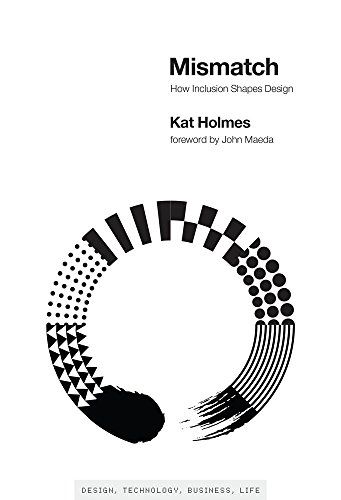
Nova: Absolutely, Atlas. And it’s a concept brilliantly explored across two pivotal works we’re diving into today: Kat Holmes’ "Mismatch: How Inclusion Shapes Design" and Daniel Kahneman’s seminal "Thinking, Fast and Slow."
Atlas: Ah, Kahneman! The Nobel laureate who basically mapped out how our brains often trick us. And Kat Holmes, whose work at Microsoft truly put inclusive design on the map. I remember reading about her insights emerging from the practical challenges of making technology accessible. It’s fascinating how those two ideas intertwine.
Nova: Exactly. Holmes' work, deeply rooted in her experience with inclusive design, really shows us how embracing human diversity isn't just a moral imperative, but a strategic advantage for innovation. And Kahneman, for his part, gave us the scientific framework to understand we often fail to see that diversity in the first place, with his groundbreaking research on cognitive biases. We're talking about how our own minds, and the very concept of an 'average user,' can create blind spots in design, and how to actively overcome them.
Atlas: So, it's about peeling back the layers of our own perception to find something deeper. I like that. It resonates with my own drive to understand the 'why' behind things, whether it's a scent or a system.
The Blind Spot: Why Our Intuitions Fail Us in Design
SECTION
Nova: Precisely. Let's start with that initial claim: the danger of designing for yourself or the 'average' user. As designers, we’re often taught to build empathy, to understand our users. But what if our very brains are subtly sabotaging that effort? Kahneman helps us understand this through his dual-system thinking.
Atlas: Right, System 1 and System 2. The fast, intuitive, emotional brain versus the slow, deliberate, logical one.
Nova: Exactly. Our System 1 is brilliant for quick decisions – recognizing faces, reacting to danger. It's our autopilot. But it's also a master of shortcuts, heuristics, and unfortunately, biases. When we design, especially under pressure, our System 1 often takes over. We unconsciously project our own experiences, preferences, and abilities onto our users.
Atlas: So, are you saying our brains are actually wired to make us designers if we're not careful? That feels almost counterintuitive. I mean, isn't intuition part of creativity?
Nova: It is, but it's a double-edged sword. Think of a designer creating a new mobile banking app. Their System 1 might tell them, "Everyone uses their thumb to navigate, everyone has perfect vision, everyone understands these icons because do." They might intuitively design tiny, aesthetically pleasing buttons at the bottom of the screen, assuming a certain level of dexterity and visual acuity.
Atlas: I can already see where this is going. That designer, who is probably young, tech-savvy, and has great eyesight, isn't thinking about someone like my aunt who has arthritis and struggles with fine motor skills, or my friend who's colorblind and can't differentiate between two critical status indicators if they're just different shades of red and green.
Nova: Precisely! Imagine your aunt trying to hit that tiny transfer button while holding her phone with one hand on a bumpy bus ride. The buttons are too small, the contrast is too low, the haptic feedback is non-existent. She struggles, gets frustrated, and maybe even gives up. The app, designed with the best intentions for "everyone," has inadvertently excluded her because the designer's System 1 operated within its own comfortable bubble.
Atlas: That's a great example. It's not just a minor inconvenience; it's a complete breakdown of the user experience. And it highlights how our 'fast thinking' truly sabotages a design, not out of malice, but out of an unexamined default setting. It's like building a beautiful, complex machine, but forgetting that not everyone has the same fuel type.
Nova: What's even more interesting is how this 'blind spot' extends beyond physical abilities to cognitive biases. We might assume users have unlimited attention spans, or that they'll always read every instruction. But Kahneman shows us our brains are constantly trying to conserve energy. If a design requires too much 'System 2' thinking – too much effort, too many steps – users will simply disengage.
Atlas: That makes me wonder, how many times have I, as a designer, unconsciously assumed a user's context or cognitive load based on my own? It's like we're constantly trying to build order, but if we're not careful, that order is only accessible to a select few.
Designing for the Edges: Unlocking Innovation Through 'Mismatch' Empathy
SECTION
Nova: And that naturally leads us to the second key idea we need to talk about: if our intuitive 'fast thinking' creates these blind spots, how do we actively engage our 'slow thinking' and a deeper kind of empathy to overcome them? This is where Kat Holmes' concept of "Mismatch" becomes incredibly powerful.
Atlas: So, it's about actively seeking out the opposite of that 'average user' assumption?
Nova: Absolutely. Holmes defines "mismatch" as the gap between human diversity and design. It’s not about a person being disabled, but about the creating a disability through its exclusion. And her radical insight is that by designing for these so-called 'edge cases,' for those often excluded, you don't just help them; you actually unlock better, more innovative solutions for.
Atlas: That's fascinating. So, it's not just about being 'nice' or 'inclusive,' it's actually a strategy for? It feels almost like a design hack – find the most extreme constraint, and that's where the most elegant solution emerges.
Nova: Precisely. Let's take a classic example: the curb cut. Sidewalks used to end abruptly, making it impossible for someone in a wheelchair to cross the street independently. The initial design of the curb cut was a direct response to this obvious 'mismatch' for wheelchair users. It was a specific solution for a specific, excluded group.
Atlas: I'm picturing it now. A simple ramp where the sidewalk meets the street. A straightforward solution to a clear problem.
Nova: But here's the magic: once those curb cuts became commonplace, who else benefited? Parents pushing strollers, delivery drivers with hand trucks, travelers with rolling luggage, cyclists, pedestrians with temporary injuries, even kids on skateboards. What started as an 'edge case' solution became a universal improvement, making cities more navigable and accessible for countless people who weren't initially the target.
Atlas: Wow. That's actually really inspiring. It completely flips the script. Instead of trying to design for the broadest, most generic middle, you focus on the most specific, most challenged user, and that ends up expanding the reach exponentially. It's like finding the deepest point in a river to understand its entire current.
Nova: Exactly! It's a fundamental shift in mindset. Instead of starting with "How can I design for the average person?" you ask, "Who is currently being excluded by this design? What are their unique challenges? How can I design for?" And often, that leads to a solution that wasn't even considered when focusing on the average.
Atlas: So, how do we, as designers, actively find these 'edges' instead of just assuming we know them? It feels like it requires a different kind of empathy, a more active, almost investigative empathy.
Nova: It absolutely does. It means moving beyond surveys and focus groups that often capture the 'average,' and actively seeking out diverse perspectives. It means spending time in the shoes of someone with a different physical ability, a different cultural background, a different cognitive processing style. It means observing not just they do, but they struggle, where the 'mismatches' occur.
Atlas: That resonated with me. I've always been drawn to understanding the subtle cues, the 'scent' of a user's frustration, if you will. It's about connecting with the human element, not just the pixels. Designing for the edges, then, is about building a system that can gracefully accommodate the unexpected, the nuanced, the diverse. It’s about creating a harmonious order that doesn’t exclude.
Synthesis & Takeaways
SECTION
Nova: And that's really the profound insight from both Kahneman and Holmes. Our intuition, our 'fast thinking,' is a powerful tool, but it's also prone to blind spots. True innovation, true empathy in design, comes from consciously engaging our 'slow thinking' to challenge those assumptions and actively seek out the 'mismatches' in the world.
Atlas: It's about moving from a reactive design process, where we fix problems after they arise for some users, to a proactive one, where we anticipate and design for that human diversity from the very beginning. The curb cut example is so clear – it wasn't just about making cities more accessible for some; it made them better for everyone.
Nova: It's a continuous journey of understanding and adaptation, not a checklist. It's recognizing that the human experience is infinitely varied, and our designs should reflect that richness, not flatten it into an imagined average. The real impact is not just on individual products, but on fostering a more connected, equitable, and ultimately, more innovative world.
Atlas: That's such a hopeful way to look at it. It transforms a perceived limitation into a creative opportunity. So, for our listeners, especially designers out there, think about a recent design decision you made. Who might be unintentionally excluded or inconvenienced by it? How could you actively seek out those 'edge' perspectives and turn a 'mismatch' into a moment of true design brilliance?
Nova: This is Aibrary. Congratulations on your growth!