

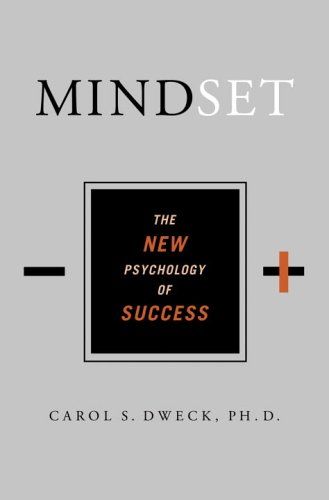
Mindset
Introduction: The Secret Architecture of Success
Introduction: The Secret Architecture of Success
Nova: Welcome to Aibrary, the show where we dissect the ideas that shape our world. Today, we are diving deep into a concept so pervasive it’s changed how parents talk to kids, how CEOs lead teams, and how we view our own potential: Carol Dweck’s 'Mindset: The New Psychology of Success.'
Nova: : That title sounds huge, Nova. I feel like I’ve heard the term 'growth mindset' everywhere—in corporate training, in school newsletters. But what is the actual, fundamental premise Dweck is laying out? Is it just about trying harder?
Nova: That’s the perfect starting point, because the common understanding often misses the nuance. Dweck, a Stanford psychologist, argues that our success isn't just about our talent or intelligence—those fixed qualities we think we’re born with. It’s about the underlying we hold about those qualities. She boils it down to two fundamental mindsets: Fixed and Growth.
Nova: : Fixed versus Growth. It sounds like a binary switch, but I imagine the reality is far more complex. Why should our listeners care about which one they lean toward? Does it really dictate life outcomes?
Nova: Absolutely. Dweck’s research suggests this belief system acts like a self-fulfilling prophecy. If you believe your intelligence is a fixed trait—you either have it or you don't—you approach challenges completely differently than someone who believes intelligence is something you cultivate. It’s the architecture of how we handle setbacks, and that’s where the real drama of life happens.
Nova: : So, we’re not just talking about being optimistic; we’re talking about a fundamental psychological operating system that dictates our response to adversity. I'm ready to unpack this. Let’s start by clearly defining these two operating systems.
Key Insight 1: Defining the Core Dichotomy
The Two Operating Systems: Fixed vs. Growth
Nova: Let’s paint a picture. Imagine two students, Alex and Ben, both get a B- on a difficult math test. Alex, operating from a fixed mindset, immediately thinks, 'I’m just not a math person. I hit my limit.' For Alex, the B- is proof of a permanent lack of ability. They might hide the test or feel shame.
Nova: : That’s the trap, right? The fixed mindset sees the result as a verdict on their inherent worth or talent. What does Ben, with the growth mindset, see?
Nova: Ben sees the B- and thinks, 'Okay, my current strategy for studying this material didn't work. I need to spend more time on the problem sets, or maybe I need to ask the teacher for clarification on these specific concepts.' For Ben, the B- is data, not destiny. It’s a temporary state that effort and strategy can change.
Nova: : That’s a powerful distinction. In the fixed mindset, challenge is a threat because it exposes perceived inadequacy. If I’m inherently smart, I shouldn't to struggle. But in the growth mindset, struggle is the to getting smarter. Dweck emphasizes that people with a fixed mindset often avoid challenges entirely to protect their image of being naturally gifted.
Nova: Exactly. And this plays out everywhere. In the fixed mindset, effort is seen as a negative signal. If you have to try hard, it means you weren't naturally good enough in the first place. Think about the brilliant athlete who quits when they face their first serious injury because they equate struggle with weakness.
Nova: : Whereas the growth mindset champion sees effort as the necessary fuel. I read that in the workplace, this manifests as resistance to feedback. Someone with a fixed mindset hears constructive criticism as, 'You are fundamentally flawed at this job,' leading them to become defensive or shut down.
Nova: Precisely. And the fixed mindset person often views the success of others as a direct threat to their own standing. They might downplay a colleague’s achievement or feel competitive rather than inspired. The growth mindset person, conversely, sees a successful peer as a source of learning—'If they can do it, I can learn how they did it.' It shifts the entire social dynamic from zero-sum competition to collaborative learning.
Nova: : So, if we summarize the fixed mindset reaction to difficulty: avoidance, defensiveness, seeing effort as a sign of weakness, and feeling threatened by others' success. It sounds exhausting, constantly having to prove something you believe is static.
Nova: It is. And the beautiful thing Dweck discovered is that these mindsets aren't permanent labels. They are. You might have a growth mindset about your cooking skills but a fiercely fixed mindset about your public speaking ability. The goal isn't to be 100% growth all the time, but to recognize when the fixed voice creeps in and consciously choose a growth response.
Nova: : That’s a crucial point. It’s not about labeling people; it’s about recognizing the internal monologue. If I’m constantly worried about looking stupid, that’s my fixed mindset running the show. If I’m excited about the chance to learn something new, even if I fail initially, that’s the growth engine kicking in. This leads us perfectly into how we actually that growth engine.
Key Insight 2: Cultivating Resilience Through Feedback
The Language of Growth: Praising Process Over Talent
Nova: One of the most actionable takeaways from the book revolves around praise. We all want to encourage people, especially children, but Dweck found that the we praise can inadvertently lock people into a fixed mindset.
Nova: : I remember this vividly. Telling a child, 'You are so smart!' feels like the ultimate compliment, right? It validates their inherent quality.
Nova: It does, but Dweck’s research shows that praising intelligence or talent—the fixed traits—actually makes children fragile when they encounter difficulty later. They attribute success to something they can’t control, so when they fail, they think they’ve lost that smartness.
Nova: : So, the compliment backfires. What is the growth-oriented alternative? I recall something about praising the journey.
Nova: Exactly. The growth mindset thrives on praising the. Instead of 'You are so smart for getting an A,' the growth-oriented feedback is, 'I am so impressed by how you stuck with that difficult problem set,' or 'Your strategy of breaking the project into smaller steps really paid off.' We are praising effort, strategy, focus, perseverance, and improvement.
Nova: : That makes so much sense. It connects the positive outcome directly to controllable actions. It’s teaching them the mechanism of success, not just celebrating the result. It’s like giving them the recipe instead of just serving them the cake.
Nova: A perfect analogy. And this applies to business, too. If a manager only praises the salesperson who closed the biggest deal, they reinforce the fixed idea that only top performers matter. A growth-oriented manager praises the team member who tried three new outreach methods, even if they didn't convert, because those methods might lead to success next quarter.
Nova: : I’m thinking about the concept of 'Not Yet.' I’ve seen this used in classrooms, and it’s brilliant. If a student says, 'I can’t do algebra,' the teacher responds, 'You can’t do algebra.' That single word, 'yet,' transforms a statement of finality into a statement of temporary status.
Nova: 'Yet' is the growth mindset superpower. It implies a future state of mastery is attainable. It’s a linguistic tool that reframes failure as a temporary waypoint on the learning curve. It’s about embracing the messy middle ground where real learning occurs.
Nova: : It sounds like the core message here is that we need to shift our focus from successful to successful. And that becoming requires embracing the struggle, which is something we often try to shield ourselves and others from.
Case Study: Resilience and Organizational Culture
Mindsets in the Arena: Business and Innovation
Nova: Let’s move this out of the classroom and into the high-stakes world of business. Dweck argues that organizational culture is deeply influenced by the dominant mindset of its leadership. When leaders operate from a fixed mindset, what happens to innovation?
Nova: : If the leadership believes their company’s success is due to their 'genius' or their 'unique market position'—a fixed trait—they become risk-averse. They won't want to try anything that might expose that genius as fallible. They’ll stick to what worked last year.
Nova: Precisely. And that’s a death sentence in a rapidly changing market. We see case studies where companies that embrace a growth mindset foster environments where intelligent risk-taking is encouraged. They understand that failure in an experiment is just an expensive, but necessary, data point for future success. They treat setbacks as learning opportunities, not career-ending events.
Nova: : I recall reading about how this impacts employee development. In a fixed culture, high-potential employees might be pigeonholed early on. If they are labeled the 'star coder,' they might never be given a chance to lead a project outside of coding, because management fears they might fail at leadership.
Nova: That’s the subtle tyranny of the fixed mindset in HR. The growth mindset demands that we see potential everywhere and create pathways for development, even if it means temporary dips in performance while someone learns a new domain. It’s about valuing the over the current snapshot.
Nova: : What about dealing with market disruption? If a competitor suddenly releases a game-changing product, the fixed mindset organization panics, blames external factors, or tries to sue them. How does a growth mindset organization react?
Nova: They pivot faster. They analyze the competitor succeeded, not just they succeeded. They ask, 'What did they learn that we missed?' They look inward at their own processes and say, 'We need to develop a new strategy for X, Y, and Z.' It’s about agility born from the belief that they develop the necessary new skills.
Nova: : It sounds like the growth mindset is the psychological underpinning of true organizational resilience. It’s the difference between a company that weathers a storm because it was built on solid rock, versus a company that weathers a storm because it learned how to build a better boat while sailing through it.
Nova: That’s a fantastic way to put it. The growth mindset doesn't prevent storms, but it equips the crew with the belief that they can learn to navigate any sea. It’s about cultivating that internal belief in plasticity, whether you’re an individual trying to learn Python or a Fortune 500 company trying to master AI integration.
Key Insight 4: When Growth Goes Wrong
The Fine Print: Criticisms and Misinterpretations
Nova: Now, we have to address the elephant in the room. Any wildly popular psychological concept eventually faces scrutiny. What are the main criticisms leveled against the growth mindset theory?
Nova: : The most significant one I encountered is that it can be oversimplified to the point of being meaningless. People hear 'praise effort' and they just praise effort, even if the effort is misdirected. If a student spends ten hours staring blankly at a textbook without using effective study strategies, praising that 'effort' is actually counterproductive.
Nova: That’s the danger of misapplication. Dweck herself has noted that growth mindset isn't just about effort; it’s about effort strategy, seeking help, and persistence. If you only praise effort, you’re still falling into a fixed trap—the trap of believing that effort alone, regardless of outcome or method, is the sole measure of worth.
Nova: : Right. It becomes 'praise the process' as a mantra, detached from the actual learning mechanism. Another criticism I saw was that it can ignore systemic issues. If a student is in an underfunded school district with overworked teachers, telling them to adopt a growth mindset feels tone-deaf. It puts the entire burden of success onto the individual’s belief system.
Nova: That’s a very fair and important critique. The growth mindset is a powerful tool for individual agency, but it is not a substitute for structural equity. Belief doesn't magically conjure better resources or dismantle systemic barriers. It’s a necessary condition for individual improvement, but not a sufficient condition for universal success.
Nova: : So, we must remember that the growth mindset is about how we to the reality we are given, not a tool to pretend that reality is perfectly fair or easy. It’s about maximizing potential within constraints, not eliminating the constraints themselves.
Nova: Exactly. And there’s also the concern that it doesn't guarantee success. As one source noted, you can believe you can improve all you want, but if you lack the foundational skills or the opportunity to practice those skills, belief alone won't get you to the top tier. It’s the difference between believing you can run a marathon and actually training for one.
Nova: : It seems the key takeaway from the criticism section is balance. We embrace the power of belief to change our approach, but we must remain critically aware of the external factors and ensure our application of the concept is sophisticated—praising strategy and learning, not just mindless exertion.
Conclusion: Choosing Your Next Step
Conclusion: Choosing Your Next Step
Nova: We’ve covered a lot of ground today, moving from the foundational difference between believing talent is static versus malleable, to how that belief shapes our reactions to failure and success.
Nova: : It’s clear that Carol Dweck has given us a powerful lens. The most resonant idea for me is recognizing that the fixed mindset is often driven by fear—the fear of being judged as inadequate. The growth mindset is driven by curiosity and the desire for mastery.
Nova: To synthesize our key takeaways: First, identify your fixed triggers. When do you feel defensive or want to quit? That’s your fixed voice speaking. Second, practice process praise—focus feedback on effort, strategy, and perseverance, not just innate talent. And third, embrace the power of 'yet.' Reframe every current limitation as a temporary state.
Nova: : And for our listeners looking to implement this immediately, I suggest this: The next time you face a genuine challenge—a difficult email, a complex project, a skill you’ve avoided—don't ask, 'Am I good enough for this?' Ask, 'What is the first small strategy I can employ to learn my way through this?'
Nova: That shift in questioning is everything. It moves you from a state of judgment to a state of action. The Mindset book isn't just about psychology; it’s a blueprint for continuous self-improvement in every domain of life. It reminds us that the most important quality we possess isn't our current talent, but our capacity to develop new ones.
Nova: : It’s a powerful message that we control the narrative of our own development. Thank you for guiding us through Dweck’s essential work today, Nova.
Nova: My pleasure. Keep questioning your assumptions about what you can and cannot do. This is Aibrary. Congratulations on your growth!