

Your Inner Critic is a Lie: Cultivating Resilience for Breakthroughs in Agent Engineering.
Golden Hook & Introduction
SECTION
Nova: Atlas, quick. I say 'inner critic,' you give me the first word that comes to mind.
Atlas: Useless.
Nova: Impostor syndrome.
Atlas: Annoying.
Nova: Agent engineering.
Atlas: Breakthrough.
Nova: Exactly. Now, what if I told you those first two words, 'useless' and 'annoying,' are actually holding back the third, that breakthrough?
Atlas: Oh, I see where you’re going with this. That’s a bold claim, especially for our listeners who are knee-deep in complex Agent systems.
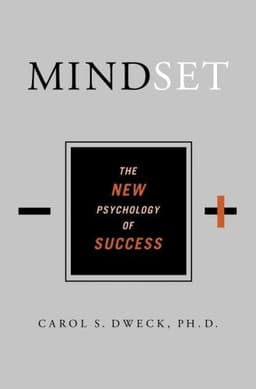
Nova: It absolutely is. And today we're tackling that very idea through the lens of two foundational works: Carol Dweck's 'Mindset' and Angela Duckworth's 'Grit.' Both authors, in their own groundbreaking research, unveiled how our internal beliefs profoundly shape our capacity for extraordinary achievement, not just in life, but critically, in high-stakes fields like Agent engineering.
Atlas: And these aren't just feel-good books, right? They’re backed by decades of rigorous psychological study, revealing surprisingly simple truths that have reshaped education, business, and even sports. Dweck’s work, for instance, has been cited thousands of times and profoundly influenced how we think about learning and potential. Duckworth's insights, similarly, moved beyond raw talent to show what truly drives long-term success.
Nova: Precisely. They’re not about wishing away challenges, but about rewiring how we perceive and respond to them. And for anyone building intelligent agents, where the problems are often novel and the solutions aren't in any textbook, that internal wiring is everything. Let's start with Dweck's profound distinction, shall we?
The Power of the Growth Mindset in Agent Engineering
SECTION
Atlas: Okay, so the inner critic, the one that whispers, "You're not good enough," or "This Agent system is too complex for you." Where does that even come from, and how does Dweck suggest we silence it?
Nova: That voice often stems from what Dweck calls a 'fixed mindset.' It's the belief that our intelligence, our abilities, our talents, are static, carved in stone. If you believe you have a fixed amount of intelligence for, say, designing a multi-agent orchestration layer, then every mistake, every bug, every failed test, becomes proof that you're just not smart enough. It’s a direct attack on your inherent capability.
Atlas: Whoa. So it’s not just about feeling bad, it’s about actively hindering your ability to learn and adapt? For our listeners who are architects, constantly pushing the boundaries of what Agent technology can do, that sounds like a catastrophic belief system.
Nova: It truly is. Imagine two Agent engineers, both facing a brand-new, incredibly complex challenge: designing a truly autonomous decision-making Agent that needs to operate in unpredictable real-world scenarios. Engineer A, with a fixed mindset, hits a wall. The initial design fails. The inner critic screams, "See? You're not cut out for this cutting-edge stuff." What happens next? They might give up, or stick to what's safe, or blame external factors.
Atlas: I can totally see that. For someone in a high-pressure role, where performance is constantly being evaluated, it feels safer to just stick to known patterns.
Nova: Exactly. Now, Engineer B, with a growth mindset, faces the exact same failure. But their internal narrative is different. They think, "Okay, this didn't work. What can I learn from this? Where can I iterate? What new algorithms or architectures do I need to explore?" They understand that their abilities aren't fixed; they can be developed through effort, through learning, through embracing the struggle.
Atlas: That’s a fundamentally different approach. It’s like the bug isn't a judgment on them, but a puzzle to solve.
Nova: Precisely. The fixed mindset sees effort as a sign of low ability—"If I have to work hard, it means I'm not smart." The growth mindset sees effort as the path to mastery—"The harder I work, the smarter I become." This isn't just a feel-good philosophy; Dweck's research, especially in educational settings, shows how students with a growth mindset outperform those with a fixed mindset, particularly when faced with difficult material. They persist longer, learn more deeply, and ultimately achieve more.
Atlas: So, for an Agent engineer, shifting to a growth mindset means viewing every failed deployment, every unexpected Agent behavior, every late-night debugging session, not as a personal indictment, but as a crucial data point for improvement. It sounds like it’s about building a more resilient internal operating system.
Nova: That’s a perfect analogy, Atlas. You're building a more robust internal architecture that can handle the inevitable errors and reconfigurations inherent in innovation. The growth mindset transforms challenges into opportunities for system upgrades, not system crashes.
Grit and Perseverance: The Engine of Agent Engineering Success
SECTION
Atlas: Okay, so you’ve got this growth mindset, you’re ready to learn and adapt. But what happens when the learning curve is endless, the project is years long, and the setbacks just keep coming? That's where I imagine Angela Duckworth's work on 'Grit' comes in. Because a resilient internal OS still needs fuel, right?
Nova: Absolutely. A growth mindset gets you started, but grit keeps you going. Duckworth defines grit as passion and perseverance for long-term goals. It's not just about being able to learn from failure; it's about having the stamina and the unwavering focus to pursue difficult goals over months, even years, despite obstacles, plateaus, and even boredom.
Atlas: I mean, in Agent engineering, that's practically the job description. You’re often working on cutting-edge problems with no clear solutions, requiring deep dives into complex algorithms, distributed systems, and often, completely new paradigms. It's not always glamorous.
Nova: Exactly. Think of a team developing a novel multi-agent system for, say, optimizing a global logistics network. This isn't a two-week sprint. This is a multi-year endeavor involving countless iterations, unexpected data complexities, and the constant need to integrate new research. A team member might be brilliant, incredibly talented, but if they lack grit, they might get frustrated after the third major redesign and jump to a 'sexier' project.
Atlas: I’ve seen that happen. The initial excitement wears off, and the sheer grind of making something truly robust and scalable sets in.
Nova: Contrast that with an engineer who might not have been the 'star' in their initial coding boot camp, but they possess immense grit. They are deeply passionate about the problem of logistics optimization, and they combine that passion with relentless perseverance. They're the ones who will stay up late dissecting obscure academic papers, meticulously refactoring code, and patiently debugging elusive concurrency issues. They might not be the fastest, but they are the most consistent and the most committed.
Atlas: So grit isn't just brute force or stubbornness, then? It’s a directed, sustained effort aligned with a core purpose.
Nova: It is. Duckworth emphasizes that grit isn't just about working hard; it's about working hard. This passion provides the underlying motivation to persevere through the inevitable drudgery and setbacks. It's about strategic patience, not blind persistence. For an Agent architect, this means having a genuine fascination with creating intelligent, autonomous systems, and then systematically chipping away at the technical and conceptual challenges.
Atlas: That makes sense. It’s like, knowing you’re building this complex Agent system, the value it will create, gives you the strength to push through when the documentation is sparse or the integration is a nightmare. It’s not just about the code; it’s about the ultimate impact.
Nova: Precisely. And what's fascinating is how Dweck's growth mindset and Duckworth's grit intersect. A growth mindset provides the belief that you improve, that your efforts yield results. Grit provides the sustained effort and direction to the improving. Together, they create an incredibly powerful engine for breakthrough innovation, especially in fields like Agent engineering where the landscape is constantly shifting and mastery is a continuous journey.
Synthesis & Takeaways
SECTION
Nova: So, bringing it all together, Atlas, what we're really talking about here is how your emotional state, your internal operating system, directly impacts your professional output, especially when you're building the next generation of intelligent agents.
Atlas: It’s a profound connection, really. It’s not enough to be brilliant; you also need the internal architecture—the mindset and the grit—to deploy that brilliance consistently and resiliently. Without it, even the most innovative ideas can wither under the weight of self-doubt or the sheer grind of development.
Nova: Exactly. Nova's Take from our content today is that these insights fundamentally connect your emotional state to your professional output, empowering you to approach Agent engineering challenges with greater confidence and persistence. It’s about building a resilient inner architecture to match the robust external architectures you create.
Atlas: So this isn't just about personal well-being, though that's a huge benefit. It’s a strategic advantage. It's about enhancing your capacity for value creation and achieving those breakthroughs in Agent engineering that you're driven by. It’s the difference between an Agent system that just works, and one that truly revolutionizes.
Nova: And that's the real power. It's not about being immune to challenges or self-doubt. It’s about having the mental tools to navigate them, to learn from them, and to persist through them. It transforms the process from a gauntlet of judgment into a continuous journey of growth and discovery.
Atlas: Absolutely. So, for our listeners, whether you're debugging a complex Agent decision tree or architecting a scalable multi-agent platform, consider this: How might actively applying a growth mindset to its challenges, and a renewed sense of grit to its long-term vision, fundamentally change your experience and its ultimate success?
Nova: This is Aibrary. Congratulations on your growth!