

Unlocking Your Inner Potential: The Power of Mindset
Golden Hook & Introduction
SECTION
Nova: You know, Atlas, I was reading something the other day that really stuck with me. It said that most people are walking around with an operating system in their heads that hasn't been updated in years, maybe decades.
Atlas: Whoa, an operating system? That’s a fascinating analogy. Are we talking about mental software here? Because if my brain is running on Windows 95, I might need an immediate upgrade.
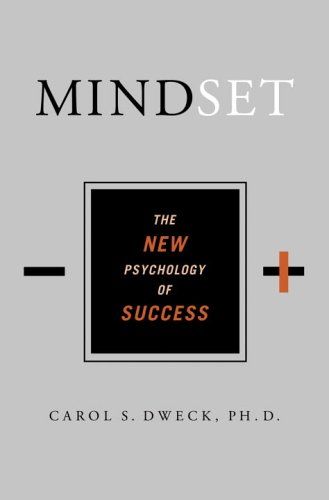
Nova: Exactly! And today, we're diving into how to get that upgrade, drawing insights from two phenomenal books: Carol S. Dweck's groundbreaking "Mindset," and James Clear's incredibly practical "Atomic Habits." Dweck, a Stanford University psychologist, really shifted the conversation around potential, showing us that our core beliefs about our abilities aren't just personality quirks, but powerful drivers of our destiny. Her work, which has been widely praised and highly rated by both academics and general readers, really unpacks the difference between seeing your intelligence as fixed or as something that can grow.
Atlas: That makes perfect sense. I mean, it’s not just about what you do, but how you about what you do. It's like, you can have the best hardware, but if your OS is buggy, you’re still going to crash. I’m curious, what’s the core difference between these two "mindsets" that Dweck talks about?
The Architecture of Belief: Mindset as an Operating System
SECTION
Nova: Well, Dweck's work really illuminates two primary mindsets: fixed and growth. Someone with a fixed mindset believes their intelligence, talents, and abilities are static. They have a certain amount, and that's it. It’s like a finite resource.
Atlas: Oh, I know that feeling. It’s that voice that tells you, "I'm just not good at math," or "I'm not a creative person." It feels very limiting, almost like a label you can't peel off.
Nova: Exactly. And because of that belief, people with a fixed mindset tend to avoid challenges, fearing failure will expose their perceived limitations. They might shy away from learning new things if it means struggling, because struggling implies they're not smart enough. Praise for them often focuses on their inherent talent, which paradoxically makes them more fragile when they face difficulties.
Atlas: That’s actually really inspiring, that idea that struggle isn't a sign of inadequacy, but a necessary part of growth. I imagine a lot of our listeners, especially those in demanding fields, might feel that pressure to always appear competent, which could inadvertently push them towards a fixed mindset. How does Dweck’s research support this?
Nova: Dweck’s research, spanning decades, shows that it's not just about effort, but about the of effort. She conducted studies where children were praised in different ways. Some were praised for their intelligence, others for their effort. The kids praised for intelligence often chose easier tasks later, wanting to protect their "smart" label. Those praised for effort, however, embraced harder challenges, seeing them as opportunities to learn. It’s a powerful demonstration of how our beliefs about our abilities fundamentally shape our approach to challenges and setbacks.
Atlas: So you're saying that even the way we're praised can steer us towards one mindset or the other? That’s profound. It means it’s not just an internal thing, but also influenced by our environment and how others perceive us.
Nova: Absolutely. And conversely, a growth mindset is the belief that your abilities can be developed through dedication and hard work. Talent is just a starting point. It's about seeing challenges as opportunities to grow, and failures as valuable lessons.
Atlas: That gives me chills. So, it's not about being the smartest person in the room, but about being the most willing to learn and evolve. I can see how that would lead to a completely different trajectory in life. But how does this connect with habits? Because having a growth mindset is one thing, but actually the work to grow, that's where habits come in, right?
Tiny Steps to Grand Shifts: Habits as Applications
SECTION
Nova: Precisely, Atlas. If mindset is your operating system, then habits are the applications running on it. This is where James Clear's "Atomic Habits" comes in. Clear’s book, which has become a global bestseller and is celebrated for its actionable advice, isn't about grand, sweeping changes. It's about the cumulative effect of small, consistent actions. He argues that true change comes from tiny, often unnoticeable shifts that compound over time.
Atlas: So you're saying it's not about waking up one day and deciding to run a marathon, but about putting on your running shoes every day for five minutes? That sounds much less intimidating.
Nova: Exactly. Clear provides a practical framework based on four laws of behavior change: make it obvious, make it attractive, make it easy, and make it satisfying. He emphasizes designing your environment to support good habits and making bad habits invisible, unattractive, difficult, and unsatisfying. The book is filled with relatable examples, like the British cycling team that transformed from an underperforming group to Olympic champions by focusing on marginal gains—tiny improvements in every area, from nutrition to pillow choices.
Atlas: That’s a great example. It really highlights how these small, almost invisible changes can lead to monumental results. It's like the compound interest of self-improvement. But I’m curious, for our listeners who might be feeling overwhelmed by big goals, how do these "atomic habits" actually when you're trying to implement them? Is it just constant willpower?
Nova: Not at all. That’s what Clear argues against. Willpower is finite. Systems are sustainable. He talks about identity-based habits. Instead of saying, "I want to run a marathon," you say, "I am a runner." The focus shifts from what you want to achieve to who you wish to become. When you identify as a runner, making the choice to go for a run becomes aligned with your self-image, making it easier. It's about casting votes for the person you want to be with every small action.
Atlas: Wow, that’s so powerful. It moves beyond just the mechanistic act of doing something and connects it to a deeper sense of self. It speaks to that core desire for personal evolution that many curious learners have. So, if mindset is the belief system that enables growth, then atomic habits are the practical, daily steps you take to manifest that growth.
Nova: You've hit the nail on the head. My take, and what connects these two incredibly impactful books, is that your mindset is the operating system, and habits are the applications. Optimizing both creates a powerful feedback loop for continuous personal evolution. A growth mindset gives you the belief that you improve, and atomic habits provide the practical, achievable steps to.
Atlas: I can see how those two ideas are inextricably linked. You need the belief to even start trying, and you need the system to actually make progress. It's a holistic approach to self-improvement.
Synthesis & Takeaways
SECTION
Nova: So, to bring it all together, the profound insight here is that true personal transformation isn't about a single, monumental decision or a sudden burst of motivation. It’s about cultivating a deep-seated belief in your capacity to grow, as Carol Dweck illuminates, and then consistently taking tiny, deliberate actions that accumulate, as James Clear so brilliantly outlines. It’s about understanding that your beliefs are not fixed, and neither are your capabilities.
Atlas: That’s a wonderful way to put it. It’s a powerful reminder that our potential isn't some destination we arrive at, but a continuous journey of unfolding. It means every small choice, every tiny effort, every moment we choose curiosity over certainty, is a step towards a more evolved version of ourselves. For anyone out there feeling stuck or overwhelmed, this approach offers both the philosophical grounding and the practical roadmap to start making meaningful changes.
Nova: Absolutely. And if you take just one thing from today's discussion, let it be this: start small. Cultivate a growth mindset by actively seeking challenges, viewing failures as learning opportunities, and focusing on effort over innate talent. Then, start with one atomic habit this week, like reading for 10 minutes daily, or taking a five-minute walk. Observe its ripple effect. You might be astounded by the compound interest of these seemingly insignificant actions.
Atlas: That’s a truly actionable takeaway. It democratizes self-improvement, making it accessible to everyone, regardless of where they are on their journey. It proves that lasting change isn't about being perfect; it's about being consistent and believing in your own capacity for evolution.
Nova: This is Aibrary. Congratulations on your growth!