

Unlocking Deeper Learning: The Art of Student-Centered Engagement
Golden Hook & Introduction
SECTION
Nova: What if I told you that the very rewards we use to motivate students—gold stars, good grades, even money—are actually their desire to learn? Sounds counter-intuitive, right?
Atlas: Hold on, really? That goes against everything we’ve been taught since kindergarten! You get a sticker if you’re good, you get a good grade if you study hard. Are you saying we’ve been doing it all wrong?
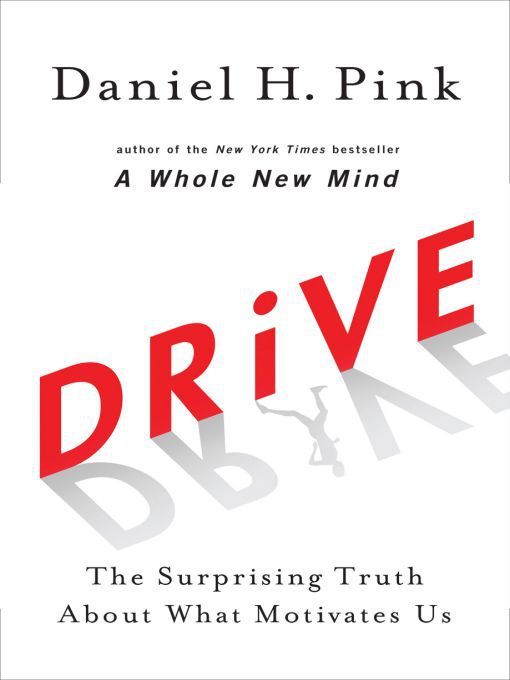
Nova: Well, not entirely wrong, but perhaps missing the deeper currents of human motivation. Today, we're diving into two groundbreaking books that fundamentally shift how we think about engagement, especially in learning. We're talking about "Drive: The Surprising Truth About What Motivates Us" by Daniel H. Pink, and "Mindset: The New Psychology of Success" by Carol S. Dweck.
Atlas: Oh, I've heard whispers about these! Pink, if I recall, was a former speechwriter who became a best-selling author by dissecting what truly makes us tick beyond the traditional carrot-and-stick. And Dweck, a Stanford psychologist, practically invented the modern understanding of how our beliefs about our own abilities shape everything.
Nova: Exactly! Both authors, from their distinct fields, converged on a similar truth: true engagement isn't about external rewards; it's about tapping into deep, internal drives. And that's where we start, Atlas, by questioning those very rewards.
Unleashing Intrinsic Motivation: The Power of Autonomy, Mastery, and Purpose
SECTION
Atlas: So you're saying money actually makes people creative? That sounds like a headline designed to make me spill my coffee. How does that even work when we're so conditioned to work for incentives?
Nova: It's a fascinating paradox that Pink illuminates with decades of behavioral science. He argues that for complex, creative tasks—the kind of tasks we want our students to master—external motivators can actually backfire. He illustrates this beautifully with something called the "candle problem."
Atlas: The candle problem? Sounds like a riddle.
Nova: It is, in a way. Researchers give participants a candle, a box of thumbtacks, and a book of matches. The task is to fix the candle to the wall so it doesn't drip wax onto the table.
Atlas: Okay, so a practical problem. My first thought is probably the most common one: melt the side of the candle and stick it to the wall.
Nova: Most people do. But that doesn't work well. The clever solution is to empty the box of thumbtacks, tack the empty box to the wall, and then place the candle the box. It requires a cognitive leap, thinking outside the literal box.
Atlas: That's brilliant! I would never have thought of that.
Nova: Now, here's where Pink's insight comes in. They ran this experiment with two groups. One group was simply told it was for research. The other group was offered money—a reward for being among the fastest to solve it.
Atlas: I'm guessing the money group crushed it, right? Faster, more efficient?
Nova: The exact opposite. The group offered money took, on average, to solve the problem.
Atlas: Whoa. That's incredible. Why?
Nova: The extrinsic motivation, the promise of money, actually narrowed their focus. It made them zero in on the obvious, direct path, hindering the creative, 'aha!' moment needed to see the box not just as a container for tacks, but as a potential platform. For tasks requiring creativity and conceptual thinking, the 'carrot-and-stick' approach often stifles the very ingenuity we're trying to foster.
Atlas: That's a profound insight, especially when we think about education. We're constantly incentivizing with grades, with scholarships, with praise for "getting the right answer." So you're saying those external pressures might actually be preventing students from truly engaging and thinking deeply?
Nova: Precisely. Pink identifies three intrinsic drivers that truly fuel us: Autonomy, the urge to direct our own lives; Mastery, the desire to get better and better at something that matters; and Purpose, the yearning to do what we do in the service of something larger than ourselves. When students feel they have a choice in what they learn, how they learn, and why it matters, that's when the magic happens.
Atlas: Okay, but how do you actually give students 'autonomy' in a structured classroom? It sounds a bit chaotic for educators who are already stretched thin. I imagine a lot of our listeners, especially those in high-stakes teaching environments, are thinking, "My curriculum is set, my tests are mandated. Where's the wiggle room?"
Nova: That's a fair question. It doesn't mean letting go of all structure. It can be as simple as offering choice in the format of a project, or letting students pick which book they read from a curated list, or even just giving them a voice in classroom rules. It’s about cultivating that internal sense of control, even within boundaries. It’s about moving beyond mere compliance.
Cultivating Resilience: Embracing the Growth Mindset in Learning
SECTION
Nova: And this idea of striving for mastery, of wanting to improve, is deeply connected to our next big insight: the power of our mindset. It's the groundbreaking work of Carol Dweck, and it’s about how our fundamental beliefs about our abilities shape our entire approach to learning and life.
Atlas: Oh, I've heard of the growth mindset! It’s become quite a buzzword, but I'm curious about the deeper implications. What's the core distinction Dweck makes?
Nova: Dweck spent decades researching why some people thrive on challenges while others crumble. She found that it largely boils down to whether you have a "fixed mindset" or a "growth mindset."
Atlas: Give me an example. How does this play out in real life for a student?
Nova: Imagine two students facing a difficult math problem. The student with a fixed mindset believes their intelligence is a fixed trait—they're either good at math or they're not. When they struggle, their internal voice might say, "I'm just not smart enough for this. I should give up." They see effort as a sign of weakness, or that they lack natural talent.
Atlas: Oh, I've been there! That internal voice, 'I'm just not smart enough.' It's like an invisible wall you hit.
Nova: Exactly. Now, the student with a growth mindset believes their abilities can be developed through dedication and hard work. When they struggle, their internal monologue shifts: "This is hard, but I can learn it. I need to try a different strategy, or ask for help." They see effort as the path to mastery, and mistakes as learning opportunities.
Atlas: That's actually really inspiring. It redefines failure not as an endpoint, but as feedback. But how does an educator actually a growth mindset, especially when students come in with years of fixed thinking? It’s not like you can just tell them, "Hey, have a growth mindset!"
Nova: It’s not. Dweck's research shows it's largely about we praise and provide feedback. Instead of praising intelligence, we should praise effort, strategy, and perseverance. This teaches students that their success comes from their actions, not some innate, unchangeable trait. It shifts the focus from the outcome to the process.
Atlas: That makes me wonder, could there be a downside to constantly pushing for a 'growth mindset'? I mean, sometimes things are genuinely difficult, and it's okay to struggle or even fail, and it's not always about 'not trying hard enough.' How do we balance resilience with realistic self-assessment?
Nova: That’s a thoughtful question. Dweck herself addresses this. It's not about denying reality or pretending effort alone guarantees success in every single instance. It's about approaching challenges with the that improvement is possible, and that even if a particular path doesn't work, there are always lessons to be learned and alternative strategies to explore. It's about the conviction that our capacity for learning and growth isn't static. It's about making the most of our potential.
Synthesis & Takeaways
SECTION
Nova: So, when we combine Pink’s insights on intrinsic motivation—autonomy, mastery, purpose—with Dweck’s growth mindset, we get a truly powerful recipe for deep, lasting engagement. It’s about nurturing that internal spark, rather than constantly trying to light it from the outside.
Atlas: So, it's not just about what we teach, but how we frame the entire learning experience. It's about designing for human nature, not against it. It's about understanding that deep, internal drives are the true engine of curiosity and persistence. For educators listening, what's one tiny, actionable step they could take this week?
Nova: Start small. Identify one area in your current teaching where you can offer more autonomy to students, even if it's just a small choice. Maybe it’s letting them choose how they present a project, or which topic they research from a list. That seemingly tiny shift can have a ripple effect, tapping into those intrinsic motivators.
Atlas: That’s a wonderful place to start. It’s about empowering others, helping them find their own powerful drives, and fostering that resilience we all need to tackle life's challenges. It's about creating an environment where learning isn't just a requirement, but a genuine adventure.
Nova: Absolutely. And that curiosity, that drive, it’s infectious. When we foster it in others, we often rekindle it in ourselves.
Atlas: What a phenomenal way to look at it. This is Aibrary. Congratulations on your growth!