

Unlock Your Hidden Edge: Why Mastering Your Inner Narrative Leads to Breakthroughs.
Golden Hook & Introduction
SECTION
Nova: What if everything you've ever been told about your inherent potential was fundamentally wrong? Not just a little off, but a complete misdirection that's holding you back from breakthroughs?
Atlas: Whoa. That's a bold statement right out of the gate, Nova. But honestly, as someone who sees leaders constantly pushing boundaries, constantly facing pressure to perform, the idea that we might be self-sabotaging our own potential is incredibly intriguing, and a little terrifying.
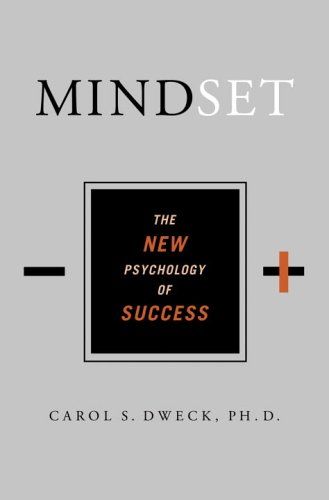
Nova: It’s a powerful thought, isn’t it? And today, we're dissecting the brilliant insights from Carol Dweck's seminal work, "Mindset." Dweck, a Stanford psychologist, spent decades researching why some individuals thrive on challenges while others crumble, revealing a profound truth about how our beliefs shape our destiny.
Atlas: I can definitely see how a book called "Mindset" would resonate with our listeners who are always looking for that strategic edge. What exactly did Dr. Dweck uncover that's so game-changing?
Nova: She essentially drew a line in the sand, showing us there are two fundamental ways we perceive our abilities: a fixed mindset and a growth mindset. And that distinction, Atlas, changes everything.
The Mindset Matrix: Fixed vs. Growth
SECTION
Nova: So, let's start with the fixed mindset. This is the belief that our intelligence, our talents, our abilities are static. They're carved in stone. You're either good at something, or you're not. And if you have this mindset, when you face a challenge, especially a tough one, your immediate instinct is often to avoid it.
Atlas: Hold on. For a strategic architect or a leader, isn't there an incredible pressure to appear competent? To always have the answers? I imagine that fixed mindset would be incredibly difficult to shake, because failure feels like a public declaration of inadequacy. How do you even begin to shift that deeply ingrained belief?
Nova: You've hit on the core tension there. A fixed mindset creates a fear of failure, because failure means proving you're smart, talented. It shuts down learning. But the growth mindset is the exact opposite. It's the belief that your abilities can be developed through dedication and hard work. That challenges are opportunities to learn and grow.
Atlas: Okay, so it’s not about ignoring setbacks, but seeing them as fuel for progress. That sounds great in theory, but can you give me an example that really illustrates this? Someone who faced a huge "you're not good enough" moment and used it to propel them forward?
Nova: Absolutely. Think about Michael Jordan. Famously, he was cut from his high school varsity basketball team. For someone with a fixed mindset, that’s it. "I'm not good enough for basketball." But Jordan's response wasn't to quit. The cause was that rejection, but his process was relentless practice. He’d wake up early, practice before school, stay late, focusing specifically on the skills he lacked. He took that perceived failure, that moment of being told he wasn't good enough, and transformed it into an obsessive drive to improve.
Atlas: Wow. The outcome, of course, is legendary. But it makes me wonder, how does that translate beyond the world of sports into, say, building legacies in business? Because in strategic planning, there are always setbacks, market shifts, unexpected challenges. How does a leader maintain that growth mindset when a multi-million dollar project hits a wall?
Nova: It's about reframing those walls not as dead ends, but as design flaws in the initial plan, or as new data points. Consider a tech CEO I know. They launched a product that completely flopped. Instead of attributing it to the team's incompetence, which would be a fixed mindset, they saw it as a learning opportunity. The process involved investing in retraining that very same team, analyzing where they went wrong, and then pivoting them to a new, innovative project based on those lessons. The outcome was a stronger, more adaptable team and ultimately, a successful new product line. That's a growth mindset in action, fostering sustainable growth within the organization.
Grit: The Unseen Engine of Enduring Success
SECTION
Nova: And speaking of relentless practice and pushing past setbacks, that brings us beautifully to our second core idea, one that builds directly on the growth mindset: the power of grit. This comes from Angela Duckworth, whose book, also titled "Grit," really dives deep into what makes some people achieve enduring success while others, often more talented, fall by the wayside.
Atlas: Hold on, so it's not just about working hard, it's about you're working hard and? For leaders building legacies, that feels incredibly relevant, but also incredibly difficult to maintain. How do you keep that fire lit when you're years into a monumental, challenging vision?
Nova: Exactly! Duckworth’s research highlights that grit isn't just about effort; it's about passion and toward very long-term goals. She found that grit is often a stronger predictor of success than innate talent. It’s the stamina you need for the marathon, not just the sprint.
Atlas: So talent isn't enough. That's actually really inspiring, because it means we all have a chance to cultivate this. But what does it look like in a real-world, high-stakes scenario?
Nova: Think about Jamie Dimon leading JPMorgan Chase during the 2008 financial crisis. The cause was an unprecedented financial meltdown, a global economic catastrophe. Many banks were collapsing, and the pressure to make short-term, reactive decisions was immense. But Dimon, with a deep sense of grit, maintained an unwavering focus on the bank's long-term stability and core principles. His process involved making tough, unpopular calls, not panicking, and systematically navigating the institution through the storm.
Atlas: That’s a powerful example of resilience. But maintaining that "sustained passion" when everything is burning down... how do you cultivate that? Is it a personality trait you're born with, or something you can build?
Nova: Duckworth argues emphatically that grit is a skill, a strategic muscle you can intentionally build. It’s not just about working hard, it's about deliberate practice – not just doing more, but doing. It involves targeted feedback, focused improvement, and a clear understanding of your "hierarchy of goals." That means having an ultimate, top-level goal, and then seeing how all your smaller, daily tasks contribute to that larger vision. It gives purpose to the perseverance.
Atlas: That makes sense. It’s about connecting the dots, seeing how every small effort serves that greater strategic foresight. That’s what helps you build legacies, even when the path is incredibly difficult.
Synthesis & Takeaways
SECTION
Nova: So, when we synthesize Dweck’s mindset and Duckworth’s grit, we see an incredibly powerful combination. A growth mindset gives you the fundamental belief that you improve, that challenges are opportunities. And grit provides the sustained passion and perseverance to actually on that belief, to put in the deliberate practice over the long haul.
Atlas: So, if I'm a leader trying to connect the dots and build legacies, it's about first believing I evolve, and then consistently applying that belief to the long-term vision, even when it's tough and you're surrounded by uncertainty. It’s about trusting your inner wisdom to guide that sustained effort.
Nova: Precisely. It’s about intentionally building those strategic muscles for enduring success. And a tiny step everyone can take today: identify one recent challenge you faced. Instead of automatically labeling it a 'failure,' reframe it as a 'learning opportunity' for future growth. Ask yourself: what specifically did I learn from that experience, and how can I apply it to my next challenge?
Atlas: That's a powerful and practical challenge. It's not just about thinking differently, but acting on it to build that muscle. A true strategic move for personal evolution, and carving out time for that kind of reflection is key.
Nova: Exactly. It's about making breakthroughs by mastering your inner narrative.
Atlas: I love that.
Nova: This is Aibrary. Congratulations on your growth!