

The Resilient Innovator: Cultivating Inner Strength Amidst Constant Change.
Golden Hook & Introduction
SECTION
Nova: We've all been told, "What doesn't kill you makes you stronger." It's that classic adage, right? But what if that's only half the story? What if some things actually to be stressed, to be challenged, to truly thrive and grow exponentially?
Atlas: Oh, I like that. That sounds rough, but… Wait, are you saying that the very things we try to protect ourselves from – the shocks, the unexpected chaos – could actually be our secret superpower? That feels counter-intuitive to everything we're taught about stability.
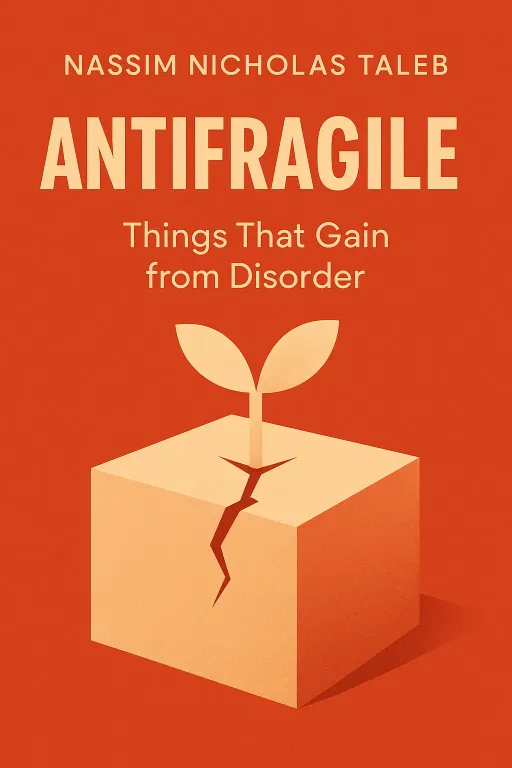
Nova: Absolutely! And that's exactly what we're diving into today, drawing heavily from two incredibly influential thinkers. First, Nassim Nicholas Taleb's groundbreaking work,. Taleb, a former options trader and scholar, really shook the academic and financial worlds by proposing a new category of being, beyond just robust or resilient. He essentially said, 'There's something that gains from disorder.'
Atlas: Okay, so it’s not just about surviving the storm, but coming out of it with more sails?
Nova: Precisely! And then we’ll pair that with Carol Dweck's transformative book,. Dweck’s research at Stanford fundamentally changed how we understand human potential, showing how our beliefs about our abilities dramatically impact our capacity to learn and grow. Together, these ideas push us beyond merely bouncing back, to actively bouncing.
Atlas: I can see that. For a lot of our listeners who are, say, leading teams or building products, the goal is often stability, predictability. But what does "beyond resilience" actually look like in practice?
Beyond Resilience: The Power of Antifragility
SECTION
Nova: Well, let's start with Taleb's core concept: antifragility. Imagine a system that doesn't just resist damage, or even recover from it, but actually with exposure to stressors, volatility, and uncertainty. Think about it like our bones. They don't just stay the same when you exercise; they get stronger. They need that beneficial stress.
Atlas: Right, like if you break a bone, it often heals back stronger than before. So, it's not just about enduring, but evolving? That's a great analogy. But how does that apply to something more abstract, like a business or a team? I imagine a lot of our listeners feel like their project teams are constantly facing crises, and the goal is just to the next one.
Nova: Exactly. And that's where "The Blind Spot" comes in. We often aim for stability, for smooth sailing, but the modern world demands more than just resilience. True strength comes from thriving on disorder, using volatility as a fuel for growth. Take the internet itself, for example. It wasn't designed to be perfect; it was designed to withstand nuclear attack. Individual nodes could fail, but the network as a whole would simply route around the damage. And in doing so, it became incredibly robust and, yes, antifragile. It evolved and grew of its ability to adapt to constant small failures.
Atlas: Wow. So, it wasn't built for perfection, but for imperfection and adaptation. That's a huge shift in perspective. But wait, looking at this from a collaborative architect's perspective, isn't that risky? In our desire for efficiency and control, don't we often try to remove all the 'stressors' that could make things antifragile? Like over-planning or avoiding any risk in a new product launch?
Nova: Absolutely. And paradoxically, that can make us more fragile. If you insulate something too much, it loses its ability to self-repair and strengthen. Think of a muscle that’s never used—it atrophies. For empathetic leaders building strong, connected teams, this isn't about throwing your team into chaos for chaos's sake. It's about understanding that a certain amount of beneficial friction, of challenges, is essential for growth. Like a team that never has to solve a difficult problem together will never truly understand its collective strength.
Atlas: That makes me wonder, then, for a team that's always striving for harmony, how do we differentiate between destructive chaos and this 'beneficial disorder'? Because I imagine a lot of leaders wouldn't want to intentionally introduce something that could cause stress.
Cultivating the Antifragile Mindset: From Challenge to Catalyst
SECTION
Nova: That's a perfect transition, because it leads us to the 'how.' If antifragility is the goal – gaining from disorder – how do we, as individuals and leaders, cultivate that within ourselves and our teams? This is where Carol Dweck's work on the growth mindset becomes incredibly powerful.
Atlas: Ah, the growth mindset. Seeing challenges as opportunities. I can see how that connects.
Nova: Exactly. A fixed mindset believes our abilities are static. So, a challenge is a threat to our perceived intelligence or skill. But a growth mindset understands that abilities can be developed through dedication and hard work. For an antifragile mindset, this means actively seeking out challenges, even small ones, not just enduring them. It’s about reframing discomfort, like difficult conversations, not as something to avoid, but as essential 'stressors' that build capability.
Atlas: So, embracing discomfort, like difficult conversations, isn't just about 'getting through it,' but actually a way to strengthen the team's 'muscles' for conflict resolution? That’s a powerful reframing for someone driven by a need for harmony and effective human connection. It's sustainable growth through intentional, beneficial friction.
Nova: Exactly! It’s about building a system, both individually and within a team, that learns from every 'oops' moment. Think of a software development team that intentionally runs "chaos engineering" experiments, injecting small failures into their system to see how it responds. Or a product design team that actively encourages a "red team" to tear apart a new prototype. They're not hoping for failure, they're the potential for failure to make their system stronger. It's simulated beneficial disorder.
Atlas: That’s a great example. So, it's not about being reckless, but being strategically uncomfortable. For our listeners leading teams, what's one small, intentional way they could introduce 'beneficial disorder' this week without causing a full-blown meltdown? Maybe in a brainstorming session, or even in seeking feedback?
Nova: A fantastic question for immediate application! One simple way is to actively solicit dissenting opinions in meetings. Instead of asking, "Does everyone agree?" ask, "Who disagrees, and why?" Or, if you're a leader, delegate a task you'd normally do to someone less experienced, knowing there might be some stumbles. That small 'stressor' for them, and for you letting go, can lead to immense growth and stronger systems in the long run. It’s about learning from the stressor, not just avoiding it.
Synthesis & Takeaways
SECTION
Nova: So, ultimately, antifragility isn't about avoiding failure, or even just surviving it. It's about designing our lives, our teams, and our strategies so that we actually learn and grow from volatility and uncertainty. It's moving from merely 'bouncing back' to genuinely 'bouncing forward,' becoming stronger and more capable with every unexpected turn.
Atlas: That’s actually really inspiring. So, this isn't about creating a cutthroat, high-stress environment, but about building stronger, more adaptable teams that can truly thrive, even when things get messy. It's about understanding that friction, when intentionally and thoughtfully applied, can be a pathway to deeper trust and more effective human connection, which is crucial for sustainable growth.
Nova: Exactly. The resilient innovator doesn't just weather the storm; they learn how to harness its energy. It's a profound shift in how we approach a world that will inevitably deliver shocks.
Atlas: I can definitely relate. That makes me wonder, where in your own work or personal life could you intentionally introduce a small amount of beneficial disorder to test and strengthen your systems? Think about the areas where you crave more stability, and consider if that stability is actually making you more fragile. It’s about finding that sweet spot where challenges become catalysts.
Nova: The potential for growth when we embrace that mindset is truly limitless.
Atlas: This is Aibrary. Congratulations on your growth!