

The 'Mindset' Advantage: Why Your Inner Game Shapes Your Outer Influence.
Golden Hook & Introduction
SECTION
Nova: Atlas, if I asked you about the biggest secret to persuasive communication, what's the first thing your brilliant mind conjures up?
Atlas: Oh, Nova, easy! It’s all about the perfectly timed dramatic pause, a power stance, and maybe a well-rehearsed anecdote about my dog. What else is there? Isn't that the whole game?
Nova: You know, Atlas, sometimes it feels like that's all people focus on—the external theater of communication. But what if I told you the true secret to influence lies not in the performance, but in a much deeper, often unseen place?
Atlas: Intriguing. You’re telling me my dog anecdote isn’t the pinnacle of rhetoric? My whole world is crumbling. So, what exactly is this mystical, unseen force we’re talking about today?
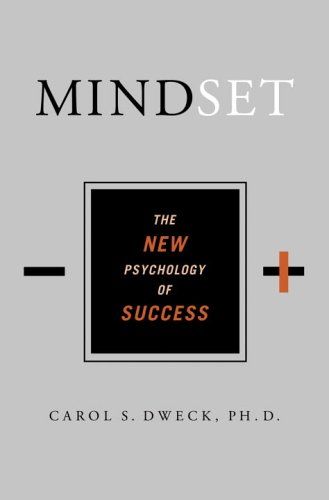
Nova: Today, we’re diving into two incredibly powerful ideas that fundamentally shift our understanding of personal growth and, by extension, our ability to communicate with impact. We're looking at by the brilliant Carol Dweck, and by the equally insightful Angela Duckworth.
Atlas: Ah, Dweck and Duckworth. Two titans of psychology. What's the story behind these two, especially Dweck? I remember hearing about her work being pretty groundbreaking.
Nova: Absolutely. Carol Dweck, a Stanford psychologist, really pioneered the concept of mindset through decades of research, often with children. Her work revealed that it’s not just about what you know, but what you about your own intelligence and abilities that dictates your potential. She wasn’t just theorizing; she was observing, experimenting, and showing how these beliefs play out in real-time learning and achievement. It's truly foundational.
Atlas: That makes me wonder, then, how does Angela Duckworth fit into this? Was she also observing children, or did her path to "grit" come from a different angle?
Nova: Duckworth actually had a fascinating journey. She started in management consulting, then became a middle school math teacher. It was in the classroom, watching some of her most talented students struggle and some of her less talented students excel, that she realized raw ability wasn't the full picture. This led her to pursue psychology and ultimately develop her groundbreaking theory of "grit." Her personal experience really fueled her scientific inquiry.
Atlas: So we have Dweck showing us we view our abilities, and Duckworth showing us the of sustained effort. I can already see how this could be a game-changer for anyone who wants to speak with confidence and master persuasion. But where do we even begin to unpack this 'inner game' that shapes our outer influence?
The Internal Compass: How Mindset Drives Communication
SECTION
Nova: Let's start with Dweck's core distinction: the fixed mindset versus the growth mindset. Imagine communication not just as a skill you possess, but as a journey. A fixed mindset person believes their communication abilities, their eloquence, their persuasive power, are largely inherent—you either have it or you don't.
Atlas: Oh, I know that feeling. It's like, "I'm not a natural speaker," or "I'm just not good at debating." So, if you believe that, you almost don't even try to improve, right?
Nova: Precisely. This belief can silently sabotage your persuasive efforts. If you think your ability to articulate powerful arguments is a fixed trait, you’ll avoid situations where you might stumble, where your ideas might be challenged, or where you might not appear perfectly fluent.
Atlas: That sounds rough, but how does that actually manifest in a high-stakes meeting when you're trying to articulate a complex strategy? Isn't it natural to just want to appear competent and not make mistakes in that environment?
Nova: It is, but a fixed mindset takes that desire for competence and turns it into a fear of incompetent. So, instead of proactively seeking feedback to refine a strategic argument, someone with a fixed mindset might present it once, then avoid further discussion, fearing criticism. Or, they might stick to safe, familiar phrasing, even if it's less impactful, because trying something new feels too risky to their perceived "competence."
Atlas: So the blind spot is that we focus so much on the external delivery, the words, the tone, the body language, that we miss the internal monologue dictating our choices. It’s like, if I believe I’m not a naturally eloquent person, I’ll unconsciously limit my opportunities to become one.
Nova: Exactly. Think of it like this: a fixed mindset communicator might see a challenging question during a Q&A as an attack on their intelligence, leading to defensiveness or a curt response. Whereas someone with a growth mindset would view that same challenging question as an opportunity to clarify, elaborate, or even learn something new, ultimately strengthening their argument. They’re not afraid to say, “That’s a great question, let me rephrase that,” or “I hadn’t considered that angle, thank you.”
Atlas: Wow, that’s actually really inspiring. So it's about seeing every interaction, every piece of feedback, even every stumble, as a chance to level up your communication game, rather than a judgment on your inherent ability. It's a profound shift in perspective. But how do we that shift, especially when the stakes feel high and we just want to nail it? What are the practical steps to cultivating this growth mindset when it comes to expressing ourselves clearly?
Unshakeable Resolve: The Power of Grit in Mastering Expression
SECTION
Nova: That's where Angela Duckworth's work on "grit" becomes so crucial. It’s not just about believing you grow; it’s about having the passion and perseverance to of growing, especially when it’s difficult. Duckworth argues that grit, not just talent, is the most accurate predictor of long-term success.
Atlas: Okay, but wait, I can definitely relate to the idea of passion and perseverance. I’m passionate about fluent English, and I’m strategic. But how do I differentiate between productive grit and just… being stubborn? Like, if I'm refining an argument, at what point is it grit, and at what point is it just banging my head against a wall, not knowing when to stop?
Nova: That’s a fantastic distinction, Atlas. Grit isn't mindless endurance. It's about practice, sustained over time, towards a long-term goal you're passionate about. For communication, it means embracing the iterative process. It's the willingness to draft, get feedback, revise, articulate, listen, clarify, and then do it all again, even when the initial attempts feel clunky or ineffective.
Atlas: So it's not just about; it's about and. It’s about the feedback loop and learning from each iteration, rather than just repeating the same mistakes with more effort. That makes sense.
Nova: Exactly. Think of any truly influential speaker or writer. They didn’t become masters overnight. They likely spent countless hours outlining, practicing, getting critiques, and refining their message. That dedication, that willingness to push through the "too hard to articulate" moments, that's grit in action. It's the commitment to improving your communication skills, not just when it feels easy or when you're naturally good at it.
Atlas: That makes me wonder, if I'm practicing outlining one compelling argument daily, as our user profile suggests, how does cultivating grit make that practice more effective? Is it about the feedback loop, or something deeper, like the internal resilience to keep going when an argument feels weak?
Nova: It's both, actually. Grit ensures you the feedback, even the uncomfortable kind, and that you when the argument feels weak. It’s the deep-seated commitment that says, "This idea matters, and I will find the clearest, most persuasive way to express it, no matter how many drafts or tough conversations it takes." It strengthens your resolve to build powerful arguments, even when the initial structure seems shaky. It’s the unwavering belief in the of mastery.
Synthesis & Takeaways
SECTION
Nova: So, when we bring Dweck's mindset and Duckworth's grit together, we see this incredible synergy. Your internal beliefs about your capacity to grow fuel your sustained effort and passion to actually achieve that growth in your communication. It’s a powerful feedback loop. Your internal beliefs aren't just feelings; they are the powerful drivers shaping your capacity to communicate confidently and persuasively.
Atlas: That’s such a powerful synthesis. It makes me think about that deep question from our content: "When was the last time you dismissed an idea as 'too hard' to articulate, and how might a growth mindset change your approach next time?" For anyone striving for clear expression and strategic impact, that hits home. It’s about realizing that "too hard" isn't a final verdict, but an invitation to apply grit with a growth mindset.
Nova: Precisely. The true mastery in communication isn't about some innate talent you were born with. It's about the audacious belief in your capacity to grow, to learn, to refine, and the unwavering commitment to that growth, day in and day out. It’s about cultivating that inner game so your outer influence becomes unstoppable.
Atlas: It’s a call to action, really. To trust your ability to build powerful arguments, and then to relentlessly pursue that mastery. So, for our listeners, the next time an idea feels "too hard" to articulate, challenge that thought. Ask yourself: "What if I approached this with a growth mindset and a dose of grit?" The answer might just unlock your most influential voice yet.
Nova: Absolutely. And that's a perfect place to leave it for today. Thank you for joining us on this journey into the 'Mindset' Advantage.
Atlas: This is Aibrary. Congratulations on your growth!