

The Growth Mindset: Why Your Beliefs Shape Your AI Journey
Golden Hook & Introduction
SECTION
Nova: What if the biggest barrier to your success in AI isn't the technology, the algorithms, or even the market? What if it's simply what you believe about yourself?
Atlas: Whoa, that's a pretty bold claim, Nova. I mean, in the rapidly evolving world of AI, it often feels like the tech itself is the biggest hurdle. We're constantly chasing new models, new frameworks, new breakthroughs. How could something as internal as a belief system be more significant than all of that external complexity?
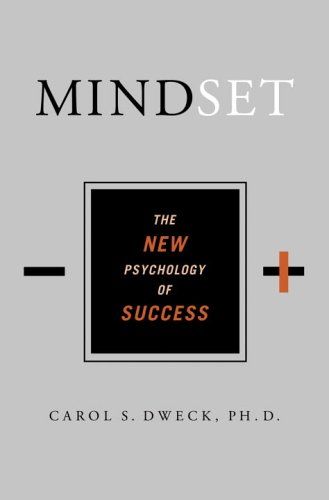
Nova: Honestly, Atlas, it’s a blind spot many of us have, and it can silently derail our entire AI journey. Today, we're diving into two foundational books that illuminate this profound truth: Carol Dweck's seminal work, "Mindset: The New Psychology of Success," and Angela Duckworth's equally powerful "Grit: The Power of Passion and Perseverance." Dweck, a brilliant psychologist, spent decades researching how our core beliefs about our abilities dictate our potential, observing everyone from schoolchildren to Fortune 500 executives. Her insights challenge the very notion of 'talent' versus 'effort.'
Atlas: That makes me wonder, then, how does this apply to navigating the constant challenges of building a strong knowledge base in AI or even expanding our industry connections? Because those often feel like uphill battles where innate ability seems to matter a lot.
The Mindset Shift: From Fixed Limitations to Growth Opportunities in AI
SECTION
Nova: Exactly. Let's unpack Dweck's core idea first: the fixed mindset versus the growth mindset. A fixed mindset is the belief that your intelligence, your abilities, your capacity for learning—especially in a field as complex as AI—are static. You're either good at it, or you're not. When faced with a challenge, someone with a fixed mindset might think, "I'm not good at this," and give up, protecting their ego.
Atlas: Oh, I know that feeling. I imagine a lot of our listeners, especially when they hit a wall with a particularly dense AI paper or a tricky coding problem, have had that exact thought. It’s almost a defense mechanism.
Nova: It absolutely is. But the growth mindset is a fundamentally different approach. It's the belief that your abilities can be developed through dedication and hard work. Challenges aren't roadblocks; they're opportunities to learn and grow. Failures aren't definitive proof of inadequacy; they're valuable feedback.
Atlas: So, you're saying if I'm struggling to grasp a new AI framework, my mindset really changes that? It’s not just about me being 'not smart enough' to get it?
Nova: Precisely. Let's imagine two aspiring AI developers, both equally bright, facing the exact same complex neural network problem. Developer A, with a fixed mindset, hits a wall. The code isn't compiling, the results are nonsensical. They quickly conclude, "This is too hard for me. I'm just not cut out for deep learning." They might spend a little more time, but their internal narrative is already defeatist. They give up, protecting their belief that they're 'smart' by avoiding further 'failure.'
Atlas: That sounds like a fast track to burnout and missed opportunities, especially in AI where things change so quickly.
Nova: It is. Now, Developer B, with a growth mindset, faces that identical problem. The code breaks, the results are baffling. Instead of concluding "I'm not good at this," their internal monologue shifts to "What can I learn from this? Where did I go wrong?" They see it as a puzzle. They'll spend hours debugging, consulting documentation, reaching out to colleagues, experimenting with different parameters. They embrace the struggle, seeing it as part of the learning process.
Atlas: And the outcome?
Nova: Developer B eventually breaks through. They not only solve the problem but, more importantly, they deepen their understanding, build resilience, and gain confidence for the next challenge. The difference wasn't innate talent; it was their approach to the obstacle. They transformed an 'I can't' into an 'I'll figure it out.'
Atlas: That's actually really inspiring. It means that the biggest limitation isn't the difficulty of AI, but our own internal narrative about our capabilities. So, it's about reframing our perception of challenges as opportunities for growth.
Grit and the AI Journey: Sustained Passion and Perseverance
SECTION
Nova: And that leads us perfectly into the other side of this coin, something Angela Duckworth brilliantly articulates as 'grit.' If a growth mindset gives you the belief system, grit provides the sustained fuel to act on that belief. Duckworth defines grit as sustained passion and perseverance toward long-term goals.
Atlas: So, grit isn't just about working hard, it's about what you work hard on and why? It sounds like it's less about raw effort and more about directed, long-term dedication.
Nova: Exactly. It’s not just tenacity; it's tenacity. Duckworth's research shows that grit is a more reliable predictor of success than talent. Think about it in the context of AI. It’s a field that demands continuous learning, dealing with ambiguity, and often, facing repeated failures before a breakthrough.
Atlas: I can definitely relate to that. Trying to demonstrate ROI for a new AI initiative, for example, can be a marathon, not a sprint. You hit snags, you get skeptical stakeholders, you have to constantly refine your approach.
Nova: That’s a perfect example. Consider the journey of an AI startup founder. They might have a brilliant idea, a truly innovative AI solution. But the path from idea to market is riddled with obstacles: securing funding, building a functional prototype, facing technical bugs, getting initial user adoption, and then scaling. They face countless rejections, technical failures, and market shifts that demand pivots.
Atlas: That sounds like a daily dose of 'what can I learn from this?'
Nova: Absolutely. A founder lacking grit, despite their initial brilliance, might get disheartened by the first few rejections or technical setbacks. They might pivot aimlessly, chasing the next shiny object, or eventually give up entirely. Their passion might be fleeting.
Atlas: But a gritty founder...
Nova: A gritty founder, however, deeply passionate about their core vision for how their AI solution will impact the world, sees each failure as data. Each rejection is a chance to refine their pitch. Each technical bug is a puzzle to solve. They adapt, they persist, often through years of struggle, because their long-term vision fuels their daily perseverance. They might adjust their tactics, but their ultimate goal remains unwavering.
Atlas: That’s a great way to put it. So, how do we cultivate that kind of grit in our AI journey, especially when the challenges feel overwhelming, or the immediate returns aren't obvious? It's easy to say 'be gritty,' but how do you actually that when you're in the trenches?
Nova: A key part is connecting your AI work to something larger than yourself. What problem are you truly passionate about solving with AI? For our strategic networkers and driven achievers, it's about building meaningful relationships and demonstrating value. When you link your daily grind in AI to that deeper purpose, your passion becomes the anchor for your perseverance. Also, it’s about deliberate practice. Not just working hard, but working on the areas where you need to improve, and consistently pushing your boundaries.
Synthesis & Takeaways
SECTION
Nova: So, bringing Dweck and Duckworth together, it becomes clear that a growth mindset provides the belief system – the conviction that you learn and adapt in AI – and grit provides the sustained effort and passion – the deep, long-term commitment that ensures you learn and adapt. It’s not just about acquiring knowledge, but about how you frame the entire journey, how you interpret setbacks, and how long you're willing to stick with it.
Atlas: That’s a great way to put it. It feels like these aren't just abstract concepts; they’re fundamental operating systems for anyone serious about making an impact with AI. It’s about trusting your inherent ability to connect the dots, as your growth recommendations suggest, and building consistent momentum, even with something as simple as dedicating 15 minutes daily to AI industry news. Those small, consistent actions, fueled by a growth mindset and grit, compound over time.
Nova: Absolutely. And that leads us to our deep question for today: Reflect on a recent challenge in your AI learning or networking. Did you approach it with a fixed mindset, perhaps thinking, "I'm not good at this," or with a growth mindset, asking, "What can I learn from this?" The answer to that question holds the key to your strategic networking, your AI fundamentals, and your ability to demonstrate ROI.
Atlas: That’s a powerful reflection. I'd challenge our listeners to take it a step further: identify one small AI challenge you've been avoiding or feeling stuck on, and consciously choose to approach it with a growth mindset this week. See it as an opportunity to build your grit, not just your skills.
Nova: Because ultimately, your beliefs truly do shape your AI journey. The tech is complex, but your capacity to master it is far more expansive than you might think.
Atlas: It empowers you to tackle any 'next destination' – whether it's AI fundamentals, strategic networking, or ROI demonstration – with confidence.
Nova: This is Aibrary. Congratulations on your growth!