

The Growth Mindset Myth: Why Fixed Beliefs Limit Your Strategic Vision
Golden Hook & Introduction
SECTION
Nova: Atlas, if Carol Dweck's "Mindset" and Angela Duckworth's "Grit" were comic books, what would be your five-word review for the entire series? No cheating, five words exactly.
Atlas: Oh, man, a comic book review? Hmm... "Your Brain: Level Up Daily!"
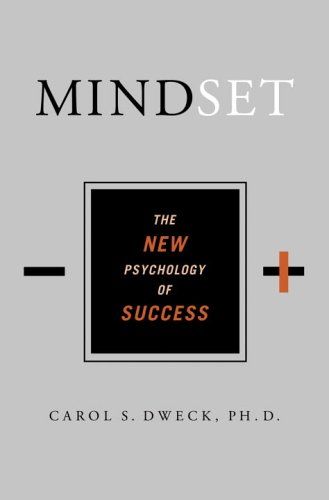
Nova: "Your Brain: Level Up Daily!" I love that! It perfectly captures the essence of what we're diving into today, because we're not just talking about self-help; we're talking about the very DNA of strategic ambition. Today we're exploring two profoundly influential books: Carol Dweck's "Mindset: The New Psychology of Success" and Angela Duckworth's "Grit: The Power of Passion and Perseverance."
Atlas: These aren't just buzzwords, are they?
Nova: Absolutely not. Carol Dweck, a Stanford psychologist, spent decades meticulously researching why some individuals and organizations flourish under pressure while others falter. Her work illuminated how our fundamental beliefs about ability – whether we see them as fixed or as something that can be developed – profoundly shape our responses to challenges. And then you have Angela Duckworth, who took a fascinating path from management consulting and teaching high school to becoming a psychologist, all to understand why talent often isn't the sole predictor of success. She coined "grit" to describe that sustained passion and perseverance.
Atlas: That makes me wonder, then. What if the biggest barrier to a company's next breakthrough isn't some external market force, but something far more internal, something within the leadership's own head?
The Internal Lens of Strategy: How Mindset Shapes Vision
SECTION
Nova: Precisely. That brings us to our first core idea: the internal lens of strategy. We often think of strategic vision as this purely external exercise—market analysis, competitive landscape, product roadmaps. But what Dweck's work shows us is that our own internal beliefs about ability and growth deeply shape what we even dare to envision. A fixed mindset can unconsciously cap your company's potential before you even draw the first strategy slide.
Atlas: But how does that actually play out in a boardroom or in a strategic planning session? Like, are we talking about a CEO literally saying, "We can't learn that new technology, it's beyond us"? Or is it more subtle than that?
Nova: It's usually far more subtle, Atlas. Imagine a company I'll call "Innovate or Stagnate Inc." They were once a dominant tech player, riding high on a core product they perfected years ago. Their leadership team, brilliant in their field, had what we'd call a collective fixed mindset. They believed their success came from their inherent, unchangeable genius in that one specific area.
Atlas: Okay, so their identity was tied to "being the best at X."
Nova: Exactly. So, when the market started to shift, when new, disruptive technologies emerged that required fundamentally different skill sets and business models, their response wasn't to learn and adapt. It was subtle resistance. They'd dismiss new entrants as "niche," new technologies as "unproven," or say, "that's not who we are." They saw market shifts as threats to their fixed identity, not as opportunities for growth and reinvention. They were reluctant to invest in R&D outside their core, they clung to outdated business models, and there was this pervasive internal resistance to upskilling or even acknowledging that their "perfected" product might need fundamental change.
Atlas: That sounds rough. So, it's not just about an individual's personal belief, but how that belief filters up into the entire organizational strategy, almost like a collective blind spot?
Nova: Absolutely. It becomes a cultural blind spot. The fear of failure, the reluctance to look foolish while learning something new, the need to always appear competent—all hallmarks of a fixed mindset—can prevent bold, necessary strategic moves. They weren't bad people; they just believed their abilities were static, and that belief, unconsciously, limited their strategic ambition and ultimately led to stagnation. They dared not envision a future where they weren't defined by their past success.
Atlas: That’s going to resonate with anyone who struggles with adapting to rapid market changes. It's like your internal framework for growth becomes as critical as any external market analysis.
Grit as the Growth Mindset in Action: Sustaining Strategic Execution
SECTION
Nova: Exactly. And speaking of navigating those challenges, that naturally leads us to the other side of this coin: "Grit," by Angela Duckworth. If a growth mindset is the belief in potential, then grit is the fuel that realizes it, especially when the path is anything but smooth. Grit isn't just about individual tenacity; it's a cultural byproduct of a growth-oriented organization.
Atlas: I can see that. For our listeners who are building lasting foundations, 'grit' sounds like a foundational quality. But isn't there a fine line between grit and just... banging your head against a wall? For someone trying to build lasting foundations, how do you know when to be gritty and when to strategically retreat or pivot entirely?
Nova: That's a really good question, and it's where the growth mindset becomes crucial. True grit, as Duckworth defines it, isn't mindless persistence. It's sustained passion and perseverance towards long-term goals, but critically, it's coupled with a willingness to learn and adapt. Think of a hypothetical company I'll call "Phoenix Startups." They faced multiple near-death experiences: failed product launches, investors pulling out, market crashes.
Atlas: Sounds like every startup story ever.
Nova: Exactly! But instead of giving up or pivoting superficially every time, their leadership and team, driven by a deep growth mindset, systematically learned from each failure. They didn't see the failures as proof of their incompetence; they saw them as data points, as learning opportunities. They iterated, they adjusted their tactics, they sometimes even fundamentally redesigned their approach, but they maintained their commitment to their overarching vision. They persevered, not out of stubbornness, but out of a tenacious, adaptive learning process. Eventually, they found their breakthrough.
Atlas: So, it's about the 'why' behind the perseverance. Are you sticking with it because you believe you can learn and adapt, or because you just can't admit you might be wrong about your initial idea?
Nova: Precisely. A fixed mindset might lead to stubbornness, clinging to a flawed plan because changing it implies you weren't smart enough initially. Grit, fueled by a growth mindset, means you're willing to look foolish, to admit mistakes, to learn, to adjust, and to keep pushing forward because you believe your abilities to overcome the challenge can be developed. It's intelligent perseverance. It's essential for navigating the inevitable setbacks of building a business and achieving those ambitious strategic goals.
Synthesis & Takeaways
SECTION
Nova: So, bringing it all together, a growth mindset provides the mental framework to envision bold strategies and embrace change as an opportunity, while grit provides the sustained energy and resilience to execute those strategies through inevitable setbacks. They are two sides of the same strategic coin, absolutely critical for any leader or organization aiming for meaningful, lasting growth.
Atlas: That’s a powerful way to look at it. It's about looking inward to expand outward. For our listeners who are building lasting foundations and seeking clarity in their strategic decision-making, what's one immediate step they can take to identify if a fixed mindset is subtly limiting their next big move?
Nova: I'd suggest a simple, yet profound, reflective exercise. Ask yourself: "Where in my strategic planning, or in my team's discussions, am I most resistant to new ideas or uncomfortable with the prospect of failure?" That discomfort often flags a fixed mindset at play. Then, actively seek out dissenting opinions, challenge your own assumptions, and frame potential failures as learning opportunities, not as definitive judgments on your abilities.
Atlas: That's a great way to start connecting the dots. It's about trusting your vision enough to let it evolve, seeing challenges not as roadblocks, but as opportunities to refine your path.
Nova: Exactly. It's about building an unstoppable team and staying ahead of the curve, not by avoiding failure, but by learning from it with purpose and passion.
Atlas: This is Aibrary. Congratulations on your growth!