

The 'Growth Mindset' Advantage: Rethinking Market Expansion
Golden Hook & Introduction
SECTION
Nova: What if I told you the biggest threat to your next market expansion isn't the competition, or a lack of funding, or even a flawed product, but something far more insidious and often overlooked, lurking right between your own ears?
Atlas: Whoa, Nova. That's quite the opener. Are we talking about imposter syndrome here, or something even deeper? Because if it's lurking in my own head, that feels like a battle I'm already losing before I even start.
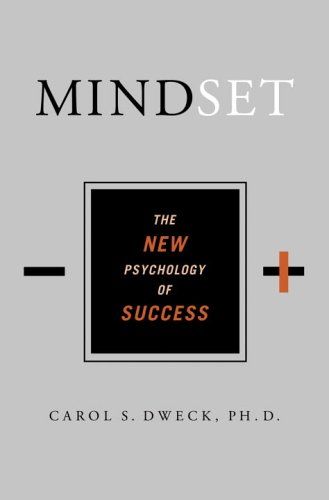
Nova: It’s deeper, Atlas. It's about how we fundamentally perceive challenges and opportunities. Today, we're diving into the profound insights from Carol Dweck's groundbreaking work, "Mindset: The New Psychology of Success," and how it seamlessly connects with strategic market dynamics, particularly Geoffrey A. Moore's classic, "Crossing the Chasm." Dweck, a brilliant Stanford psychologist, spent decades unearthing why some individuals and organizations thrive on setbacks while others falter. Her research forms a surprising bedrock for understanding market entry.
Atlas: So you're saying this isn't just fluffy self-help, but a core strategic lever? Because for anyone trying to build something substantial, a 'mindset' often feels like a soft skill, not a hard-nosed business driver. I need to know this actually impacts the bottom line.
Nova: Absolutely, it's a hard-nosed business driver, Atlas. It's the operating system for all your other strategies.
The Internal Compass: Mindset as a Strategic Asset
SECTION
Nova: Think about it this way: Dweck identifies two primary mindsets. First, the fixed mindset. People, or organizations, with a fixed mindset believe their abilities, intelligence, and even their product's inherent quality are static. They're born with a certain amount, and that's it. So, when they face a challenge, especially in a new market, it feels like a direct judgment on their fundamental competence.
Atlas: So, if I launch a new product into, say, the European market, and it doesn't immediately take off, a fixed mindset would tell me, "Well, my product just isn't good enough, or my team isn't smart enough." It sounds like a fast track to giving up.
Nova: Precisely. They might double down on what they already know, blame external factors, or retreat. Now, contrast that with the growth mindset. This perspective believes that abilities and intelligence can be developed through dedication and hard work. Challenges become opportunities to learn, to grow, to develop new strategies. Failures are not verdicts on your worth; they're data points for improvement.
Atlas: That's interesting, because I can see how that plays out. For someone who's focused on building and optimizing, the idea of static ability feels like a dead end. But wait, isn't there some stability in believing in inherent strengths? Doesn't a company need to know what it's at? Isn't there a risk in constantly questioning your core competencies?
Nova: That's a great point, Atlas. It's not about denying your strengths; it's about how you approach their development and application. A fixed mindset leader might say, "We're brilliant at X; therefore, we'll dominate this new market." When they hit a snag, say, their brilliantly designed app struggles with local user interface preferences in a new country, a fixed mindset might make them dismiss the feedback as the market being "unsophisticated" or "not ready for their genius." They double down on their original, unyielding vision. They believe their product succeed because it's inherently superior. This leads to them burning through resources, alienating potential customers, and eventually, a costly withdrawal.
Atlas: Oh, I've seen that play out. It's like watching a sports team that refuses to adapt their strategy mid-game, even when they're clearly losing. They just keep trying the same plays, convinced they're the best, until the clock runs out.
Nova: Exactly. But a growth mindset leader, facing the same cultural resistance, would view that feedback as invaluable. They'd say, "Okay, our core offering is strong, but can we adapt its presentation to resonate with this specific audience? What can we learn from this market's unique preferences?" They'd invest in localizing, iterating, and viewing the initial struggle as a critical learning phase. They see the resistance not as a personal failure, but as a puzzle to solve, a skill to acquire.
Atlas: That makes perfect sense for someone who's driven by efficiency and practical solutions. It's about optimizing the process of expansion, not just optimizing the product in isolation. So, how does one even begin to identify these mindsets within their own team, especially when everyone is under pressure during a market launch?
Nova: That's a crucial question. It often shows up in how people discuss setbacks. Do they say, "We failed because we're not good enough," or "We failed, what can we learn from this to improve next time?" It's in the language of blame versus the language of learning.
Navigating the 'Chasm' with Growth-Oriented Leadership
SECTION
Nova: And that naturally leads us to the second key idea we need to talk about, which often acts as a counterpoint to what we just discussed. This growth mindset is absolutely critical when we look at Geoffrey Moore's concept of "Crossing the Chasm." Moore describes the perilous journey companies face when trying to move an innovative product from early adopters—those tech-savvy, risk-taking individuals—to the mainstream market, which is far more pragmatic and risk-averse.
Atlas: Okay, so the "chasm" is that treacherous gap between the enthusiasts and the practical, everyday users. I’ve always seen that as a marketing and sales problem, a matter of getting the right message to the right people. But you’re saying it’s more than that? So, it's about whether the leadership they can cross it, even when things look bleak?
Nova: Precisely. The chasm is fraught with uncertainty, unexpected user needs, and often, a lot of initial rejection from the mainstream. A fixed mindset leader might look at the lukewarm reception from the early majority and conclude, "Our product just isn't for them," or "They don't get it." They might retreat, convinced their innovative idea was too far ahead of its time, or simply not universally appealing.
Atlas: That’s going to resonate with anyone who’s tried to launch something truly new. It's easy to blame the market when your brilliant idea doesn't immediately catch fire. So, what does a growth mindset leader do differently here? What are the concrete behaviors?
Nova: A growth mindset leader views that mainstream resistance not as a definitive "no," but as a series of solvable problems. Take a company that develops a groundbreaking AI-powered analytics platform. They have incredible success with data scientists and engineers. When they try to sell to C-suite executives in traditional industries, they get pushback: "It's too complex," "We don't have the internal expertise," "What's the ROI?" A fixed mindset leader might just say, "Well, they're too old school," and abandon the mainstream.
Atlas: That sounds rough, but it's a common story. The brilliant innovators often struggle with the boring, practical reality of broad adoption.
Nova: Right. But a growth mindset leader, instead of blaming the market, would ask, "What are we doing? How can we our offering, our messaging, our support, to meet the needs of this mainstream audience?" They might realize the mainstream doesn't need raw AI power; they need simplified dashboards, clear business outcomes, and robust training programs. They'd invest in user experience, customer education, and possibly even simplifying the product's core functionality for a broader appeal. They see the "failures" in mainstream adoption as critical feedback loops, not dead ends. They look for the "beachhead" in the mainstream, figuring out which specific segment they can win first.
Atlas: I see. For someone trying to build something lasting and expand strategically, how do you cultivate this 'failure as data' approach when every setback feels like a punch to the gut, especially when you've invested so much? It's easy to say 'learn from failure,' but it's incredibly hard to do when your livelihood is on the line.
Nova: It absolutely is hard, Atlas. It requires intentional practice. It starts with leadership explicitly framing challenges as learning opportunities and celebrating effort and adaptation, not just immediate success. It's about creating a culture where asking "What did we learn?" is more important than "Who's to blame?" It's about building psychological safety so teams feel comfortable experimenting and even failing, knowing it's part of the growth process.
Synthesis & Takeaways
SECTION
Nova: So, what we're really saying is that market analysis, competitive intelligence, and product innovation are vital, but without the internal framework of a growth mindset, even the most brilliant strategies can falter. Your internal compass, how you perceive obstacles and opportunities, dictates how effectively you can navigate the external landscape of market expansion. It's the ultimate strategic advantage.
Atlas: That’s actually really inspiring. For any builder or strategist, this reframes the whole challenge. It's not just about what's, but what's. It reminds me of the idea that you can't improve what you don't measure, but you also can’t grow if you don’t believe you grow. So, if I'm a listener, trying to integrate this into my own approach or my team's, what's one immediate, tangible step I can take today to foster this growth mindset?
Nova: Start by consciously reframing a recent challenge you or your team faced. Instead of asking "Why did this go wrong?" ask "What specific new information did we gain, and how does it change our next approach?" Make it a habit to seek out feedback, especially critical feedback, and view it as a gift that helps you see blind spots and learn. It’s a muscle you have to consistently work.
Atlas: That's a pragmatic and actionable step. It shifts the focus from dwelling on the problem to actively seeking solutions and learning. It’s about building a better future, not just reacting to the present. Nova, this has been incredibly insightful.
Nova: My pleasure, Atlas.
Nova: This is Aibrary. Congratulations on your growth!