

The Growth Equation: Why Challenges Are Your Greatest Teachers
Golden Hook & Introduction
SECTION
Nova: Most of us believe success comes from avoiding mistakes at all costs. We meticulously plan, we strategize, we try to create these perfect, smooth pathways to our goals. We want to bypass every possible stumble.
Atlas: Oh, absolutely. The entire self-help industry, in many ways, is built on selling us shortcuts around the hard stuff. "Three easy steps to X," "Avoid these common pitfalls," "Hack your way to success." It's all about minimizing friction.
Nova: Exactly! But what if our biggest breakthroughs, our most profound learnings, and our truest growth are actually hiding those very stumbles? What if the path of least resistance is actually the path of least personal evolution?
Atlas: Huh. That’s a bit of a mind-bender. So you're saying the things we actively try to dodge are precisely what we should be leaning into? That feels… counterintuitive, to say the least. My gut reaction is to protect myself from failure.
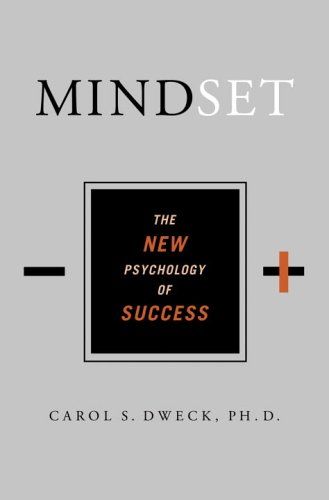
Nova: And that's precisely the "blind spot" we're exploring today, Atlas. Our topic, "The Growth Equation: Why Challenges Are Your Greatest Teachers," dives deep into this very idea. We're drawing heavily from two seminal works: Carol S. Dweck's groundbreaking book "Mindset" and Angela Duckworth's immensely practical "Grit."
Atlas: Ah, Dweck and Duckworth. Two giants in understanding human potential.
Nova: Absolutely. What's fascinating about Dweck is that her work on mindsets wasn't just academic theory spun from an armchair; it emerged from decades of rigorous research, observing why some students thrived on challenges while others crumbled. She fundamentally shifted how educators and psychologists understand human potential. And Duckworth, a former White House speechwriter and McKinsey consultant, brought this uniquely practical, data-driven approach to defining and measuring 'grit,' showing its profound impact beyond the classroom into every domain of achievement.
Atlas: That blend of deep research and real-world application sounds powerful. It makes me wonder, though, if we're so naturally wired to avoid pain and failure, how do we even begin to overcome that? For someone who's naturally cautious, who values precision and fears judgment, that avoidance feels almost like a survival instinct.
The Blind Spot – Why We Resist Growth Through Challenge
SECTION
Nova: It’s a fantastic question, and it gets right to the heart of what we call "The Blind Spot." Many of us, almost instinctively, see challenges or failures as roadblocks, not opportunities. It’s this deep-seated fear of judgment—either from others or from our own internal critic—that holds us back. We fear looking incompetent, we fear the discomfort, and so we avoid taking risks.
Atlas: I mean, that's incredibly relatable. Who to look bad? Who to feel that sting of failure? Especially in environments where there's a premium on being perceived as capable and always having the answers.
Nova: Exactly. And this fear, this blind spot, often originates from what Dweck calls a "fixed mindset." It's the belief that our intelligence, our talents, our abilities are static. You're either good at something, or you're not. If you fail, it means you're simply not good enough. And if you believe that, why would you ever put yourself in a situation where that fixed ability could be tested and found wanting?
Atlas: So, it's like a mental autopilot that steers us away from anything that might expose a perceived deficiency. It’s self-protection, but it's ultimately self-limiting.
Nova: Precisely. Let me give you an example. Imagine a student, let's call her Elara. Elara was brilliant in high school, coasting through advanced classes, always getting top marks. She genuinely believed she was "smart." Then she gets to a highly competitive university, and in her first advanced mathematics course, she encounters a problem she simply cannot solve. She works at it for hours, then days, and it just doesn't click.
Atlas: Oh, the classic "big fish in a small pond" suddenly in the ocean scenario.
Nova: Right. Her internal narrative, which had always been "I'm smart," suddenly collapses into "I'm not smart enough." Instead of seeing this difficult problem as a chance to stretch her understanding, to learn a new approach, she attributes her struggle to a fundamental lack of innate talent.
Atlas: And what’s the outcome of that fixed mindset in Elara’s situation?
Nova: The outcome is devastating for her growth. She starts disengaging. She avoids similar problems, even drops the course eventually. The shame, the withdrawal, the refusal to try again – it all stems from that belief that her intelligence is a fixed quantity that was just exposed as insufficient. Her initial success, ironically, had made her brittle.
Atlas: Wow. That’s a powerful illustration. I mean, that's incredibly relatable beyond academics. How many of us, especially in demanding professional roles, have side-stepped a new, complex project, or even a different career path, because the risk of looking 'less than capable' felt too high? You’re so used to being the expert, the one with the answers, that the thought of being a novice again is terrifying. It’s not just students; it’s anyone who fears losing their perceived status or competence.
The Shift – Cultivating Resilience and Perseverance (Growth Mindset & Grit)
SECTION
Nova: It impacts everyone. But here's where "The Shift" comes in. What if Elara, or any of us, could reframe that struggle? What if that difficult math problem, or that intimidating new project, wasn't a test of fixed ability, but an opportunity to build a new one?
Atlas: Okay, so how do we actually that? It sounds great in theory, but when you're in the thick of it, facing a real setback, when that internal critic is screaming, "You're not good enough!" how do you switch from that immediate, painful reaction to "I'll get there"? That’s the real trick, isn't it?
Nova: It absolutely is. And this is where Angela Duckworth’s concept of "Grit" becomes so powerful. Grit, as she defines it, isn't about raw talent or even just sheer effort. It’s about sustained passion and perseverance towards long-term goals. It's about having the stamina to stick with your future, day in, day out, not just for the week, not just for the month, but for years.
Atlas: So it’s not just about pushing through a single tough moment, but about a consistent, almost stubborn, dedication to an overarching vision?
Nova: Exactly. And the crucial part is that grit is cultivable. It’s not something you’re born with or without. It’s a muscle you develop by consciously shifting your mindset, by seeing setbacks as valuable information, not as personal indictments.
Atlas: Can you give me an example that really brings that to life? Because again, "grit" can sound a bit abstract.
Nova: Let's consider a contrasting story to Elara's. Imagine a musician, let's call him Leo. Leo wasn't a prodigy. In fact, his early teachers told him he lacked natural musicality. He struggled with coordination, his ear wasn't naturally sharp, and his initial auditions were, frankly, disastrous. He faced rejection after rejection.
Atlas: Oof. That's a tough start for an aspiring artist. Most people would probably give up right there.
Nova: Most would. But Leo had a growth mindset and, crucially, he cultivated grit. Every failed audition wasn't a sign he "wasn't a musician," but rather data. He'd ask for specific feedback: "What did I need to improve on?" He’d analyze recordings of his performances, identifying weaknesses. He dedicated years to deliberate practice, not just playing, but focusing intensely on his weak points, seeking out new teachers, trying new techniques.
Atlas: So it wasn't just about practicing more hours, but he practiced. It was intentional, analytical effort.
Nova: Precisely. He saw every struggle as a necessary step in the learning process. When a piece of music felt impossible, his internal dialogue shifted from "I can't do this" to "I can't do this." He embraced the iterative nature of growth, the small, consistent efforts, and the unwavering belief that improvement was always possible. His passion for music was sustained by his belief in his own capacity to develop.
Atlas: Wow, that’s a powerful contrast to Elara. Leo saw failure as data, not destiny. So, for someone trying to master a new programming language, or even just a difficult concept in philosophy, it's less about the initial 'spark' or natural talent and more about showing up every single day, even when the code breaks or the idea just isn't clicking? That's what grit looks like in an intellectual pursuit.
Nova: That’s it. It’s the sustained passion for the pursuit itself, fueled by the belief that your abilities develop, that makes all the difference. It's about seeing effort not as a sign of weakness, but as the engine of growth.
Synthesis & Takeaways
SECTION
Nova: So, bringing it all together, "The Growth Equation" is truly about consciously moving past that "blind spot" – that innate human tendency to avoid discomfort and fear judgment – and actively cultivating both a growth mindset and grit. It’s about reframing effort and failure not as obstacles, but as the primary, most powerful mechanisms for learning and mastering anything new.
Atlas: That makes so much sense. It's about understanding that the struggle isn't the problem; it's the crucible where true capacity is forged. So, for that recent challenge we all faced, that moment where we felt stuck or frustrated, how might viewing it as a learning opportunity fundamentally change our next steps? What does that mean for someone seeking deeper understanding and purpose?
Nova: It means everything. It means instead of withdrawing, we lean in. Instead of seeing a setback as a sign of personal failing, we see it as crucial feedback. It's about trusting your inner compass, knowing your journey is your own, and dedicating time each week for reflection – journaling those insights, understanding what the challenge taught you. Because ultimately, personal growth and clarity aren't found in avoiding the struggle, but in courageously engaging with it.
Atlas: That gives me chills, honestly. It’s a hopeful way to look at something that often feels overwhelming. It’s not about being fearless, but about being brave enough to learn from the fear itself.
Nova: Exactly. Embrace the challenges, for they are truly your greatest teachers.
Atlas: This is Aibrary. Congratulations on your growth!