

Synergizing Mindset and Intrinsic Motivation
Golden Hook & Introduction
SECTION
Nova: Most of us treat our potential like a fixed bank account. We assume we were born with a certain amount of intelligence or skill, and we spend it until it is gone. We guard our talents, avoid challenges that might expose our limits, and view failure as a bankruptcy of our identity. But that entire premise is a dangerous delusion.
Atlas: That sounds like a heavy way to start, but I suspect you are right. We often act like we have a finite amount of ability, and once we reach the edge of that container, we stop. It feels safer to stay within the lines than to risk looking foolish by trying something where we might actually fail.
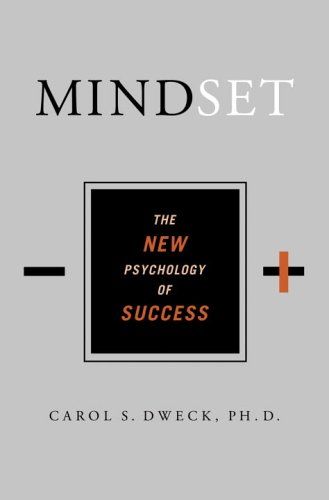
Nova: Exactly. And that is the trap. Today, we are dismantling that trap by looking at two foundational pillars of human performance. First, we are diving into Mindset by Carol S. Dweck, a Stanford psychologist whose work completely shifted how we understand intelligence. She moves us away from the idea of being born with talent and toward the idea of cultivating it.
Atlas: I have always found her research on how children handle failure to be one of the most revealing studies in psychology. It really changes the way we view our own professional development.
Nova: It does. And we are pairing that with Drive by Daniel H. Pink. While Dweck gives us the operating system for how to think, Pink gives us the engine for what actually moves us. He argues that the old carrot-and-stick model of motivation is fundamentally broken for modern, complex work. He replaces it with three pillars: autonomy, mastery, and purpose.
Atlas: That feels like the perfect combination. One gives us the permission to grow, and the other gives us the reason to keep going. Let us dig into the mindset piece first, because I imagine that if you do not have the right mental foundation, the drive part might not even matter.
The Growth Mindset Foundation
SECTION
Nova: That is a sharp observation. Think of the mindset as the soil. If the soil is toxic or hardened, you can plant the most expensive seeds of motivation, but nothing is going to grow. Dweck identifies two main types. The fixed mindset is the belief that your qualities are carved in stone. You are smart, or you are not. You are talented at sales, or you are a natural-born engineer.
Atlas: Wait, hold on. Does anyone actually admit to having a fixed mindset? Most people I talk to would claim they want to grow. But in practice, their actions tell a different story. They avoid the hard project because they are afraid that if they struggle, it proves they aren't as smart as everyone thinks they are.
Nova: You hit the nail on the head. It is rarely a conscious admission. It shows up in the avoidance of risk. In a fixed mindset, effort is seen as a sign of weakness. The logic goes like this: if you were truly talented, you would not need to work so hard. Therefore, needing to work hard means you lack talent.
Atlas: That is such a destructive cycle. It basically punishes the very act of learning. If I have to struggle to understand a new software or a new strategy, I am telling myself I am failing, rather than telling myself I am building a new neural pathway.
Nova: Precisely. That is the shift to the growth mindset. In this model, effort is the path to mastery, not a sign of deficiency. Failure is not a permanent state; it is just a data point. It is information about what did not work so you can adjust your next attempt.
Atlas: I am thinking about the high-stakes environments we often discuss. When you are in a high-pressure role, the stakes feel so massive that failure feels like it will end your career. How do you maintain a growth mindset when the consequences of a mistake are actually severe?
Nova: That is the million-dollar question. The key is in how you frame the experiment. Even in high-stakes environments, you can create a sandbox. You frame the task as a growth experiment rather than a final verdict on your competence. Dweck’s research shows that the most successful people are not the ones who never fail; they are the ones who are obsessed with the process of improvement. They are constantly asking what they can learn from the outcome, regardless of whether it was a success or a disappointment.
Atlas: That makes sense. It is about decoupling your self-worth from the immediate outcome of the task. If I am a leader, and I treat my team’s mistakes as a failure of character, I am fostering a fixed mindset. If I treat them as a failure of the process, I am fostering growth.
Nova: Exactly. And that leads us to the most powerful word in the growth mindset vocabulary, which is yet. You are not bad at public speaking; you are just not good at it yet. You have not mastered the financial model yet. That tiny word shifts the entire perspective from a dead end to a path forward.
Atlas: I love the simplicity of that. It turns a wall into a door. But let us bridge this into the second part of our discussion. Once you have this growth mindset—once you believe you can actually improve—what is the force that keeps you pushing toward that improvement? That is where Daniel Pink’s work comes in, right?
The Science of Intrinsic Motivation
SECTION
Nova: Yes, and this is where it gets interesting. We have been conditioned to believe that the best way to get people to do something is to offer a reward or threaten a punishment. Pink calls this the carrot-and-stick approach. It works for simple, mechanical tasks, but it actually destroys performance when it comes to creative, conceptual, or high-level work.
Atlas: I have seen this happen so many times. You try to incentivize a team with a bonus for a specific creative output, and the quality of the work actually drops. It is like the brain stops focusing on the problem and starts focusing on the bonus.
Nova: That is exactly what happens. It is called the over-justification effect. When you pay someone to do something they might otherwise find interesting or meaningful, you turn their internal passion into an external transaction. And once the transaction is done, the motivation vanishes. Pink argues that for the kind of work that requires critical thinking and problem-solving, we need to focus on three intrinsic drivers: autonomy, mastery, and purpose.
Atlas: Let us break those down. Autonomy seems the most straightforward, yet it is the one leaders seem to struggle with the most. Everyone says they want their team to be autonomous, but then they micromanage every detail.
Nova: It is the paradox of control. Leaders fear that if they release the reins, the project will go off the rails. But Pink’s research suggests that autonomy is the greatest catalyst for performance. It is the desire to direct our own lives. When you give someone ownership over their work, they do not just do the task; they start looking for ways to improve the process.
Atlas: I can relate to that. When I am given a clear outcome but allowed to figure out the path to get there, I am infinitely more engaged. If someone tells me exactly how to do every step, my brain shuts off. I am just following instructions, not solving problems.
Nova: That is the difference between compliance and engagement. Compliance is doing what you are told. Engagement is caring about the outcome. That brings us to the second pillar: mastery. This is the urge to get better and better at something that matters. This is where Dweck’s growth mindset is absolutely essential. You cannot pursue mastery if you do not believe you can improve.
Atlas: And mastery is a never-ending game, right? You never truly arrive. It is the pursuit that provides the satisfaction.
Nova: Correct. It is an asymptote. You get closer and closer, but you never fully reach the finish line. That is why it is so satisfying. It provides a constant sense of progress. And the third pillar, purpose, is the glue. It is the desire to do what we do in the service of something larger than ourselves.
Atlas: This is where I see a lot of organizations miss the mark. They slap a mission statement on the wall and think that counts as purpose. But purpose is not a poster. It is the connection between the daily, grind-heavy work and the actual impact on the world.
Nova: You are absolutely right. Purpose is about the why. If you are a coder, your purpose is not to write code; it is to solve a problem that makes a user's life easier. If you are an architect, your purpose is not to draw lines; it is to create a space where people can thrive. When people see the impact of their work, they are willing to push through the frustration and the plateau of mastery.
Atlas: That is a powerful triad. Autonomy, mastery, and purpose. It effectively turns the work into a self-sustaining loop. You have the autonomy to choose your path, the growth mindset to pursue mastery, and the purpose to keep you grounded when things get tough.
Synthesis and Practical Application
SECTION
Nova: And that is the connection. You can see how these two books, while written by different people about different aspects of human behavior, are essentially two sides of the same coin. Mindset is the internal infrastructure. Drive is the energy that flows through that infrastructure.
Atlas: I love that. It makes me think about how we can actually apply this. We have talked about the theory, but let us get practical. For the person listening to this right now—someone who is likely managing a team or trying to level up their own career—what is the first move?
Nova: The first move is a shift in how you view influence. If you want to scale your influence, you have to stop being the bottleneck. You have to start being the architect of environments. The most concrete, tiny step you can take this week is to identify one task where you can grant complete autonomy to a team member.
Atlas: That sounds simple, but I know it is difficult to execute. It requires a lot of trust.
Nova: It does. And you have to set the stage properly. When you hand off that task, you explicitly frame any potential mistakes as essential growth experiments. You are not saying, "Do this however you want and I do not care about the result." You are saying, "I trust your judgment, and if this doesn't go according to plan, we are going to look at it as data to improve our process, not as a reason to stop trying."
Atlas: That removes the fear of failure from the equation. It gives them the safety to operate with a growth mindset. And by giving them that autonomy, you are likely to get a better result than if you had micromanaged them, because they are now personally invested in the mastery of that task.
Nova: Exactly. You are moving from a manager who directs tasks to a leader who cultivates talent. It changes the entire dynamic. The team member feels trusted, they feel a sense of purpose because they know their contribution matters, and they are given the space to develop their skills.
Atlas: I have been thinking about how this applies to my own work. I often fall into the trap of doing the work myself because I think I can do it faster. But what I am really doing is depriving myself of the chance to lead and depriving my team of the chance to grow. That is a double loss.
Nova: That is a profound realization. We often confuse efficiency with effectiveness. It might be faster for you to do it, but it is not more effective for the long-term success of the organization or your personal growth as a leader. Scaling requires you to let go of the need for perfection and embrace the messy process of development.
Atlas: It really comes down to whether you want to be the hero of the story or the mentor. The hero saves the day, but the mentor creates more heroes.
Nova: That is a beautiful way to put it. When you adopt a growth mindset, you realize that your value is not in what you can do today, but in what you can enable others to do tomorrow. That is the highest form of professional success.
Atlas: This has been a great exploration. We have moved from the internal, psychological foundation of the growth mindset to the external, structural requirements of intrinsic motivation. And we have ended with a very practical, actionable way to bridge the two.
Nova: It is all about the long game. Sustainable momentum does not come from willpower or external rewards; it comes from aligning your mindset and your environment with the fundamental human need to learn, grow, and contribute.
Atlas: I am definitely going to look for that one task this week to delegate with full autonomy. It is scary, but I think that is a sign that it is the right thing to do.
Nova: That discomfort is just the growth mindset talking. Embrace it.
Atlas: I will. This has been a fantastic conversation, Nova.
Nova: Likewise, Atlas. And to everyone listening, remember that your potential is not a fixed asset; it is a project you are building every single day.
Atlas: This is Aibrary. Congratulations on your growth!