

Mindset for Product Growth: Beyond the Metrics
Golden Hook & Introduction
SECTION
Nova: Atlas, I want you to give me a five-word review of the idea of 'mindset and grit' as the secret sauce for product growth. Go.
Atlas: Oh, man, five words? Okay… "Mindset: the invisible, messy engine."
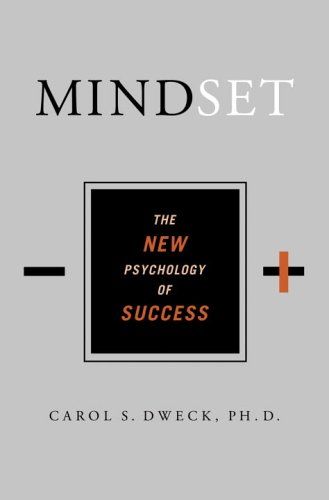
Nova: Invisible, messy engine. I love that! Because it absolutely is. Today, we’re peeling back the layers on that very engine, exploring the profound mental architecture that underpins true product growth and sustained innovation. We're diving deep into two foundational texts that really cracked open this concept: Carol Dweck’s groundbreaking book, "Mindset," and Angela Duckworth’s equally impactful work, "Grit."
Atlas: I’m curious, Nova, how do these seemingly academic concepts, born from years of psychological research, translate into the messy, high-stakes reality of product development? Dweck’s work, for example, came from decades of studying why some people thrive under pressure while others just… fold. And Duckworth, a former consultant and teacher, even won a MacArthur ‘genius’ grant for her insights into perseverance.
Nova: Exactly! And that’s why we’re here. Today, we’ll explore how shifting our mindset from fixed to growth can revolutionize how we approach product challenges, and then we'll discuss how 'smart grit' allows us to persist wisely, not just blindly, towards truly impactful product outcomes.
The Resilient Mindset: Embracing Growth Over Fixedness
SECTION
Nova: So let’s kick off with Dweck’s "Mindset." She essentially boils it down to two core beliefs we hold about our abilities: fixed or growth. A fixed mindset believes our intelligence and talents are static, unchangeable. A growth mindset, however, sees them as raw material that can be developed through hard work and dedication.
Atlas: Right, like, if you think you’re either good at coding or you’re not, that’s fixed. But if you believe you can at coding with practice, that’s growth.
Nova: Precisely. Now, imagine a product team launching a new feature. They’ve poured months into it, and it fails spectacularly. The data screams 'flop.' A fixed mindset leader might say, "Well, we tried. This just isn't our strength. Let's move on." Or even worse, "Who's to blame?"
Atlas: But wait, looking at this from an analytical architect's perspective, when the data screams 'failure,' isn't it pragmatic to pivot, or even cut losses, rather than just 'learn'? How do you differentiate between a stubborn refusal to accept reality and a genuine growth mindset in action?
Nova: That’s the critical distinction. It’s not about ignoring data; it’s about how you interpret it. Think about Instagram. Before it was Instagram, it was a complex location-based app called Burbn. It had too many features, and nobody really got it. If the founders had a fixed mindset, they would have said, "Well, we're just not good at building social apps," and given up.
Atlas: Oh, I remember Burbn. It was… a lot.
Nova: It was! But Kevin Systrom and Mike Krieger, they looked at the data. They saw that people were only really using one small part of Burbn: photo sharing. They didn't say, "Why is this happening to us?" They asked, "What can we learn from this?" They stripped away everything else, focused solely on photos, and Instagram, as we know it, was born. That’s a growth mindset in action – seeing setbacks as information, not condemnation.
Atlas: That’s a great example. For our listeners who are analytical architects themselves, trusting intuition can sometimes feel at odds with cold, hard data. But a growth mindset, in that context, almost acts as a bridge, allowing you to interpret data not as a final verdict, but as a critical input for the next iteration.
Nova: Absolutely. It transforms the question from "Am I good enough?" to "Am I learning enough?" It’s the invisible engine pushing you to iterate, experiment, and ultimately, innovate.
Atlas: I can see how that would be powerful. But I also wonder, can a growth mindset go too far? Can it become a kind of "toxic positivity" where you're always trying to "learn" from failure, even when the product is clearly dead?
Smart Grit: Perseverance Meets Adaptive Learning
SECTION
Nova: That’s an excellent point, Atlas, and it leads us beautifully into our second core idea: Angela Duckworth’s concept of "Grit." Because a growth mindset alone isn’t quite enough. You need the sustained effort to apply that learning. Grit, as Duckworth defines it, is passion and perseverance for long-term goals. It’s sticking with your future, day in, day out, not just for the week, not just for the month, but for years.
Atlas: Okay, but in a fast-paced market, isn't 'long-term perseverance' just code for stubbornness? As an empathetic leader, you care about efficiency and well-being. How do you know when to grit it out versus when to admit defeat and move on, especially when your team is showing signs of burnout, or the market is clearly shifting? That sounds like a fine line.
Nova: It is a fine line, and that’s where the "smart" part of "smart grit" comes in. Duckworth’s research shows it’s not just about brute-force effort. It’s about deliberate practice, seeking feedback, and strategic adaptation. Think of a product team working on a complex AI feature. They hit roadblock after roadblock. The initial model isn't performing, the data is messy, and morale starts to dip.
Atlas: I’ve been there. That’s a tough spot. You’ve got to protect your focus, as my growth recommendations suggest.
Nova: Exactly. A team with blind stubbornness might just keep throwing more hours at the same failing approach. But a team with would pause. They’d revisit their assumptions, seek expert advice, break down the problem into smaller, testable components, and perhaps even pivot their technical approach entirely while still aiming for the same long-term goal of an effective AI feature.
Atlas: So it's like a marathon runner who trains smarter, not just harder. They know when to adjust their pace, or even change their shoes, but the goal of finishing the marathon remains.
Nova: That’s a perfect analogy! It’s the purposeful pursuit of a goal that is personally meaningful and challenging. Duckworth’s work really highlighted that grit isn't just about talent; it’s about sustained, directed effort. She found that what truly predicted success in many fields wasn't IQ or natural ability, but this combination of passion and perseverance.
Atlas: That’s fascinating. As an empathetic leader trying to foster this culture of 'smart grit,' how do you do that without burning out the team or appearing to ignore their concerns about a product that might be struggling? My growth recommendations also nudge me towards strategic delegation. Could that play a role?
Nova: Absolutely. Fostering 'smart grit' within a team involves creating an environment where effort is celebrated, mistakes are seen as learning opportunities, and feedback is actively sought. Strategic delegation can empower team members to own parts of the problem, fostering their individual sense of passion and perseverance. It's about distributing the 'grit' and allowing for diverse approaches to problem-solving, rather than a top-down mandate to just "work harder." It’s a culture, not a command.
Synthesis & Takeaways
SECTION
Nova: So, bringing it all together, the growth mindset gives us the foundational belief that we learn and improve, especially from setbacks. And smart grit is the sustained, adaptable effort that makes that learning actually happen, propelling us towards those ambitious long-term product visions. Together, they truly are the invisible engines that drive continuous product innovation and sustained market impact.
Atlas: That’s actually really inspiring. For our listeners, especially those who are analytical architects and resilient builders, what’s one tiny step they can take this week to start cultivating this unstoppable product momentum? Something they can schedule into those dedicated 'deep work' blocks?
Nova: When you face a product challenge this week, big or small, consciously adopt that 'growth mindset' by asking, "What can I learn from this?" instead of "Why is this happening to me?" It's a subtle shift, but it reshapes your entire approach.
Atlas: And beyond that personal shift, the deeper question for leaders out there is: How can you foster a culture of 'smart grit' within your product team, encouraging persistent effort alongside adaptive learning? It’s about building an environment where both individual growth and collective perseverance thrive.
Nova: Exactly. It's about consciously designing your responses to failure, embracing the learning, and building that sustained, intelligent effort into your team's DNA. Think about how you can empower your team to not just work hard, but to work smart, to adapt, and to truly learn from every step of the journey. What does that look like for you?
Atlas: That gives me chills. It’s not just about building better products; it’s about building better teams and better leaders.
Nova: This is Aibrary. Congratulations on your growth!