

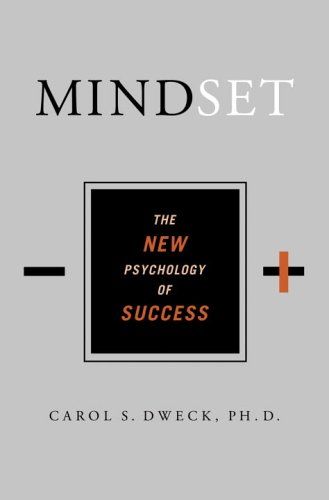
Mindset for Mastery: Cultivating Growth and Ambition
Golden Hook & Introduction
SECTION
Nova: Alright, Atlas, quick quiz: what do you really know about 'mindset' and 'grit'? Give me your best, most brutal five-word review.
Atlas: Oh, I love this! Hmm… 'Buzzwords for the perpetually positive.'
Nova: Whoa, buzzwords? That's a bold claim right out of the gate! But you know, that skepticism is exactly what we need to cut through the noise today. Because we're diving into two concepts that might sound like self-help clichés, but are actually backed by decades of groundbreaking research: Carol Dweck’s revolutionary work on 'Mindset' and Angela Duckworth’s deep dive into 'Grit.'
Atlas: Okay, so not just motivational posters, but actual science. I'm listening. Especially for anyone out there, like many of our listeners, who have a natural drive for improvement, who are trying to build future endeavors, these ideas feel like they should be practical, not just theoretical.
Nova: Absolutely. And what’s fascinating is that Dweck, a Stanford psychologist, spent literally decades studying why some people thrive on challenge while others crumble, ultimately coining the terms fixed and growth mindsets. And Duckworth, a celebrated psychologist and MacArthur 'genius' grant recipient, distilled years of research into why passion and perseverance, not just talent, are the true predictors of success. We’re talking about foundational psychology here.
Atlas: A MacArthur 'genius' grant? Okay, that adds some serious weight to the conversation. So, let's peel back the layers. Where do we even begin with these two powerhouses?
Nova: We begin with the very foundation of how we view our own abilities: Carol Dweck's groundbreaking work on mindset. Because before you can tackle any challenge, you first have to believe you.
The Transformative Power of Mindset: Beyond Fixed Limitations
SECTION
Nova: So, Dweck's core insight is elegantly simple: people generally operate with one of two core beliefs about their intelligence and abilities. There's the 'fixed mindset,' where you believe your qualities are carved in stone – you're either smart or you're not, talented or you're not. And then there's the 'growth mindset,' which is the belief that your basic abilities can be developed through dedication and hard work.
Atlas: That makes sense. I imagine a lot of our listeners, especially those trying to pivot careers or master new skills, probably wrestle with that fixed mindset voice whispering, 'You're not good enough,' or 'You're not a natural at this.'
Nova: Exactly! Imagine a young student, let's call her Maya, struggling with a complex math problem. If Maya has a fixed mindset, her internal monologue might be, 'I'm just not a math person. I'll never get this.' She might give up quickly, feeling defeated, because she sees her struggle as proof of her inherent lack of ability. Her focus is on smart, not smart.
Atlas: Oh, I've been there! That feeling of hitting a wall and immediately concluding it's a personal failing, not just a difficult problem. For someone trying to build a new foundation, that's a huge hurdle.
Nova: Now, picture another student, Leo, facing the same problem with a growth mindset. His internal voice might say, 'This is tough, but I haven't figured it out. What can I try differently? What can I learn from this mistake?' Leo sees the challenge as an opportunity to stretch his brain, to learn new strategies. He's not afraid of making errors because he understands that errors are information, not indictments.
Atlas: So basically, one sees a dead end, the other sees a detour. But is it really that simple to just 'think differently'? For someone who's always believed they're not 'creative' or not 'a leader,' how do you even begin to shift that deeply ingrained fixed mindset? It feels like just willing yourself to change isn't enough.
Nova: That’s a brilliant point, and it’s why Dweck emphasizes that it’s not just positive thinking. It's about understanding the behind it. Our brains are incredibly plastic. Every time you learn something new, every time you push past a challenge, you're literally building new neural pathways. It's not magic; it's biology. Think of someone like Vincent van Gogh. He wasn't born a revered artist; he struggled for years, faced rejection, and learned relentlessly. His 'talent' was cultivated through immense effort and a belief in his own capacity to improve.
Atlas: That makes me wonder, then, for someone feeling stuck, trying to build a new skill for a career transition, how do you actively start cultivating that growth mindset? What's the practical first step beyond just knowing about it?
Nova: A crucial first step is to recognize your fixed mindset triggers. When do you feel defensive, give up easily, or blame external factors? When you catch yourself thinking 'I can't,' try adding 'yet.' Then, actively reframe challenges as learning opportunities. For example, if you're struggling with a new software for your personal branding, instead of saying 'I'm terrible at tech,' say 'I'm still learning this software, and every bug I fix teaches me something new.' It shifts the focus from outcome to process, making the journey itself the reward.
Grit: The Unseen Engine of Ambition and Long-Term Success
SECTION
Nova: And that naturally leads us to the second key idea we need to talk about, which often acts as the engine for a growth mindset: Angela Duckworth's concept of 'Grit.' Because once you believe you grow, the next question is, do you sustain that effort, that ambition, over the long haul?
Atlas: Yeah, because belief is great, but consistency is a whole different beast. Especially when you're trying to navigate new professional paths, there's a lot of uncertainty and moments where you just want to throw in the towel.
Nova: Exactly. Duckworth defines grit as passion and perseverance for long-term goals. It's not just about working hard; it's about working hard for an extended period, even when faced with failure and adversity. She famously studied cadets at West Point, teachers in tough schools, and contestants in the National Spelling Bee, and found that grit was a better predictor of success than talent or IQ.
Atlas: So you're saying raw talent almost doesn't matter? For listeners trying to transition careers, where natural aptitude might seem crucial, that's a big claim. Isn't there a point where you just don't have the 'chops' for something, no matter how hard you try?
Nova: That's a common misconception. Duckworth isn't saying talent doesn't exist or doesn't matter. What she's saying is that talent is how quickly your skills improve when you invest effort. Grit is about how consistently you that effort. So, talent effort equals skill, and skill effort equals achievement. Effort counts twice! Think of someone like George Lucas. He was rejected by USC's film school, but his passion for storytelling and perseverance led him to create Star Wars. He didn't let initial rejections define his potential.
Atlas: Wow, that's a powerful reframing. It makes it sound like grit is the ultimate multiplier for ambition. But how do you cultivate that kind of passion and perseverance if you're not sure what your 'superordinate goal' is yet? For someone seeking personal branding, trying to articulate their unique value, that clarity might not be there right away.
Nova: That's a crucial point. Grit isn't just about bulldozing through. It has components: interest, practice, purpose, and hope. It starts with finding something that genuinely fascinates you, something you care about deeply. It's okay if that evolves. Then, it's about deliberate practice – not just doing it, but doing it with focused attention on improvement. And purpose, which is the belief that your work matters to others.
Atlas: I can see how that would be incredibly empowering for someone trying to architect a new life for themselves, to realize their innate ambition isn't just a fleeting desire but a powerful engine that can be cultivated. It’s like, your desire for more isn’t a weakness, it's a blueprint.
Synthesis & Takeaways
SECTION
Nova: Precisely, Atlas. Mindset gives you the belief that you improve, and grit gives you the unwavering fuel to, consistently, over time. It's about combining that resilient, growth-oriented mindset with the passion and perseverance to pursue your long-term goals. Your ambition, your drive for more, isn’t something to suppress; it’s a strength to be cultivated and directed.
Atlas: So for anyone out there who feels like they’re building something from the ground up – whether it’s a new skill, a new career path, or even just a stronger personal brand – these aren't just feel-good ideas. They're foundational tools to navigate the inevitable challenges and setbacks. It's about trusting that inner architect.
Nova: Exactly. And the tiny step we can all take this week, inspired by these insights, is to identify just one area where you typically shy away from challenges. This week, consciously choose to approach it with a growth mindset, focusing on learning, not just the immediate outcome. Even that small shift can start to rewire your approach.
Atlas: That's actually really inspiring. It grounds these big ideas in something actionable. Because ultimately, it's not about being perfect from day one, but about that consistent, deliberate forward motion. It’s about understanding that every challenge is just another brick in the foundation you're building.
Nova: Absolutely. And when you embrace that journey of self-discovery, when you trust your ambition and pair it with grit and a growth mindset, you're not just improving; you're actively architecting a future that truly reflects your potential. It's about seeing yourself not as a finished product, but as a masterpiece in progress.
Atlas: What a powerful way to look at it. This is Aibrary. Congratulations on your growth!