

Mastering Your Inner Dialogue: Cultivating a Positive Mindset
Golden Hook & Introduction
SECTION
Nova: Alright, Atlas, rapid-fire word association. I'll throw out a word, you give me the first thing that comes to mind, no overthinking.
Atlas: Oh, I like this. Hit me.
Nova: Challenge.
Atlas: Opportunity. Wait, no, 'mountain.' Too slow?
Nova: Perfect! That works! Now, 'failure.'
Atlas: Learning. Definitely learning. Not 'end of the world,' which is my usual go-to.
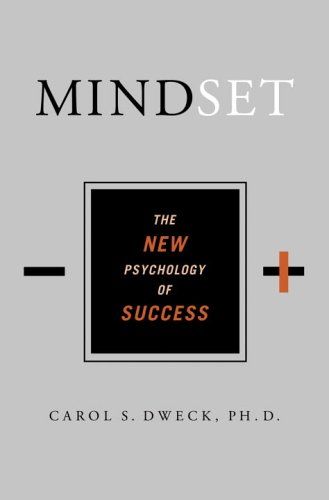
Nova: Exactly! And that's exactly where we're headed today, because we're diving into the profound insights from 'Mindset' by Carol S. Dweck and 'Learned Optimism' by Martin E. P. Seligman. What's fascinating about Dweck's work is how it emerged from decades of rigorous research, not just anecdotal evidence, fundamentally shifting how psychologists and educators understood human potential and how we approach everything from school to business.
Atlas: That’s amazing. I mean, for a lot of our listeners, the idea of changing how they think about 'failure' or 'challenge' feels enormous. Is this really something we can consciously shift, or is it just a nice idea?
The Duality of Mindset: Fixed vs. Growth
SECTION
Nova: Absolutely, it's something we can shift, and it starts with understanding what Dweck calls the 'fixed' versus 'growth' mindset. Think of it like this: a fixed mindset says your intelligence, your abilities, your talents are just that—fixed. You're either good at something or you're not. End of story.
Atlas: Oh, I know that feeling. It's like, "I'm not a math person," or "I'm just not creative."
Nova: Exactly! And when someone with a fixed mindset faces a setback, like failing a test or struggling with a new skill, their internal narrative often defaults to, "See? I'm not good enough. I lack the talent." They might give up, avoid future challenges, or even feel threatened by the success of others because it highlights their perceived deficiencies.
Atlas: That sounds like a pretty limiting way to live. I can definitely see how that would stifle anyone trying to reinvent their career or pick up a new skill. Why even try if you think you're inherently limited?
Nova: Precisely. Now, flip that to the growth mindset. This perspective believes that your basic qualities, like intelligence and talent, can be developed through dedication and hard work. You might not be a 'math person', but you can become one. You might not be 'creative', but you can cultivate creativity.
Atlas: So, when someone with a growth mindset faces that same setback, like failing a test, what do they tell themselves?
Nova: They say, "Okay, that didn't work. What can I learn from this? What strategies can I try next time? How can I improve?" They see challenges as opportunities to stretch themselves, to learn, and to grow. It's not about being perfect; it's about getting better.
Atlas: I can see how that would be empowering, especially for someone who feels like they're starting over or trying to build inner strength. But wait, isn't it just about being naturally good at things? Like, some people just better at math or art. Are we saying those natural aptitudes don't exist?
Nova: Not at all. Natural aptitudes absolutely exist. The point is, a fixed mindset makes those aptitudes the of your potential, while a growth mindset sees them as the. It's about the effort you put in, the strategies you employ, and your resilience in the face of difficulty. Dweck's research followed students over long periods, showing how those who adopted a growth mindset consistently outperformed their fixed-mindset peers, even if they started with similar abilities. It’s the belief in development that unlocks the development itself.
Atlas: That’s a powerful distinction. So, it's less about raw talent and more about the belief in your capacity to develop that talent. It's like saying, "I might not be there yet, but I'm on my way."
Cultivating Learned Optimism: Explanatory Styles
SECTION
Nova: Exactly! And that naturally leads us to the second key idea we need to talk about, which often acts as a powerful tool once you understand your mindset: how we talk to ourselves after something happens. Martin Seligman, in 'Learned Optimism,' really drills down into what he calls 'explanatory styles.'
Atlas: Explanatory styles? Is that just a fancy way of saying how we rationalize things?
Nova: Well, it's more profound than rationalization. It's about how we interpret the of events, especially setbacks or successes. Seligman found that our explanatory style falls along three dimensions: permanence, pervasiveness, and personalization.
Atlas: Okay, break that down for me. Permanence, pervasiveness, personalization.
Nova: Let's take two colleagues who both miss out on a promotion. One, with a pessimistic explanatory style, might think, "I'm always overlooked for promotions; I'll never get ahead in this company." That's permanent—it's forever. They might also think, "I'm generally bad at my job, and everyone knows it," which is pervasive—it affects everything. And "It's all my fault," which is personalization.
Atlas: Wow. That's a triple whammy of self-defeat. I imagine a lot of our listeners, especially those feeling a bit lost in their career journey, might fall into that trap. It feels like the world is conspiring against them.
Nova: It does, and it leads to feelings of helplessness and giving up. Now, the colleague with an optimistic explanatory style might interpret the same event very differently. They might say, "This specific role wasn't a good fit for my current skills, but I can definitely develop those for the next opportunity." That's temporary and specific. They also might consider external factors: "The company is restructuring, and they prioritized someone with more experience in X area." That’s externalized personalization, not internal blame.
Atlas: That sounds rough, but it's practical. It's not saying, "Oh, everything's fine!" when it isn't. It's finding a constructive way to view the situation. But isn't this just 'toxic positivity'? What if the situation genuinely bad? Are we supposed to lie to ourselves?
Nova: A really important question, Atlas. And no, it's absolutely not about toxic positivity or denying reality. Learned optimism is about and. It's about realistically assessing whether a setback is truly permanent, pervasive, and personal, or if it's temporary, specific, and perhaps influenced by external factors. An optimistic explanatory style isn't about ignoring problems; it's about seeing problems as surmountable and learning experiences, rather than insurmountable personal failings. It's about asking, "Is this truly going to be this way, or is there a specific, temporary cause?"
Atlas: So, it's not blind optimism, it's optimism. It's like, you acknowledge the rain, but you also know the sun will eventually come out, and you can still find things to do indoors.
Nova: Exactly! And it's a muscle you can train. By consciously challenging those automatic negative interpretations—asking yourself, "Is this truly permanent? Is this truly pervasive? Is this truly about me?"—you can start to reframe your internal dialogue. This isn't just about feeling better; Seligman's research shows it directly impacts resilience, health, and even success in various domains. For those seeking to build a secure future, this skill is paramount.
Synthesis & Takeaways
SECTION
Nova: So, when you put Dweck’s mindset work together with Seligman’s learned optimism, you get a really powerful framework. Understanding your mindset—whether you lean fixed or growth—is the foundation. It determines how you approach challenges in the first place. Then, your explanatory style is the daily practice, the moment-to-moment interpretation of events that either reinforces that mindset or helps you shift it.
Atlas: That makes perfect sense. Your mindset is the operating system, and your explanatory style is the software you run every day. So, for our listeners who are trying to navigate uncertainty, build something new, or simply cultivate a more positive outlook, what's one tiny step they can take this week?
Nova: Here's a tiny step: for one week, when you face any challenge, big or small, identify your initial thought. If it sounds like a fixed mindset thought—"I can't do this," "I'm not good at this," "This is too hard for me"—consciously reframe it. Ask yourself, "What if this is an opportunity to learn and grow? What if this is a chance to try a new strategy?"
Atlas: I love that. It’s an active practice, not just passive wishing. And it makes me think about that deep question from the book: how might a subtle shift in your interpretation of daily events profoundly alter your emotional state and long-term trajectory? That’s not just about one day; it’s about a lifetime.
Nova: It truly is. Our mindset is not fixed; it's a muscle you can train. By consciously shifting from a fixed to a growth mindset and practicing optimistic explanatory styles, you can unlock profound personal power and resilience, building that inner strength and secure future you’re seeking. It’s about choosing belief over limitation, every single day.
Atlas: That’s actually really inspiring. It means we have more control than we often think. It’s about being the architect of your own inner world.
Nova: Absolutely. And that, my friends, is a journey worth taking.
Nova: This is Aibrary. Congratulations on your growth!