

How to Build a Resilient Mindset Without Burning Out.
Golden Hook & Introduction
SECTION
Nova: You know that feeling when you try to avoid a difficult conversation, only to find the problem just… grows? What if facing that discomfort head-on was actually the secret to making everything in your life, your career, your very being, stronger?
Atlas: Oh man, that's relatable. My instinct is usually to duck and cover. I imagine a lot of our listeners, especially those managing high-pressure situations, feel that same urge to just minimize the chaos.
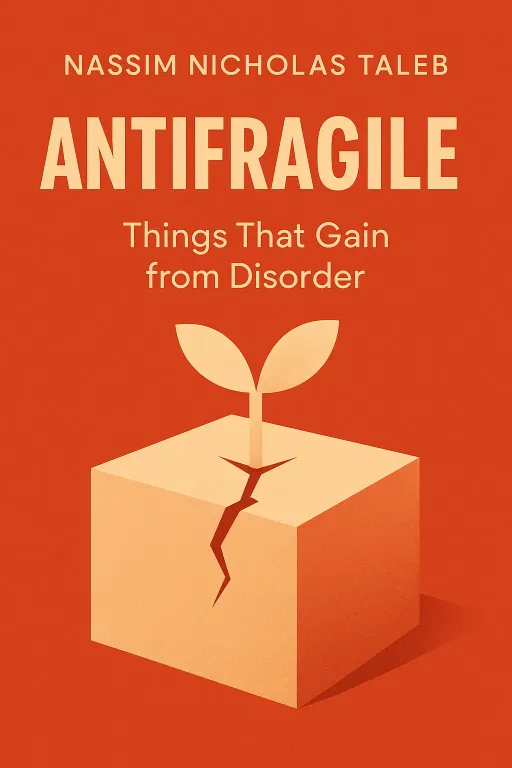
Nova: Absolutely. And that instinct, while understandable, might actually be holding us back from unlocking a deeper, more profound kind of strength. Today we're cracking open two foundational ideas that radically redefine what it means to be resilient. The first comes from Nassim Nicholas Taleb's groundbreaking work, "Antifragile."
Atlas: Ah, Taleb. The name alone sounds like he's about to drop some intellectual bombshells.
Nova: He absolutely does. Taleb, a former options trader and risk analyst, essentially inverted our understanding of resilience. He didn't just write a book; he crafted a new lens through which to view the world. He proposed that some things don't just endure chaos, they it to flourish. It’s a concept that challenges the very core of how we, as disciplined achievers and builders, often approach stability and risk.
Atlas: So he's saying that what doesn't kill you doesn't just make you stronger, it makes you… better? That sounds a bit out there, honestly. My entire strategic planning usually revolves around shocks, not inviting them.
Nova: Exactly! And that's where the real shift happens. We spend so much energy trying to build perfectly stable systems, whether that's in our financial planning, our career paths, or even our physical fitness. We see stability as the ultimate goal, trying to avoid chaos at all costs. But Taleb argues that this very pursuit of stability can leave us brittle.
Embracing Antifragility: Thriving on Disorder
SECTION
Nova: Think about the mythological Hydra. You cut off one of its heads, and two more grow back in its place. That’s antifragility in its purest form. It’s a system that doesn't just resist damage; it actively gains from disorder, stress, and volatility.
Atlas: Okay, so it’s not just surviving a punch, it’s getting stronger with every hit. That’s a powerful image, but how does that translate to, say, a business project or a personal goal? Because in the real world, some chaos is just… destructive. How do you tell the difference between a shock that makes you stronger and one that just breaks things?
Nova: That's the critical distinction. Antifragility isn't about inviting outright destruction, but about structuring yourself or your system so that smaller shocks and stressors, instead of weakening you, actually provide information and stimulus for growth. Consider your muscles. You don't just want them to strain; you lift weights, you controlled stress, and they grow stronger.
Atlas: That’s a great analogy. So, it's like the body's immune system. Exposure to germs, within limits, strengthens it against future threats.
Nova: Exactly! Or even a well-designed city. Instead of building one massive, centralized power grid that could completely fail with a single point of attack, an antifragile city might have many smaller, decentralized power sources. A shock to one doesn't bring down the whole system; it might even reveal weaknesses that allow the others to adapt and improve. It's about redundancy, distributed intelligence, and learning from localized failures.
Atlas: That makes sense for a system, but what about the individual? For someone who's constantly trying to optimize their performance, avoid burnout, and build a better future—how do they apply this? Because the idea of seeking out more stress when you're already stretched thin sounds… counterintuitive, to say the least.
Nova: It's not about seeking stress indiscriminately. It's about changing your relationship with the stress you. It’s about viewing those unexpected setbacks, those difficult conversations, those project failures, not as things to be avoided or simply endured, but as vital information. Each one is a data point, an opportunity to learn, adapt, and build a more robust personal or professional system.
Atlas: So, instead of getting knocked down and just trying to get back to where I was, I should be asking, "How can this fall actually help me jump higher?"
Nova: Precisely. It's a fundamental shift from a defensive posture to an offensive one, where disorder becomes a catalyst. And that shift, that internal reframing, leads us directly to the second powerful idea for building a truly resilient mindset.
The Growth Mindset: Fueling Antifragility Through Learning
SECTION
Nova: Because while antifragility is about happens to you, the psychological engine that allows you to become antifragile comes from Carol Dweck's groundbreaking work on "Mindset." Dweck, a Stanford psychologist, revealed through decades of research how our core beliefs about our abilities fundamentally shape our responses to challenges. Her work gained widespread recognition for its practical application in education, business, and personal development.
Atlas: I've heard of the growth mindset, but often it feels a bit like a buzzword. What exactly does it mean to have a growth mindset when things are genuinely hard?
Nova: It's far from a buzzword; it's a profound internal belief system. Dweck observed children solving puzzles. Those with a 'fixed mindset' believed their intelligence or talent was an unchangeable trait. When faced with a difficult puzzle, they'd get frustrated, give up, or even choose easier puzzles to protect their image of being "smart."
Atlas: I can definitely relate to that. The fear of looking incompetent can be a powerful motivator to avoid anything too challenging.
Nova: Exactly. But children with a 'growth mindset' saw intelligence as something that could be developed through effort and learning. When faced with a hard puzzle, they leaned in. They saw it as a chance to learn, to stretch their abilities, to. For them, effort wasn't a sign of weakness, but the very path to mastery.
Atlas: That's a huge difference. So, the growth mindset provides the internal framework to actually the shocks that Taleb talks about, instead of crumbling under them. But how do you cultivate that, especially when you're facing a significant setback, like a project failing or a personal goal getting derailed? It's hard to just flip a switch.
Nova: It's not about flipping a switch, but about conscious, consistent reframing. It starts with recognizing that moment of discomfort or failure and asking, "What can I learn from this? How can this make me better?" Rather than internalizing failure as a reflection of your inherent ability, you see it as feedback on your strategy, your effort, your approach.
Atlas: So basically you’re saying, instead of "I failed," it's "My strategy failed, and now I know something new about how to succeed."
Nova: Precisely. It's about shifting from "I'm not good enough" to "I'm not good enough." This belief system allows you to actively seek out challenges, knowing that even if you stumble, you're gathering invaluable data for your next attempt. It's the psychological muscle that allows you to become antifragile, turning every setback into a stepping stone.
Synthesis & Takeaways
SECTION
Nova: So, bringing these two powerful ideas together: antifragility is the outcome – the ability to benefit from volatility. And the growth mindset is the process – the internal belief system that allows you to engage with that volatility in a way that fuels your development. For our listeners, the diligent achievers and resilient builders, this means actively seeking out challenges, not just surviving them.
Atlas: That’s actually really inspiring. It means that the very things we often try to avoid are the things that could be making us fundamentally stronger. It's about trusting the process of struggle to build a better version of ourselves.
Nova: Absolutely. Avoiding all stress leaves us brittle, like a perfectly preserved antique that shatters at the slightest tremor. But embracing calculated exposure, and approaching it with a growth mindset, allows us to become robust, adaptable, and truly resilient. Think of a tree: it doesn't grow stronger roots in a greenhouse. It grows them by standing firm against the wind, by weathering storms. Those challenges aren't just endured; they're essential for its deep, unshakeable strength.
Atlas: Wow, that’s such a hopeful way to look at it. So, if we want to take one tangible step today, what would it be? For that listener who's right now staring down a difficult situation, what's a practical application of this?
Nova: My challenge to everyone is this: identify one current challenge in your life – a project at work, a personal goal that feels stuck, a difficult conversation you're putting off. Instead of just trying to survive it, consciously reframe it. Ask yourself, "What opportunity does this challenge present for my system – my skills, my mindset, my relationships – to become stronger, rather than just something to get through?" View it as a growth opportunity.
Atlas: That's a powerful shift. It turns a burden into a builder.
Nova: Exactly. Embrace the disorder. It's where true strength is forged.
Atlas: This is Aibrary. Congratulations on your growth!