

Holistic Health Systems: Integrating Body, Mind, and Environment
Golden Hook & Introduction
SECTION
Nova: What if I told you the popular phrase, "It's all in your genes," is not just incomplete, but fundamentally misleading when it comes to your health and potential?
Atlas: Hold on, misleading? That's a pretty bold claim, Nova. I mean, we're taught that genetics are the blueprint for everything. Are you saying we've been looking at the blueprint all wrong?
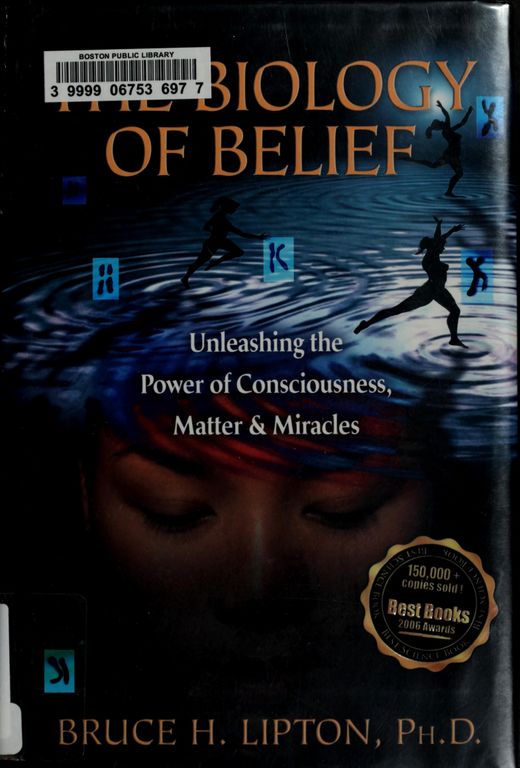
Nova: Precisely, Atlas. And it’s a concept that truly redefines what it means to seek root causes, shaking the very foundations of how we understand health. Today, we're diving into this revolutionary idea through the lens of Bruce H. Lipton’s groundbreaking work, "The Biology of Belief." Lipton, a former Stanford professor and cell biologist, was at the forefront of genetic research, only to have his own findings lead him to a completely different conclusion about where the real control lies.
Atlas: Oh, a scientist who turned his own field on its head? That’s always intriguing. So, what did Professor Lipton discover that made him question the genetic dogma?
Nova: His core premise is that our perceptions and beliefs, rather than just our genes, control our biology and health. It’s a scientific basis for the mind-body connection that goes far beyond mere philosophy.
Atlas: That sounds incredibly empowering, but also a bit overwhelming. If our beliefs are that powerful, it opens up a whole new level of responsibility, doesn't it? And that naturally leads us to the second key idea we need to talk about, which often acts as a counterpoint to what we just discussed, and that’s Carol S. Dweck’s seminal book, "Mindset." Dweck, a leading Stanford psychologist, has spent decades researching how our fundamental beliefs about our abilities impact everything from our learning to our resilience.
Nova: It’s a perfect pairing, because if Lipton explains our beliefs program our cells, Dweck shows us beliefs are most effective for growth and overcoming challenges.
The Cellular Intelligence: How Beliefs Shape Our Biology
SECTION
Nova: So, let's start with Lipton's "The Biology of Belief." For decades, mainstream science clung to genetic determinism – the idea that our genes pre-program our lives, our health, our susceptibility to disease. It was a comforting, if somewhat fatalistic, narrative.
Atlas: Yeah, it’s the ultimate excuse, isn't it? "Oh, it's just in my genes," or "I inherited this tendency." It takes the pressure off, but also takes away agency.
Nova: Exactly. But Lipton, through his research into cell biology, discovered something profoundly different. He found that the cell's environment, and more specifically, the cell's of its environment, is what dictates gene expression. Think of genes not as self-actualizing entities, but as blueprints.
Atlas: Right, blueprints. We have the instructions, but someone still has to build the house. So, who’s the architect in this cellular construction project?
Nova: The architect, or rather, the contractor, is our perception. The cell membrane, not the nucleus, is the brain of the cell. It’s covered in receptor proteins that act like tiny antennae, constantly sampling the environment. When these receptors pick up a signal – say, a nutrient, a hormone, or even an energetic thought wave – they relay that information inside the cell, triggering specific genes to turn on or off. Our interpretation of reality literally programs our cellular function.
Atlas: Wow. So you're saying my negative thoughts could literally make me sick? That sounds almost too powerful, almost… mystical. But you’re presenting it as hard science. Can you give us a vivid example of this in action?
Nova: Absolutely. Consider the classic example of stem cells. Lipton’s own research involved taking identical stem cells and placing them in three different petri dishes. In one dish, they grew into bone cells. In another, muscle cells. And in a third, fat cells. The cells were genetically identical. The only difference was the environment, specifically the biochemical signals they were exposed to.
Atlas: Okay, so the environment dictates the outcome. But how does that translate from a petri dish to a complex human being with a mind?
Nova: That's where the comes in. In a human body, our brain and nervous system are constantly interpreting our external and internal environments. Our thoughts, emotions, and beliefs generate biochemical signals – neurochemicals, hormones – that then bathe our cells. If you perceive stress, your body floods with cortisol. If you perceive love and safety, it releases oxytocin. These chemicals then tell your cells how to behave, what genes to express.
Atlas: So, for someone in health, seeking root causes, this redefines the 'root' entirely. It’s not just about the pathogens or the genetic predispositions, but about the we're creating for our own biology. This really challenges the traditional medical model that often focuses exclusively on physical symptoms.
Nova: It absolutely does. It suggests that while genes load the gun, it’s our beliefs and perceptions that pull the trigger. It offers a scientific explanation for the placebo effect, for spontaneous remissions, and for the profound impact of stress on health. It shifts us from being victims of our genes to masters of our biological destiny, by changing our minds.
Mindset as a Master Key: Unlocking Potential and Resilience
SECTION
Nova: And if our cellular biology is influenced by our perceptions, then it makes perfect sense that our overarching mental frameworks – our mindsets – have an equally profound impact on our lives, which brings us to Carol Dweck's seminal work, "Mindset."
Atlas: Oh, "Mindset"! That’s a book I've heard a lot about, but I'm curious how it connects directly to the biological control we just discussed. Is it just a metaphor, or is there a deeper link?
Nova: It’s more than a metaphor; it’s a psychological manifestation of that same principle of perception. Dweck, through decades of rigorous research, identified two fundamental mindsets: the fixed mindset and the growth mindset.
Atlas: Break it down for us. What's the core difference?
Nova: Someone with a fixed mindset believes their abilities, intelligence, and talents are static traits – you either have it or you don't. They tend to avoid challenges, give up easily when faced with obstacles, and see effort as fruitless. They also feel threatened by the success of others.
Atlas: That sounds like a recipe for stagnation, especially in fields that demand constant learning and innovation. It’s like saying, "I'm not good at X, so why bother trying?"
Nova: Exactly. Now, compare that to the growth mindset. Here, individuals believe their abilities can be developed through dedication and hard work. They embrace challenges, persist in the face of setbacks, see effort as a path to mastery, and find inspiration in the success of others. They view failure not as an indictment of their intelligence, but as valuable information for growth.
Atlas: That's a powerful distinction. So, for someone trying to elevate standards or innovate, a fixed mindset could be a massive roadblock. I can see how it could breed imposter syndrome, where even if you achieve success, you attribute it to luck rather than your own evolving skill.
Nova: Absolutely. Dweck’s research with children is particularly illuminating. When children were praised for their intelligence, they often developed a fixed mindset, shying away from harder tasks to protect their "smart" label. But when praised for their and, they developed a growth mindset, eagerly tackling more difficult problems. This isn't just about feeling good; it's about wiring the brain for continuous learning and resilience.
Atlas: So this isn't just about positive affirmations; it's about a fundamental shift in how we interpret our experiences. How does understanding these mindsets help us cultivate a 'growth-oriented practice,' especially when facing setbacks or difficult clients in a professional setting?
Nova: It's about reframing. Instead of viewing a difficult client interaction as a sign of your inadequacy, a growth mindset sees it as an opportunity to refine your communication skills, understand different perspectives, or innovate your approach. Instead of seeing a business challenge as a brick wall, you see it as a puzzle to solve, knowing that every attempt, even if it doesn't immediately succeed, builds capacity. It’s about cultivating that reflective 'tiny step' and 'deep question' mentality that allows for continuous learning, even from perceived failures.
Synthesis & Takeaways
SECTION
Nova: What's truly profound is how Lipton's cellular biology and Dweck's psychology converge. Our beliefs create our biological reality, and our mindset determines how we engage with that reality, how we learn from it, and ultimately, how we evolve. They both point to the incredible power of our internal world.
Atlas: It’s a complete loop, isn't it? From the microscopic level of our cells to the macroscopic level of our personal and professional development. It's about taking ownership of our internal narrative, realizing that the stories we tell ourselves aren't just stories; they are biological and psychological commands.
Nova: Exactly. And for our listeners who are deep thinkers, advocates, and architects of holistic systems, understanding this mind-body-mindset connection is the ultimate tool for creating truly integrated wellness protocols and ethical business models. You can't truly heal or innovate without addressing the underlying beliefs and mindsets at play.
Atlas: So the challenge isn't just about finding the right techniques, but about nurturing the internal environment – both cellular and psychological – that allows those techniques to flourish. It makes you wonder, what limiting beliefs are holding onto right now that might be silently shaping your reality?
Nova: A powerful question to ponder. This is Aibrary. Congratulations on your growth!