

Beyond the Scoreboard: The Mental Game of Peak Performance
Golden Hook & Introduction
SECTION
Nova: Atlas, what's one thing you know about achieving peak performance?
Atlas: Oh, easy. It's about having the right shoes, a perfectly timed protein shake, and probably a really good playlist. Anything else is just… noise.
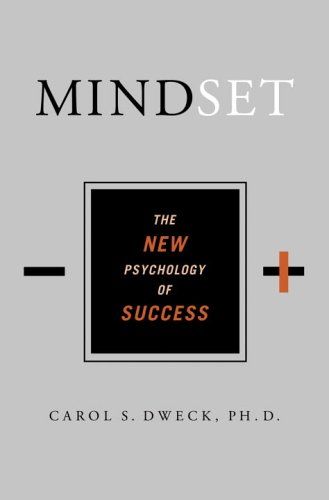
Nova: Well, today we're cutting through that noise with two groundbreaking works: "Mindset" by Carol Dweck, a Stanford psychologist whose decades of research illuminated how our fundamental beliefs about ability shape our entire lives, and "The Inner Game of Tennis" by W. Timothy Gallwey, a classic from a former tennis pro who taught us that the opponent inside our head is far tougher than the one across the net.
Atlas: Sounds like we're going 'Beyond the Scoreboard' today. I like it. So, where do we even begin with transforming our inner game?
Nova: We begin with what Dweck calls 'The Blind Spot,' Atlas.
The Blind Spot: Fixed vs. Growth Mindset
SECTION
Nova: The blind spot is this incredibly subtle trap, a belief system that most of us fall into without even realizing it. Carol Dweck's work, which is really revered in educational psychology, makes it so clear: it's the difference between a fixed mindset and a growth mindset.
Atlas: Okay, so, fixed versus growth. I've heard those terms thrown around a lot. What’s the real, tangible difference, especially for someone who feels like they’re already pushing their limits?
Nova: That’s a great question, and it's where the nuance lies. A fixed mindset is the belief that your basic abilities – your intelligence, your talents – are just static traits. You have them or you don't. So, if you get a low test score, or you fail at a new skill, a fixed mindset tells you, "I'm just not smart enough," or "I'm not good at this."
Atlas: Oh, I know that feeling. That little voice that says, "See? I told you so."
Nova: Exactly! And the danger is, if you believe that, why would you try harder? Why would you put in effort if your traits are fixed? You might even avoid challenges to protect the image of being "smart" or "talented." Dweck’s research has shown that even praising a child for being 'smart' can inadvertently push them towards a fixed mindset because they then fear making mistakes that might contradict that label.
Atlas: That’s actually really counterintuitive. So, the encouragement itself can be a trap. But wait, isn't some talent just innate? Someone who’s a natural athlete, for instance, seems to just it. Are you saying anyone can be a genius if they just 'try harder'?
Nova: Not at all. It's not about denying innate differences. It's about what you do with those differences. A growth mindset, on the other hand, believes that your most basic abilities can be developed through dedication and hard work. Brains and talent are just starting points. This view creates a love of learning and a resilience that is essential for great accomplishment.
Atlas: So basically, you're saying it's about seeing the challenge not as a judgment on your inherent talent, but as an opportunity for learning and development? Like, if a dedicated athlete faces a naturally more gifted opponent, instead of thinking, "I'll never be as good," they think, "What can I learn from this person, and how can I improve my own technique?"
Nova: Precisely. And that shift changes everything. It changes your effort, your response to setbacks, even your definition of success. It’s a profound reframe that allows for continuous growth, which I imagine resonates with our listeners who are constantly seeking to evolve.
The Inner Game: Overcoming Self-Interference
SECTION
Nova: And that naturally leads us to the second key idea we need to talk about, which often acts as a critical companion to the growth mindset: W. Timothy Gallwey's 'Inner Game.' Even if you believe you can grow, internal interference can still sabotage your performance.
Atlas: Ah, the self-sabotage. I can definitely relate. I’ve been there, where you know what to do, you have the skills, but something inside just... trips you up. What does Gallwey mean by 'inner game'?
Nova: Gallwey, who was a remarkable tennis instructor, realized that the mental game was often more challenging than the physical game. He observed his students struggling not because they lacked skill, but because of their own internal interference – things like self-doubt, overthinking, trying too hard, or criticizing themselves mid-action. He famously stated that 'the opponent within one's own head is more formidable than the one across the net.'
Atlas: Wow, that’s such a powerful insight. So it's not just about what you do, but what you to yourself, internally. Can you give an example of this interference in action?
Nova: Absolutely. Imagine a tennis player with a beautiful serve. They've practiced it thousands of times. But in a crucial match, they start to overthink. "Is my toss high enough? Am I rotating my shoulder correctly? Don't double fault!" This conscious, critical voice – what Gallwey calls 'Self 1' – starts to micromanage, and suddenly their natural, fluid 'Self 2' is paralyzed. They might hit a clumsy fault, not because they forgot how to serve, but because they got in their own way.
Atlas: That makes perfect sense. I can see how that applies far beyond the tennis court. For someone in a high-stakes academic challenge, for example, or a creative endeavor, that internal critic can be absolutely brutal. But if the solution is to 'not think,' how do you apply that to complex intellectual tasks where critical analysis the task?
Nova: That’s a brilliant distinction, Atlas. Gallwey isn't advocating for mindless action. He's teaching us to quiet the and thoughts, not the and thoughts. He suggests techniques like non-judgmental awareness – simply observing what's happening without immediately labeling it good or bad. Or focusing on external cues, like the seams on the tennis ball, to keep Self 1 occupied in a non-critical way. For an academic, it might be about deep immersion in the problem, allowing the subconscious to connect dots, rather than constantly second-guessing every word or equation.
Atlas: So it's about distinguishing helpful self-reflection from detrimental overthinking, especially for someone who seeks depth and intellectual rigor. And I imagine for an ethical explorer, someone driven by purpose, understanding this inner game helps align their actions with their deeper values without that critical voice derailing them. It’s about finding that flow state where purpose meets performance.
Nova: Exactly. It's about cultivating that inner wisdom, as you, Atlas, and our listeners, the Aspiring Sages, clearly value. It’s about seeing challenges not as judgments, but as opportunities for learning, and then having the mental clarity to actually execute on that learning.
Synthesis & Takeaways
SECTION
Atlas: I love that. It really reframes what 'failure' even means. So, for our listeners dedicated to growth and purpose, the challenge isn't just external, it's deeply internal, and completely within our control to change.
Nova: Indeed. What Dweck and Gallwey show us is that true peak performance isn't just about raw talent or endless practice; it's profoundly shaped by our mental frameworks. A growth mindset provides the fundamental belief in our capacity to learn and evolve, while the 'inner game' gives us the practical tools to quiet the internal noise and allow that potential to actualize without self-sabotage. It’s the freedom to learn, adapt, and perform authentically, even under immense pressure.
Atlas: So, it's not just about believing you can improve, but also trusting yourself enough to get out of your own way?
Nova: Precisely. It’s about cultivating that inner wisdom, as you, Atlas, and our listeners, the Aspiring Sages, clearly value. It’s about seeing challenges not as judgments, but as opportunities for learning, and then having the mental clarity to actually execute on that learning.
Atlas: I love that. It really reframes what 'failure' even means. So, for our listeners dedicated to growth and purpose, the challenge isn't just external, it's deeply internal, and completely within our control to change.
Nova: Indeed. So, we leave you with this: Consider a recent challenge in your life. How would approaching it with a pure growth mindset, free from internal interference, have changed your experience or outcome?
Nova: This is Aibrary. Congratulations on your growth!