The Resilient Leader's Mindset: Optimism and Well-being
Golden Hook & Introduction
SECTION
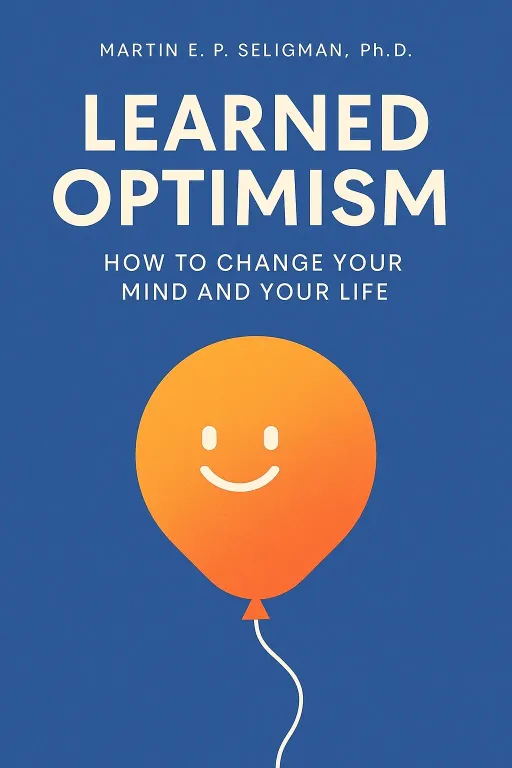
Nova: Alright Atlas, I’ve got a challenge for you. We’re talking about Martin Seligman’s groundbreaking work today. Give me your five-word review of "Learned Optimism." Go!
Atlas: Five words? Hmm. "Mindset shift, organizational game-changer."
Nova: Ooh, I like that. "Organizational game-changer" – a true strategist's take! For anyone who hasn't encountered his work, Martin E. P. Seligman, Ph. D., is often heralded as the father of positive psychology. His research, spanning decades, brought rigorous scientific inquiry to topics like happiness, well-being, and, yes, optimism. He really moved beyond just treating mental illness to scientifically studying what makes life most worth living.
Atlas: That’s a crucial distinction, isn’t it? Because often, when we talk about optimism, people might dismiss it as a 'soft skill' or just a feel-good platitude. But you’re saying Seligman brought data to it.
Nova: Absolutely. He rooted it in empirical evidence, showing it's a learnable skill, not just a personality trait. And that scientific rigor is precisely what makes his work so powerful for leaders and organizations. It provides a framework. And this framework is beautifully complemented by the insights of Christopher Peterson, a close collaborator with Seligman, who, through works like "Pursuing the Good Life," expanded this lens to encompass character strengths, gratitude, and the profound pursuit of meaning and engagement.
Atlas: So, Seligman gives us the 'how' to reframe setbacks, and Peterson gives us the 'what' to build on – the positive elements that lead to a flourishing existence. It’s not just about bouncing back from a hit, but about building muscle to thrive.
Nova: Precisely. Together, they underscore a fundamental truth: resilience and well-being are not innate gifts bestowed upon a lucky few. They are developable skills, skills that can be cultivated, practiced, and integrated into our personal lives and, crucially, into the very fabric of our teams and organizational culture.
The Architecture of Optimism: Explanatory Style as a Foundational Skill
SECTION
Nova: Let’s dive into Seligman’s core contribution: the concept of an optimistic explanatory style. It really started with his earlier work on 'learned helplessness.' Imagine a dog in a cage, subjected to unavoidable shocks. Eventually, even when given an escape route, the dog just lies down and takes the shocks. It learns helplessness.
Atlas: Oh, I know that feeling. I imagine a lot of our listeners, especially those building complex systems or navigating market shifts, have felt a version of that – where you just feel like you’re hitting your head against a wall. It’s an exhausting place to be.
Nova: It is. But Seligman’s breakthrough wasn't just identifying helplessness; it was figuring out how to it, and more importantly, how to optimism. He found that our explanatory style – how we habitually explain the causes of bad events – is the key. There are three dimensions: permanence, pervasiveness, and personalization.
Atlas: Okay, so it’s not the event itself, but the story we tell ourselves the event. Can you break down those dimensions with an example? Because for a strategist, understanding the root cause is everything.
Nova: Exactly. Let's take a common scenario for a leader: a major product launch fails to meet its sales targets, despite months of intense work and investment.
Atlas: That’s a gut punch for any builder or visionary. The kind of setback that can really shake confidence.
Nova: Absolutely. A leader with a explanatory style might interpret this failure like this: "This always happens to me. My ideas are fundamentally flawed, and this failure will cripple our entire company's innovation efforts for years. It's all my fault; I'm just not cut out for this."
Atlas: That’s a heavy narrative. It sounds like a downward spiral.
Nova: It is. Let's break down those three dimensions in that pessimistic explanation. First,: "This happens to me" and "it our efforts for years." They see the failure as permanent, unchangeable. Second,: "My ideas are " and "cripple our." They see the failure as affecting all areas of their life and work, not just this specific product. And third,: "It's; I'm just not cut out for this." They internalize the blame entirely.
Atlas: That’s a classic recipe for learned helplessness right there. It makes it sound like there's no way out, no lesson to learn, just a crushing, personal defeat. But how does an optimistic explanatory style shift that narrative?
Nova: A leader with an explanatory style, facing the, would reframe it: "This particular launch didn't meet its targets. We learned some crucial lessons about, which we can apply to future products. While I played a role, there were also that contributed."
Atlas: Whoa, that's a completely different mental landscape. It sounds like they're not denying the failure, but rather dissecting it for actionable intelligence. It's like a post-mortem, but for your internal monologue.
Nova: Exactly! The optimistic leader sees the setback as,, and. This isn't about blind positivity or ignoring reality. It's about accurately attributing cause and effect. It's about understanding that a bad event is contained, not catastrophic; it's a data point, not a destiny.
Atlas: I’m curious, though. For a visionary constantly analyzing business models, how do you prevent this from becoming a form of self-deception? Sometimes a failure systemic, or it a sign that your core idea is flawed. How do you distinguish between optimism and delusion?
Nova: That’s a brilliant question, and it gets to the heart of what Seligman emphasizes. Optimistic explanatory style is not about ignoring facts or pretending everything is fine. It’s about and. A pessimistic style tends to be inaccurate – it overgeneralizes, over-personalizes, and catastrophizes. An optimistic style, by contrast, seeks accurate, bounded explanations. It allows you to say, "Yes, this part failed, but it doesn't mean am a failure, or that else will fail." It preserves your sense of agency to act and iterate.
Atlas: I see. So it’s about taking that sharp analytical mind our listeners possess, but applying it to your own internal narrative, almost like debugging your own mental software. It’s a strategic choice in how you process information, even negative information.
Nova: Precisely. It’s a skill you can consciously develop. By observing your own reactions to setbacks and deliberately reframing them along those three dimensions, you essentially rewire your brain for resilience. It allows leaders to absorb inevitable blows, learn from them, and move forward without succumbing to learned helplessness.
Cultivating Flourishing: Beyond Optimism to Meaning and Team Dynamics
SECTION
Nova: That idea of debugging our mental software and consciously reframing challenges naturally leads us to the broader picture of what makes a life, and a team, truly flourish. This is where Christopher Peterson’s work, particularly his emphasis on character strengths, gratitude, meaning, and engagement, becomes so powerful.
Atlas: Meaning and engagement, those are big words in leadership right now. Every company wants more of it. But what’s the tangible link to, say, building resilient organizations and scalable success? Because a lot of our listeners are focused on building efficient systems and driving growth. How does 'character strengths' translate into a better bottom line or a more robust team?
Nova: That’s where the power lies. Peterson, alongside Seligman, championed the scientific study of these elements. He wasn't just talking about abstract concepts; he was identifying quantifiable traits and practices that lead to flourishing. Take character strengths, for instance. Peterson identified 24 universal character strengths, things like curiosity, perseverance, honesty, kindness, creativity, judgment, teamwork. The insight here is that when individuals, and by extension, teams, understand and their signature strengths, they become more engaged, more productive, and far more resilient.
Atlas: So, it's about understanding what each person naturally excels at, beyond just their job description, and then intentionally deploying those strengths?
Nova: Exactly. Let's imagine a team facing a significant and unexpected market disruption – perhaps a new competitor has emerged with a disruptive technology, threatening their core business model. Panic could easily set in.
Atlas: That’s a real-world nightmare for any business leader. The kind of scenario that tests every fiber of a team’s resilience.
Nova: Indeed. A leader who understands Peterson’s work wouldn't just assign tasks; they would actively encourage the team to identify and utilize their individual character strengths to tackle the problem. So, the team member strong in 'creativity' might be tasked with brainstorming radical new product ideas. The one strong in 'judgment' would evaluate the risks and opportunities of those ideas. The person with high 'curiosity' would deep-dive into understanding the new competitor's technology. Someone strong in 'teamwork' would ensure seamless collaboration and communication across the different workstreams.
Atlas: So it's not just about individual well-being, it's a strategic framework for team performance. Almost like a 'strengths-based' business model for human capital, where you're optimizing for engagement and innovation by aligning people with what energizes them.
Nova: You've hit the nail on the head. When people are operating from their strengths, they're not just doing a job; they're bringing their whole, best selves to the challenge. This leads to higher engagement, better problem-solving, and a collective sense of purpose. It fosters a growth-oriented culture because individuals feel empowered and valued for their unique contributions, not just their ability to follow instructions.
Atlas: And what about gratitude? That often feels like a purely personal, internal practice. How does that scale up to impact team dynamics and organizational resilience?
Nova: Gratitude, far from being a purely personal 'feel-good' exercise, has profound interpersonal and organizational benefits. When practiced openly within a team, it builds social capital. Expressing genuine appreciation for colleagues' efforts, contributions, or even their character strengths, strengthens bonds, increases trust, and fosters a positive feedback loop.
Atlas: So, it’s not just saying "thank you" superficially. It’s creating a culture where recognition and appreciation are woven into daily interactions.
Nova: Precisely. In times of high stress or challenge, a team with strong social bonds and a culture of gratitude is far more resilient. They support each other, they're more forgiving of mistakes, and they're more likely to pull together rather than splinter under pressure. It's about fostering psychological safety, which is critical for innovation and problem-solving. This isn't just about making people happier; it’s about creating a robust, connected, and high-performing ecosystem within the organization. It's a strategic investment in human capital that pays dividends in resilience and sustained growth.
Synthesis & Takeaways
SECTION
Nova: It’s truly fascinating how these two pillars of positive psychology, Seligman's work on an optimistic explanatory style and Peterson's focus on character strengths and flourishing, come together. Seligman gives us the individual fortitude – the mental mechanism to interpret setbacks in a way that preserves our agency. Peterson then provides the framework for applying that beyond ourselves, to consciously build thriving teams and organizations by leveraging what’s inherently good and strong in people.
Atlas: It's powerful. It moves these concepts from the realm of abstract personal development into actual strategic tools for leadership. For anyone driven by scalable success and building resilient organizations, these aren't soft skills; they’re an operating manual for engineering mental fortitude and a truly growth-oriented culture. It’s like, instead of just hoping your team stays positive, you’re actively designing the conditions for their optimism and flourishing.
Nova: Exactly. It moves beyond simply reacting to challenges, to proactively engineering a mindset – both individually and collectively. It's about understanding that the stories we tell ourselves, and the strengths we cultivate in each other, directly impact our capacity to innovate, adapt, and succeed.
Atlas: So, for our listeners, the strategists and builders out there, the visionaries trying to fuel sustainable growth, what's one concrete step they can take this week to start implementing this? Something tangible to put into action.
Nova: I’d say start with self-observation. The next time you face a minor or major setback, pause. Observe your initial explanatory style. Are you catastrophizing, seeing it as permanent and pervasive? Or can you challenge that narrative and look for temporary, specific causes? Just that awareness is the first, crucial step to rewiring your internal dialogue. And for your team, try this: at the beginning of a challenging meeting, take five minutes for a quick gratitude huddle. Ask everyone to share one thing they appreciate about a colleague's effort or contribution this week. You might be surprised by the immediate shift in energy and connection.
Atlas: Love that. Iterative learning, right? Small steps, big impact. It’s about building those mental and relational muscles, one rep at a time.
Nova: Absolutely. This is Aibrary. Congratulations on your growth!