

The Psychology of Calming Fears: Strategies for Anxiety Reduction
Golden Hook & Introduction
SECTION
Nova: You know, Atlas, I was reading this fascinating anecdote about a tightrope walker who, when asked if he was afraid of falling, said, "I'm not afraid of falling; I'm afraid of falling."
Atlas: Oh, I like that! That's a great way to put it, especially for our listeners who might be feeling that tightrope tension in their own lives. It sounds like a paradox, but it hints at a deeper psychological truth, doesn't it?
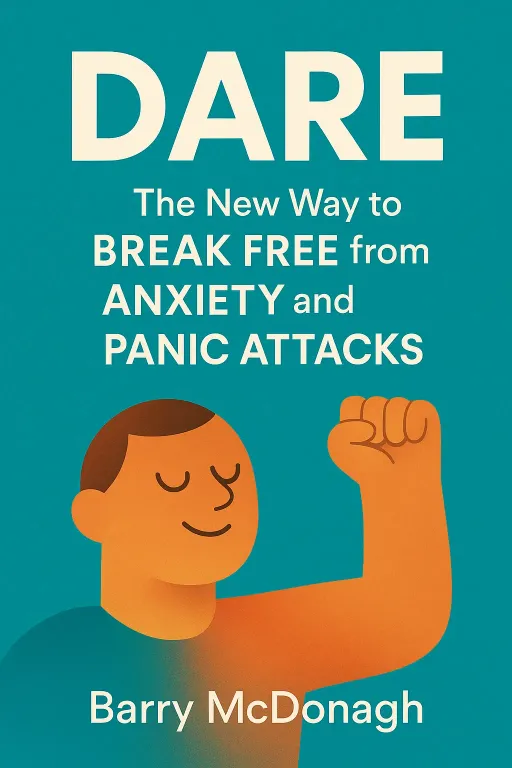
Nova: Exactly! It immediately made me think of the two brilliant books we’re tackling today, both of which offer profound insights into how we can transform our relationship with fear. We’re talking about "Dare" by Barry McDonagh, and "Mindset: The New Psychology of Success" by Carol S. Dweck.
Atlas: Ah, two powerhouses! McDonagh, who built his system from a deeply personal struggle with anxiety, offers such a counter-intuitive yet incredibly effective approach to panic. And Dweck, a Stanford professor whose work has revolutionized how we think about potential and resilience. So, we're not just talking about managing fear today, are we? We're talking about fundamentally rewiring our emotional responses.
Nova: Absolutely. And that leads us straight into our first big idea: the radical notion that sometimes, the best way to calm fear isn't to fight it, but to actually it.
From Fear to Freedom: Rewiring Emotional Responses
SECTION
Nova: McDonagh's "Dare" method is a complete game-changer for anyone experiencing anxiety or panic attacks. His core premise is that our natural fight-or-flight response, while evolutionary, often gets misdirected. We try to suppress anxiety, to push it away, and ironically, that just makes it stronger.
Atlas: Hold on, so you’re saying that instead of trying to make anxiety disappear, we should... almost embrace it? That sounds a bit out there, isn't it? Most people's first instinct is to run as fast as they can from a panic attack.
Nova: I totally know that feeling. But McDonagh argues that the very act of fighting anxiety sends a signal to your brain that there’s a real threat, perpetuating the cycle. His method, which he developed after years of personal struggle and then refining it with thousands of clients, has four key steps: Defuse, Allow, Run Towards, and Engage.
Atlas: Okay, "Defuse" makes sense – maybe not letting it escalate. "Allow" is interesting… accepting the feeling. But "Run Towards"? That feels like pouring gasoline on a fire. Can you give an example?
Nova: Absolutely. Imagine someone feels a panic attack coming on – their heart starts racing, they feel dizzy, they think they're having a heart attack. The "Dare" approach would have them not fight those sensations, but rather, them. Even say to themselves, "Okay, heart, beat as fast as you can! Bring it on, dizziness!"
Atlas: Wow, that’s actually really inspiring. It’s like challenging the fear, not fleeing from it. So instead of trying to control the uncontrollable physical sensations, you change your response to them.
Nova: Exactly. And the "Run Towards" part is crucial. It’s about actively inviting the sensations, even exaggerating them in your mind. This sends a powerful message to your brain: "This isn't actually dangerous." It short-circuits the fear response. McDonagh's own journey from debilitating panic to living a full life is a testament to this, and his work has been adopted by therapists worldwide for its effectiveness.
Atlas: That makes me wonder… for someone who's dealing with a high-stakes health journey, where uncertainty itself can breed anxiety, how does this method translate? Because it's not just about a panic attack, it's about the fear of the unknown.
Nova: That’s a brilliant connection, Atlas. And it’s where Carol Dweck’s work on mindsets comes in beautifully. While McDonagh helps us manage the immediate emotional response to fear, Dweck gives us the framework to prevent chronic anxiety stemming from uncertainty. Her core idea is the difference between a fixed mindset and a growth mindset.
Atlas: Ah, the famous fixed versus growth! I’ve been thinking about this a lot lately. In a fixed mindset, abilities and intelligence are seen as static, right? Like, "I'm just not good at math," or "I'm naturally an anxious person."
Nova: Precisely. And for someone facing a health challenge, a fixed mindset might sound like, "This is just how my body is," or "I'm always going to be sick." This creates immense anxiety because any setback feels like a permanent failure, a confirmation of their inherent limitations.
Atlas: So, the anxiety isn't just about the illness itself, but about the they're telling themselves about their ability to cope or recover. That’s a profound insight.
Nova: It really is. Dweck's research, which spans decades and has been applied in education, business, and personal development, shows that those with a growth mindset view challenges as opportunities to learn and grow. They believe their abilities can be developed through dedication and hard work.
Atlas: That’s such a hopeful way to look at it. So, if a patient is experiencing anxiety about a treatment not working, instead of seeing it as a personal failure, they might see it as information, a data point to learn from and adjust their approach.
Nova: Exactly. It reframes the fear associated with uncertainty. Instead of thinking, "What if I fail?", the growth mindset prompts, "What can I learn from this, no matter the outcome?" This shift dramatically reduces anxiety because it removes the pressure of proving something and replaces it with the joy of learning. It empowers patients in managing their health journey's emotional aspects, moving them from a place of passive fear to active engagement.
Applying Psychological Principles for Comfort
SECTION
Nova: Now, let's bring these together. Imagine a patient who is anxious about an upcoming medical procedure. They might be caught in a fixed mindset, thinking, "I'm just going to be scared, I can't handle this."
Atlas: That sounds rough, but I can definitely relate. I imagine a lot of our listeners feel that way when facing big life events. So, how would we apply McDonagh and Dweck here?
Nova: First, with McDonagh, you could guide them to reframe their fear. Instead of saying, "I'm so scared," they could try, "I'm feeling a lot of intense energy right now, it's like excitement with nowhere to go." And then, guide them towards taking a tiny, actionable step they control, no matter how small.
Atlas: So basically you’re saying, acknowledge the feeling, give it a different name, and then immediately focus on something tangible and within their power. Like, "Okay, this rush of adrenaline isn't fear, it's my body getting ready. Now, I'm going to focus on taking three deep breaths."
Nova: Precisely. And then, we layer in Dweck. The growth mindset helps them see the challenge not as a test of their inherent strength, but as an experience they can grow through. You might subtly introduce this by asking, "What's one small thing you could learn from this experience, regardless of the outcome?" or "How can you approach this like a challenge to be mastered, rather than a threat to be endured?"
Atlas: I love that. It’s about shifting the internal narrative. Instead of "This is happening me," it becomes "This is something I can learn." That immediately sounds less anxiety-provoking. It’s like, instead of saying, "I'm bad at public speaking," you say, "I'm still learning how to connect with an audience."
Nova: Exactly! It's such a subtle but powerful reframe. McDonagh teaches us to accept and even invite fear's sensations, stripping away their power. Dweck shows us how to view the underlying challenges that trigger fear as opportunities for personal growth, making us more resilient in the long run.
Atlas: That’s a perfect example. It's not about being fearless, but about being courageous, right? It's feeling the fear and deciding to grow anyway. And that’s a message that resonates deeply with anyone facing uncertainty, whether it's in their health, career, or personal life.
Synthesis & Takeaways
SECTION
Nova: What emerges from both McDonagh and Dweck's work is this incredible synergy: one helps us handle the moments of fear, and the other builds our resilience against it. It's about understanding that our emotional responses aren't fixed, they're malleable.
Atlas: That’s such a hopeful takeaway. It gives me chills, actually. The idea that we can actively choose how we respond to fear, and even choose to grow from it, that's incredibly empowering. It means our anxieties don't have to define us.
Nova: And it’s not about ignoring the difficulties or pretending everything is fine. It’s about acknowledging the reality, but then consciously choosing a response that leads to freedom and growth, rather than paralysis. For our listeners who are navigating complex situations, remember: you have more agency over your emotional landscape than you might think.
Atlas: So, the next time you feel that familiar knot of anxiety, maybe try McDonagh's "Run Towards" technique, even if it feels counterintuitive. And then, ask yourself, as Dweck would suggest, "What can I learn from this challenge?" It’s a powerful combination.
Nova: It truly is. It's about turning fear into a catalyst for self-discovery and resilience.
Atlas: That’s a great way to put it. It’s a journey from being defined by your fears to becoming the architect of your own emotional freedom.
Nova: This is Aibrary. Congratulations on your growth!









