

The Mindset of Continuous Improvement
Golden Hook & Introduction
SECTION
Nova: You know, Atlas, I was talking to someone the other day who said something that really stuck with me. They said, "The only true failure is the failure to learn." And it got me thinking about how often we, especially in demanding fields, mistake a setback for a dead end.
Atlas: Oh, I know that feeling. It's like you hit a wall, and your first instinct is often to just… stop, or worse, blame the wall. For high-achievers, that can be a really tough pill to swallow.
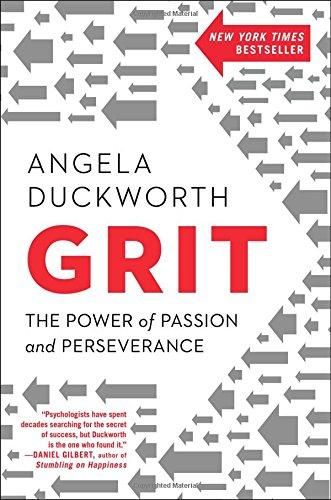
Nova: Absolutely. And that's exactly why we need to talk about continuous improvement, not just as a concept, but as a deeply ingrained mindset. Today, we're diving into the powerful ideas from two seminal works: Angela Duckworth's "Grit: The Power of Passion and Perseverance" and Carol Dweck's "Mindset: The New Psychology of Success."
Atlas: Two absolute titans in understanding human potential. I'm curious, Nova, what's a standout fact about one of these authors that really encapsulates their message?
Nova: Well, with Angela Duckworth, it's fascinating that her journey to writing "Grit" really began with her own frustration as a public school teacher. She noticed that the students who excelled weren't always the ones with the highest IQs, but those with an almost irrational persistence. This observation, rooted in real-world challenges, drove her to explore the science behind that staying power.
Atlas: That’s a great way to put it, "irrational persistence." Because often, from the outside, that’s exactly what it looks like when someone just keeps pushing through. It sounds almost counter-intuitive to the idea of working smarter, not harder.
Nova: Exactly, but it’s not about blind effort. It’s about directed, sustained effort towards a long-term goal. And that brings us perfectly into our first core idea: the foundational power of grit.
The Foundational Power of Grit
SECTION
Nova: So, let's start with grit, as Duckworth defines it. It's that unique combination of passion and perseverance for very long-term goals. It's not just about bouncing back from failure; it’s about having a compass that consistently points you towards your true north, even when storms hit.
Atlas: Okay, so it’s not just stubbornness then? Because sometimes, especially in engineering, you see people stubbornly clinging to an idea that clearly isn't working, and that's not grit, that’s just… being stuck.
Nova: That’s a critical distinction, Atlas. True grit isn't about repeatedly banging your head against the same wall. It's about maintaining your ultimate vision, but being flexible and innovative in your approach to overcome obstacles. Think about the early days of SpaceX. Elon Musk wasn't just launching rockets and hoping for the best. He had a clear, audacious vision for Mars, and he persevered through multiple spectacular failures, learning from each one, adapting the designs, and pushing his teams to innovate.
Atlas: Right, so he wasn't just throwing money at the problem, he was iterating. Like, if you're building a new engine, and the first prototype explodes, you don't just build the exact same one again. You analyze the failure, redesign, retest. That makes sense.
Nova: Precisely. Duckworth's research highlights that grit is often a better predictor of success than talent or IQ, especially in fields that demand sustained effort and problem-solving, like engineering or scientific research. She followed cadets at West Point, participants in the National Spelling Bee, even rookie teachers, and consistently found that grit was the common thread among those who succeeded.
Atlas: That’s fascinating. It implies that while talent might get you in the door, it's grit that keeps you in the race, and ultimately, helps you cross the finish line. But what does that look like on a day-to-day basis for someone in a complex technical role? Is it just… working longer hours?
Nova: Not at all. It's about deliberate practice. It's about having a "stretch goal" that's just beyond your current capability, focusing intensely on improving a specific weakness, getting immediate feedback, and then reflecting and refining. It’s an active process. For an engineer, it might be dedicating time to master a new programming language, or understanding a complex system architecture, even when you’re facing tight deadlines on your current project. It's about making that long-term investment in your own skill set, knowing it will pay off.
Atlas: So, it's less about the sheer volume of work and more about the quality and intentionality of the effort. Like, if you’re trying to optimize a process, you don’t just randomly tweak things. You identify the bottleneck, you hypothesize a solution, you test it, measure, and then you adjust based on the data.
Nova: Exactly. And this isn't just about individual endeavors. Think about the development of the internet itself. It wasn't a single stroke of genius. It was decades of incremental improvements, failures, new protocols, and persistent collaboration among countless engineers and researchers. Each setback wasn't the end; it was a data point, an opportunity to refine the vision.
Atlas: I can definitely see how that applies to large-scale, complex projects. It's like, a Mars rover isn't just designed and built once. It's a continuous cycle of simulations, tests, failures, and redesigns, all driven by the ultimate goal of getting a working machine on another planet. The grit is in the team, not just one person.
The Transformative Power of Mindset
SECTION
Nova: And that brings us so beautifully to our second core idea, which often works hand-in-hand with grit: the transformative power of a growth mindset, as articulated by Carol Dweck. If grit is the fuel for the long journey, the growth mindset is the engine that allows you to keep moving forward, even when you stumble.
Atlas: You’re saying it’s the internal operating system? Because I think a lot of people, myself included sometimes, can get stuck thinking, "I'm just not good at this," or "This is just how I am."
Nova: That's the fixed mindset talking, Atlas. Dweck's groundbreaking work shows that people generally fall into one of two mindsets: fixed or growth. A fixed mindset believes that our abilities, intelligence, and talents are static traits – you either have them or you don't. So, when you face a challenge or failure, it feels like a personal indictment of your inherent capability.
Atlas: Oh man, that resonates. The fear of failure, especially in a high-stakes environment where precision is paramount. If you make a mistake, it can feel like a direct hit to your identity as a competent engineer.
Nova: Exactly. But a growth mindset, conversely, is the belief that our most basic abilities can be developed through dedication and hard work. Brains and talent are just the starting point. This view creates a love of learning and a resilience that is essential for great accomplishment.
Atlas: So, in a growth mindset, a mistake isn't proof you're incompetent; it's just information. It's a signal that you need to adjust your approach or learn something new.
Nova: Precisely. Think about the evolution of artificial intelligence. For decades, there were "AI winters" where progress stalled, and many believed the field had inherent limitations. But researchers with a growth mindset saw these setbacks not as proof of AI's ultimate limits, but as complex problems to be solved, new avenues to explore. They kept learning, adapting, and innovating, ultimately leading to the breakthroughs we see today.
Atlas: That makes so much sense. Because if you had a fixed mindset about AI, you would’ve just given up when the early promises didn’t materialize. But those who persevered, those with that growth orientation, saw it as a challenge, not an impossibility.
Nova: And it’s not just about big scientific endeavors. Dweck gives countless examples of how this plays out in schools, in business, and in relationships. For instance, a manager with a growth mindset sees an employee's struggle not as a sign of their inadequacy, but as an opportunity for coaching, training, and development. They believe in the potential for improvement.
Atlas: So, it shifts the focus from "who is to blame?" to "how can we learn and improve?" Which, for an analytical engineer, is a much more productive frame of mind. You’re always looking for the optimal path forward.
Nova: And this is where grit and mindset truly intertwine. A growth mindset provides the belief that improvement is possible, while grit provides the sustained effort to actually achieve that improvement. You need both to continuously evolve, especially when you're tackling complex engineering problems that often have no clear-cut solutions.
Atlas: It almost sounds like a feedback loop. Your growth mindset tells you that you get better, which fuels your grit to harder, and then when you see progress, that reinforces your growth mindset. It’s a powerful cycle.
Nova: It absolutely is. And it’s a cycle that allows for true innovation. Because innovation is rarely a straight line. It requires the mental fortitude to persist through setbacks and the open-mindedness to continuously learn and adapt.
Synthesis & Takeaways
SECTION
Nova: So, Atlas, when we bring these two powerful ideas together – Duckworth's grit and Dweck's growth mindset – what’s the big takeaway for our listeners who are constantly optimizing systems, building new technologies, and pushing the boundaries of what's possible?
Atlas: I think it’s about embracing the journey, not just the destination. It’s a reminder that every challenge isn’t a judgment of your inherent ability, but an opportunity to sharpen your tools, learn a new technique, and ultimately, become more capable. It’s about cultivating that inner belief that you develop, even in the face of daunting complexity.
Nova: That’s beautifully put. It’s about understanding that our potential isn't fixed, it's fluid. It's something we actively cultivate. And for anyone in a field that demands constant learning and adaptation, this isn’t just a nice-to-have; it's essential for long-term success and personal fulfillment. It’s the difference between hitting a wall and seeing it as a stepping stone.
Atlas: And it’s not just about professional success. It’s about personal development too. How can fostering greater grit and a growth mindset enhance your ability to tackle not only complex engineering problems but also your own personal development goals? It makes you unstoppable.
Nova: Absolutely. It makes you unstoppable because you’re not afraid of the unknown, and you see every challenge as a chance to grow. It’s about finding the beauty in the struggle, knowing that each "failure" is just data for your next, more informed attempt.
Atlas: I think for our listeners, the challenge is to identify that one area where they might be holding onto a fixed mindset and ask themselves: "What if I approached this with a belief that I improve, and then applied some persistent, deliberate effort?"
Nova: That's the key. To consciously choose the growth path. And that choice, made consistently, can fundamentally alter your trajectory.
Atlas: This is Aibrary. Congratulations on your growth!









