

Cultivating Unshakable Mental Toughness: Strategies for Gymnastics & Life
Golden Hook & Introduction
SECTION
Nova: Atlas, five words to describe how you feel about mental toughness?
Atlas: Oh man, necessary, elusive, sometimes terrifying, and utterly essential.
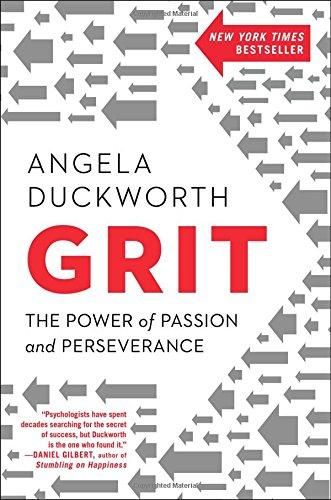
Nova: Utterly essential. I love that. And that's exactly what we're diving into today: the profound pursuit of unshakable mental toughness. We're pulling insights from three incredible books: Angela Duckworth's groundbreaking "Grit: The Power of Passion and Perseverance," Carol Dweck's foundational "Mindset: The New Psychology of Success," and David Goggins's raw, unfiltered "Can't Hurt Me: Master Your Mind and Defy the Odds."
Atlas: Wow, that's a power-packed lineup. From academic research to extreme personal challenge. It sounds like we're not just talking about lifting weights, but lifting the limits of our own minds.
Nova: Exactly. Duckworth, a renowned psychologist, brought a scientific lens to what makes people truly succeed long-term, showing us it's often more about sustained effort than raw talent. Dweck, another psychology giant, revolutionized our understanding of how our fundamental beliefs about our abilities shape everything. And Goggins… well, he’s a force of nature, a retired Navy SEAL who shows us the absolute extreme of human will, often pushing past what many consider physically possible.
Atlas: That’s a fascinating spread. I imagine a lot of our listeners, especially those striving for mastery in their own fields, might feel a pull towards Goggins's intensity, but also the practicality of Dweck and Duckworth.
Nova: Absolutely. And for anyone, whether you're an aspiring acrobat facing a new, terrifying flip, or someone trying to master a challenging new skill, understanding these principles isn't just helpful – it’s transformative. It’s about not just surviving, but thriving when the going gets tough.
The Growth Mindset: Redefining Failure
SECTION
Atlas: So, speaking of tough, let's start with Dweck's "Mindset." Because I think that's where a lot of people get stuck, right? The moment things go according to plan. How does she help us redefine what we often call 'failure'?
Nova: That’s a brilliant place to start. Dweck’s work is pivotal because it highlights two fundamental ways we approach challenges: with a fixed mindset or a growth mindset. Imagine two gymnasts, both practicing a new, incredibly difficult triple-twist dismount.
Atlas: Oh, the triple-twist. Sounds terrifying already.
Nova: It is! Now, the first gymnast, let's call her Sarah, has a fixed mindset. She believes her talent is innate, a fixed quantity. She tries the dismount, falls hard, and immediately thinks, "I'm just not good enough. This isn't for me." She feels embarrassed, maybe even ashamed, and starts avoiding that particular move, sticking to what she's already good at. Her self-worth is tied directly to performing flawlessly.
Atlas: I can definitely relate to that feeling, not necessarily in gymnastics, but in any area where you feel exposed or inadequate. That fear of looking bad can be paralyzing.
Nova: Precisely. Now, consider our second gymnast, Maria. Maria has a growth mindset. She believes her abilities can be developed through dedication and hard work. She tries the triple-twist, falls just as hard as Sarah, but her internal monologue is completely different. She doesn't think, "I'm not good enough." Instead, she thinks, "Okay, that didn't work. What happened? Was my takeoff off? Did I not get enough height? Was my rotation too slow?"
Atlas: So she sees the fall not as a personal indictment, but as data.
Nova: Exactly! It's critical feedback. Maria gets up, talks to her coach, watches a video of her attempt, and meticulously breaks down the mechanics. She sees the 'failure' not as an endpoint, but as a crucial step in refining her technique and strengthening her resolve. She’s embracing the journey, knowing every step builds her bravery. She’s not afraid to look bad because the goal isn't perfection, it's progress.
Atlas: That makes perfect sense. For our listeners who are trying to achieve mastery, that shift from "I am a failure" to "That attempt failed, what can I learn?" is monumental. But how do you practically that shift when your heart is pounding and you feel that sting of disappointment?
Nova: It's not easy, but it’s trainable. First, actively separate your identity from the outcome. Remind yourself: "My effort failed, not." Second, cultivate curiosity about the mistake. Ask "what" and "how" questions, not "why me?" And third, celebrate the effort and the learning process itself, not just the successful outcome. Maria's growth mindset enabled her to get back up, learn, and ultimately, grow stronger from that fall. That’s how you redefine failure.
Grit and Unshakable Perseverance
SECTION
Nova: And that naturally leads us to the second key idea we need to talk about, which often acts as the engine that drives that growth mindset forward: Angela Duckworth's concept of 'grit.' What comes after deciding to embrace growth, Atlas? It's the sustained effort.
Atlas: Yeah, I guess that makes sense. A growth mindset gets you back on the mat, but grit keeps you there, day after day, through the grind. But what grit, really? Is it just stubbornness?
Nova: That’s a great distinction. Duckworth defines grit as passion and perseverance for long-term goals. It’s not just about pushing through once, it’s about having a deep, sustained interest and consistent effort towards something you care about, often for years, even decades. She found that grit was a better predictor of success than talent in many fields.
Atlas: Really? That’s kind of counterintuitive. We’re so conditioned to believe in natural talent.
Nova: We are. But talent can be fleeting, or it can hit a plateau. Grit, however, keeps you going through those plateaus. Let's look at two more gymnasts: Mark and Leo. Mark is naturally gifted. He picks up new skills quickly, effortlessly. Everyone says he's a prodigy. But when he hits a tough phase in his training, where progress slows and it requires repetitive, unglamorous drills, he loses interest. He gets bored. He moves on to something else that comes easily.
Atlas: Oh, I’ve seen this play out in so many areas, not just sports. The person who's brilliant but jumps from one thing to the next.
Nova: Precisely. Now, Leo isn't as naturally gifted. He has to work twice as hard for every skill. But Leo gymnastics. He loves the feeling of pushing his body, the discipline, the gradual mastery. He sees the repetitive drills as essential steps, not obstacles. He has a deep, underlying passion for the sport, and that passion fuels his perseverance. He keeps showing up, keeps putting in the hours, even when it's frustrating, even when he's not seeing immediate results.
Atlas: So, the cause is sustained passion, the process is consistent, often tedious effort, and the outcome is eventual mastery, even if it’s slower.
Nova: Exactly. Duckworth’s research shows that Leo, the grittier individual, is far more likely to achieve elite levels of performance than Mark, the naturally talented but less gritty one. It's about that enduring commitment to a singular, meaningful goal. She actually talks about four components of grit: interest, practice, purpose, and hope. It's not just about grinding; it's about finding deep meaning in the struggle.
Atlas: That’s actually really inspiring. It feels more accessible than just being born with 'talent.' But what about the 'passion' part? Is that something you just stumble upon, or can you cultivate it? Because honestly, sometimes the 'inner drive' feels like it's sputtering.
Nova: That's a critical question. Duckworth argues that passion can absolutely be cultivated. It starts with identifying something that genuinely interests you. Then, you engage in deliberate practice, pushing yourself just beyond your current abilities. Over time, as you gain competence, you start to find deeper purpose in what you do – how it connects to something larger than yourself. And finally, hope, the belief that your efforts can lead to a better future, sustains you through setbacks. It's an active process of engagement and discovery, not just waiting for lightning to strike.
Defying the Odds: Extreme Mental Toughness
SECTION
Nova: Speaking of pushing beyond current abilities and sustaining hope through setbacks, let's talk about the extreme end of the spectrum, the kind of mental toughness that David Goggins embodies. Atlas, when you hear "defy the odds," what comes to mind?
Atlas: Whoa. That makes me wonder…how far can a human actually push? I mean, Goggins is a different breed, right? He's legendary for doing things that seem impossible. How does his approach connect to Dweck's mindsets and Duckworth's grit?
Nova: That's the beauty of it. Goggins is the ultimate embodiment of both a growth mindset and extreme grit, applied to the most brutal physical and mental challenges imaginable. He lives by what he calls the "40% Rule." He says that when your mind tells you you're absolutely done, exhausted, can't take another step, you’re actually only 40% of the way to your true capacity.
Atlas: Hold on, only 40%? That sounds a bit out there. My mind tells me I'm done after a brisk walk!
Nova: Exactly! And that's the point. Goggins's life is a testament to systematically pushing past those self-imposed mental limits. He grew up in extreme poverty, faced abuse, was overweight, and initially failed multiple times to get into the military. But he transformed himself into a Navy SEAL, an Army Ranger, and an ultra-endurance athlete, repeatedly breaking world records, often running hundreds of miles with broken bones or torn ligaments.
Atlas: That’s incredible. I mean, that gives me chills just thinking about it. But how does that translate to someone, say, an aspiring gymnast or even just someone trying to build self-confidence in their daily life, without, you know, running an ultra-marathon in the desert?
Nova: That’s the critical translation. It’s not about replicating Goggins's physical feats, but internalizing his psychological approach. His story is a vivid illustration of the mind's power to create narratives – both limiting and empowering. When he says you’re at 40%, he's talking about the mental wall, not necessarily the physical one. He teaches you to compartmentalize pain, to use negative self-talk as fuel, and to aggressively seek out discomfort as a pathway to growth.
Atlas: So you’re saying it's about recognizing that internal voice that says "I can't," and then overriding it, even if it's just for one more rep, one more minute, one more attempt at that scary move?
Nova: Precisely. For a gymnast, it might be the voice that says, "I'm too scared to try that new skill," or "I'm too tired to do another conditioning set." Goggins would say, "Good. Now do it anyway." It's about building your "calloused mind," as he puts it, by deliberately stepping outside your comfort zone, not to break yourself, but to expand your perceived limits. It’s about understanding that the discomfort is where the growth happens.
Atlas: Wow, that’s actually really powerful. It connects back to the growth mindset – seeing discomfort as an opportunity – and grit – pushing through consistently. It's like Goggins supercharges both of those.
Synthesis & Takeaways
SECTION
Nova: Absolutely. So, when we talk about cultivating unshakable mental toughness, we're really talking about a three-pronged approach. First, you embrace a growth mindset, seeing every setback, every 'failure,' as invaluable data for learning and improvement. You separate your self-worth from the immediate outcome.
Atlas: Right, that's Dweck: getting back up smarter.
Nova: Then, you apply grit, as Angela Duckworth defines it: that sustained passion and perseverance towards your long-term goals. It's the consistent, often quiet effort that compounds over time, fueled by deep interest and purpose.
Atlas: That’s Duckworth: staying on the mat, day after day.
Nova: And finally, you draw inspiration from the extreme examples of people like David Goggins, who show us that our perceived limits are often far short of our true capabilities. It's about pushing past that "40% rule" voice in your head, actively seeking discomfort as a pathway to expansion, and building an almost unbreakable mental fortitude.
Atlas: That’s Goggins: finding the courage to push beyond what you thought was possible. It’s not about never falling, but about how quickly and effectively you get back up, learn, and grow stronger. I imagine a lot of our listeners struggle with that voice that says "you're done" or "you're not good enough."
Nova: They do. And the profound insight here is that mental toughness isn't a genetic lottery. It's a skill set, cultivated through intentional mindset shifts, consistent gritty effort, and a willingness to confront and push past self-imposed limitations. It’s about understanding that the path to mastery, whether in gymnastics or in life, is paved with purposeful struggle and relentless self-belief.
Atlas: That’s such a hopeful way to look at it. It means we all have the capacity for it. So, for our listeners, where do you think they should start?
Nova: Start small. Identify one area where you typically give up when it gets hard. Then, for just one extra minute, or one extra rep, or one extra attempt, push past that initial feeling of wanting to quit. Treat it like an experiment. And then, reflect on what you learned from that small push. It’s about building that mental muscle, one rep at a time.
Atlas: I love that. Small, actionable steps. And for anyone out there wrestling with that internal voice, which is probably all of us, we want to hear from you. What's a moment when you pushed past your own 40% rule? Share your stories with us on social media. We'd love to hear how you're cultivating your own unshakable mental toughness.
Nova: Absolutely. This is Aibrary. Congratulations on your growth!









