

Unlocking the Developing Mind: From Neurons to Early Learning
Golden Hook & Introduction
SECTION
Nova: Atlas, quick, five-word review of early childhood development. What immediately springs to mind?
Atlas: Oh, man. Complex, crucial, messy, magical, foundational.
Nova: Messy, I like that. It captures the beautiful chaos, doesn't it? Because today, we're diving into the absolute bedrock of who we become. We're talking about the developing mind, from the intricate wiring of neurons to the very first sparks of learning.
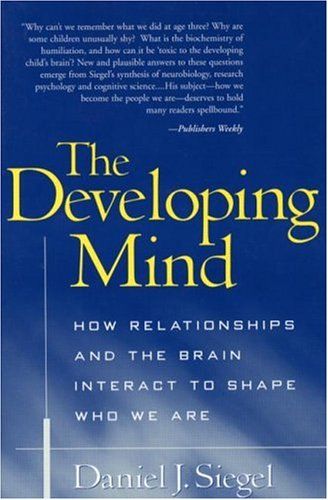
Atlas: And when you say bedrock, you really mean it. Because we’re looking at two foundational texts that piece together this incredible puzzle: Daniel Siegel's "The Developing Mind: How Relationships and the Brain Interact to Shape Who We Are," and Ellen Galinsky's "Mind in the Making: The Seven Essential Life Skills Every Child Needs."
Nova: Exactly. Siegel, a clinical professor of psychiatry at UCLA, actually wrote "The Developing Mind" to bridge the gap between hard neuroscience and the soft science of human relationships. He wanted to show, with scientific rigor, how our connections literally shape our neural pathways. It's not just touchy-feely; it's biology. It's a book that has been widely acclaimed for drawing together disparate fields into a cohesive framework, though some critics initially found its interdisciplinary approach a bit dense.
Atlas: Oh, I like that. So it’s about making the invisible architecture visible. Because I imagine a lot of our listeners, especially those in education or caregiving, see the behaviors, the struggles, the breakthroughs, but connecting them back to the actual brain development can feel like a leap.
Nova: It absolutely can. And that's where Siegel's work shines. He gives us the 'why' behind the 'what.' And then Galinsky comes in with the 'how.' She distills complex research into actionable insights on executive functions, really making the science accessible for parents and educators.
Atlas: So, we're essentially moving from the blueprint of the brain to the practical construction manual for nurturing crucial life skills.
The Integrated Brain: Relationships as Architects of Mind
SECTION
Nova: Precisely. Let's start with Siegel and this idea of the brain's blueprint. The core concept he introduces is 'integration.' He argues that mental health and resilience aren't just about having a 'good brain,' but about how well different parts of the brain—and different aspects of our experience—are integrated.
Atlas: Wait, so integration? Like, parts of the brain talking to each other? That sounds… simple, almost. What does that actually mean in practice for a developing mind?
Nova: It's deceptively simple, but profoundly impactful. Think of it like an orchestra. If all the sections—the strings, the brass, the percussion—play beautifully but never listen to each other, you just have noise. Integration is when they all play together, harmoniously, creating a symphony. For the brain, it means linking differentiated areas. For example, linking the logical left hemisphere with the emotional right hemisphere, or linking past memories with present experience, or even linking our internal states with our external relationships.
Atlas: Okay, so it’s about connection and coordination. But how do relationships come into that? Are you saying my early conversations with my parents literally shaped the physical connections in my brain?
Nova: Absolutely, yes! Siegel emphasizes that the brain is a social organ. It develops in the context of relationships. From the moment we're born, our brains are literally wiring themselves based on our interactions. A parent's consistent, attuned responses to a baby's cries, for instance, don't just soothe the baby; they help build neural pathways related to emotional regulation and attachment. This is what he calls 'interpersonal neurobiology.'
Atlas: Wow, so that's actually really inspiring. It means the quality of our early connections isn't just about comfort; it's about the very architecture of our minds. That gives me chills.
Nova: It should! Consider a child who experiences consistent, predictable care versus one who faces chaotic or neglectful environments. The first child’s brain develops more robust pathways for self-regulation, empathy, and secure attachment. The second child's brain, however, might develop heightened reactivity to stress, making them more prone to anxiety or difficulty forming secure bonds later in life. It's a biological response to relational input.
Atlas: So, when we talk about a child facing developmental challenges, it’s not just about some innate deficit. It could be deeply rooted in an environment that didn't provide the optimal relational scaffolding for integration. What does Siegel say about repairing that? Is it ever too late?
Nova: That's the hopeful part. The brain is remarkably plastic throughout life. While early experiences are foundational, Siegel argues that integration can continue to be fostered. Secure, attuned relationships—whether with a new caregiver, a therapist, or even strong friendships—can help rewire those pathways. It’s about creating new, integrative experiences that help the brain connect what was previously disconnected. It is never too late to begin the process of integration.
Atlas: That’s such a hopeful way to look at it. It means we're not just products of our past; we have the capacity for ongoing development and healing. So, the 'why' is that integrated brains are more resilient, more adaptable, and ultimately, healthier.
Cultivating Executive Functions: The Seven Essential Life Skills
SECTION
Nova: Exactly. And that naturally leads us to the second key idea we need to talk about, which often acts as a practical extension of what we just discussed: how do we actively cultivate these resilient, integrated minds? This is where Ellen Galinsky’s "Mind in the Making" comes in, with her seven essential life skills.
Atlas: Okay, so if Siegel is the blueprint, Galinsky is the instruction manual. What are these seven skills, and how do they connect to this idea of an integrated brain?
Nova: Galinsky, who spent decades at the Families and Work Institute, synthesized research from across psychology, neuroscience, and education to identify these skills. They are: Focus and Self-Control, Perspective Taking, Communicating, Making Connections, Critical Thinking, Taking on Challenges, and Self-Directed Engaged Learning. These are essentially executive functions in action.
Atlas: Right, like the CEO of your brain. That makes sense. But for an educator or a parent, sometimes these terms can feel a bit abstract. Like, 'critical thinking' – how do you actually teach that to a five-year-old?
Nova: That’s the genius of her work. She breaks it down into observable behaviors and actionable strategies. Take 'Focus and Self-Control.' It’s about helping a child learn to inhibit impulses, manage emotions, and sustain attention. It's not about telling them to 'just focus,' but creating environments and interactions that help build that muscle.
Atlas: Can you give an example? Like how does observing a child solve a problem, as the book suggests, reveal which of Galinsky's skills they're using?
Nova: Absolutely. Imagine a child trying to build a tower that keeps toppling over. If you observe them, do they get frustrated and give up immediately? That might indicate a challenge with 'Taking on Challenges' or 'Self-Control.' Or do they try different blocks, adjust their strategy, or ask for help? That shows 'Critical Thinking,' 'Making Connections', and 'Communicating.'
Atlas: So it's about looking beyond the outcome and really watching the. The strategies they employ. That's a great way to put it. It shifts the focus from 'did they get it right?' to 'how are they learning to get it right?'
Nova: Exactly. And this ties back to Siegel's integration. A child with strong executive functions typically has a more integrated brain. They can connect their emotions with their cognition and their social skills. It's all interconnected.
Atlas: So, how can a deeper understanding of neurobiology, like Siegel's, actually inform and enhance existing classroom strategies for children facing developmental challenges? This is where the rubber hits the road for our listeners.
Nova: It’s powerful. For instance, knowing that a child struggling with emotional regulation might have an underdeveloped connection between their prefrontal cortex and their amygdala—the emotional center—changes how an educator approaches them. Instead of seeing it as defiance, they might see it as a brain still learning to integrate. This understanding can lead to strategies focused on co-regulation, predictable routines, and teaching explicit emotional vocabulary, which literally helps build those neural bridges. It's about nurturing the brain, not just managing behavior.
Atlas: In other words, it helps us create environments that are not just academically stimulating, but neurologically nurturing. That’s a fundamentally different approach. It's about designing learning experiences that actively promote integration, not just content absorption.
Synthesis & Takeaways
SECTION
Nova: That’s the profound insight here. When we understand the developing mind, we realize we're not just teaching subjects; we're literally shaping brains. We're architecting the very capacity for learning and resilience. Siegel gives us the profound biological and relational 'why,' while Galinsky offers the actionable 'how.'
Atlas: And it’s not just for children. The principles of integration and cultivating life skills are lifelong journeys. For our listeners who are constantly learning, adapting, and navigating complex environments, understanding these foundations empowers them to nurture their developing minds, too. It’s about recognizing that our brains are always in development, always capable of more integration, more growth.
Nova: It makes you rethink every interaction, every supportive relationship, every moment of focused effort. It’s not just about self-improvement; it’s about brain-building. And that, in itself, is a truly empowering thought.
Atlas: Absolutely. This is Aibrary. Congratulations on your growth!