The Psychology and Practice of Wealth Creation
Golden Hook & Introduction
SECTION
Nova: Atlas, quick fire: "financial literacy." What comes to mind?
Atlas: Oh, you mean that thing they teach you in school, but expect you to master by 25? Sounds like a setup for a financial tightrope walk to me.
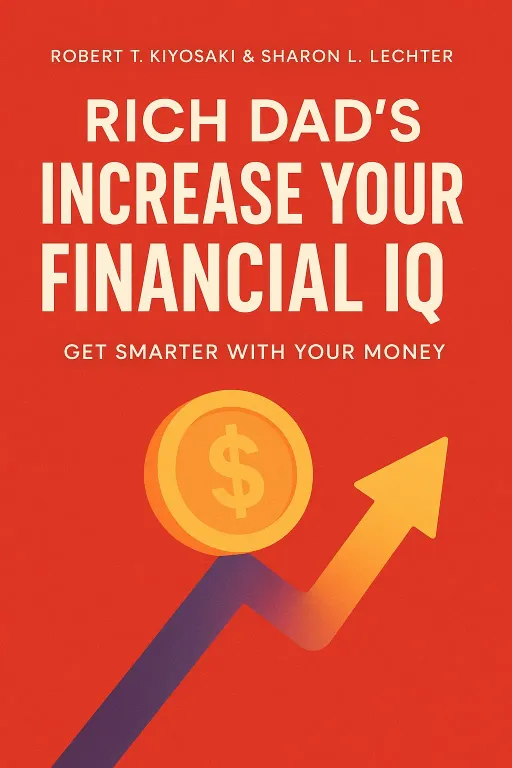
Nova: Exactly! A tightrope walk blindfolded, often. And that's precisely why we're diving into some truly game-changing perspectives today. First up, Robert Kiyosaki's "Rich Dad’s Increase Your Financial IQ." Kiyosaki, an engineer by training, really turned the financial world on its head by pointing out the glaring gaps in our traditional education system, arguing that true wealth isn't about how much you earn, but how much you and through smart decisions.
Atlas: That’s a bold statement, especially when so many of us are taught that a good job and a steady paycheck are the be-all and end-all.
Nova: Absolutely. And then, to bridge that gap from conceptual understanding to concrete action, we'll look at Brian Preston's "Millionaire Mission," which gives us a clear, nine-step framework for building financial independence. It’s about rethinking everything we thought we knew about money and then deliberately building a system around that new understanding.
Atlas: I like the sound of that. For our listeners who are clear thinkers, focused on building legacies and securing their future, "rethinking everything" and then having a "clear framework" sounds like strategic clarity in action.
Deep Dive into Core Topic 1: Financial IQ & Redefining Money
SECTION
Nova: So, let's start with Kiyosaki's core idea: the distinction between assets and liabilities. It sounds simple, right? But he argues that most people, even highly educated ones, fundamentally misunderstand what each truly is.
Atlas: I'm listening. I imagine a lot of our listeners, especially those who are strategic and analytical, already they know this. What's the hidden layer?
Nova: The hidden layer is cash flow. Kiyosaki defines an asset as anything that, and a liability as anything that. It's not about what something or what society it is.
Atlas: Wait, so… that sounds like my house might not be an asset then? That goes against everything I've been taught about homeownership being the ultimate wealth-building tool.
Nova: Precisely. That's his most famous and often controversial example. For many, a primary residence is a liability. You buy it, you have a mortgage payment, property taxes, insurance, maintenance, repairs… that's money your pocket every month. It might appreciate in value over decades, yes, but it's not generating cash flow. It's consuming it.
Atlas: That’s a really counter-intuitive perspective. For someone focused on security and building a lasting legacy, a home often feels like the bedrock of that security. You’re saying it could be a drain?
Nova: It be, from a pure cash-flow perspective. Now, if you buy a second property, rent it out, and the rental income covers all expenses and leaves you with a surplus, an asset. It's putting money in your pocket. The same goes for businesses that generate income, stocks that pay dividends, or intellectual property that earns royalties.
Atlas: So, the key differentiator isn't the item itself, but its in your personal cash flow statement. A car, for instance, is almost always a liability.
Nova: Exactly. Unless you're a rideshare driver and the income from driving exceeds all your car's expenses, it's taking money out. Kiyosaki’s "Rich Dad" taught him to focus relentlessly on acquiring income-generating assets, while his "Poor Dad"—his highly educated biological father—followed the traditional path of a good job, a nice house, and believed his education was his primary asset. The difference in their financial outcomes was stark.
Atlas: That makes me wonder about the long view. If you're constantly acquiring things that take money out, even if they're "status symbols" or "investments" that might appreciate, you're always running to stand still. But if you're systematically building things that your cash flow, you're building genuine financial freedom and security. That's a crucial distinction for someone building a legacy.
Nova: It’s a complete paradigm shift. It forces you to look at every financial decision through the lens of: "Is this putting money in my pocket, or taking it out?" It radically simplifies the path to wealth, but it challenges deeply ingrained societal norms.
Deep Dive into Core Topic 2: The Actionable Framework for Wealth
SECTION
Nova: So, once you have that financial IQ, once you understand how to identify and acquire true assets, the next question is, "Okay, so what do I with it? How do I actually build wealth systematically?" That's where Brian Preston's "Millionaire Mission" comes in with his 'Money Guy Framework.'
Atlas: A nine-step system sounds like the perfect complement to Kiyosaki’s conceptual framework. It’s the "how-to" after the "why-to." For our listeners who love strategic clarity and actionable plans, this is where theory meets practice.
Nova: Absolutely. Preston's framework is designed to guide individuals from financial uncertainty to millionaire status through a series of logical, sequential steps. It’s about building momentum. The steps include things like getting out of high-interest debt, building an emergency fund, maxing out your Roth accounts, and investing 25% of your gross income.
Atlas: Investing 25% of gross income? That sounds ambitious for many people, especially those balancing career growth with family responsibilities. How does that fit into a real-life, busy schedule for someone who wants to secure their retirement income and protect their estate?
Nova: That's where the combination of Kiyosaki's IQ and Preston's framework becomes powerful. If you've cultivated that financial IQ, you're constantly looking for ways to convert liabilities into assets, or at least minimize their cash outflow. That frees up more capital to Preston's 25% rule. For example, instead of upgrading to a bigger car that's a pure liability, you might choose a more modest one and use the difference to invest more. Or, if you have a side hustle that generates passive income, that's Kiyosaki's asset building, which then fuels Preston's investment percentages.
Atlas: So, it's not just about earning more, it's about optimizing your existing resources and cash flow so you can to follow the framework's aggressive savings and investment targets. That makes sense. It’s about being a steward of your resources.
Nova: Exactly. Preston's framework also emphasizes automation and consistency. Once you've set up the system—your emergency fund, your Roth contributions, your investment allocations—much of it runs on autopilot. That frees up your mental energy to focus on growing your financial IQ, identifying new asset opportunities, or optimizing your existing ones. It’s a virtuous cycle.
Atlas: I appreciate the emphasis on automation for our busy listeners. But what about the behavioral finance aspect? Sticking to a rigorous 9-step plan, especially when markets are volatile or life throws curveballs, requires discipline. How do these frameworks address the emotional side of money?
Nova: That's a fantastic point, and it’s where both implicit and explicit guidance comes in. Kiyosaki's work helps reframe your about money, reducing the emotional attachment to liabilities and increasing the drive for assets. Preston's framework, by being so sequential and structured, creates small wins that build confidence and reinforce positive habits. Each step completed is a psychological boost. It’s about making the right financial decisions easier to make, and harder to avoid. The clarity of the steps helps combat decision fatigue, which is a big behavioral hurdle.
Atlas: That's a powerful combination. A changed mindset a clear roadmap. It moves beyond just managing finances to actively building a financial fortress.
Synthesis & Takeaways
SECTION
Nova: So, what we really see here is that while Kiyosaki challenges us to redefine our financial intelligence, Preston gives us the tactical blueprint to apply that intelligence. They aren't mutually exclusive; they're synergistic.
Atlas: Absolutely. For our listeners who are clear thinkers, strategic, and focused on building a lasting legacy, it sounds like the ultimate optimization strategy. It’s about asking: "Am I truly understanding what builds wealth, and am I then systematically acting on that understanding?"
Nova: It’s about asking yourself, what's truly putting money in your pocket, and what's silently draining it? And how can you take that awareness and build a system around it to truly secure your future and your legacy? That's the ultimate strategic clarity.
Atlas: So, for our listeners, a tiny step you can take today: identify one area of your personal finance where you might be mislabeling a liability as an asset. Perhaps it's a subscription you don't use, or a depreciating possession that causes constant expense. Research how you might convert that drag into something that actually puts money in your pocket, even if it’s just by eliminating the drain.
Nova: And the deep question to ponder: How can cultivating a higher financial IQ and following a structured wealth-building framework converge to accelerate your retirement income optimization and estate planning? It's about making your money work harder and smarter for your long-term vision.
Atlas: That’s a powerful challenge.
Nova: This is Aibrary. Congratulations on your growth!