Unlocking Your Inner Sage: Practical Wisdom for a Resilient Mind
Golden Hook & Introduction
SECTION
Nova: What if I told you that chasing happiness externally is the fastest way to lose it? That every 'fix' you buy, every external validation you seek, might actually be subtly undermining your inner peace?
Atlas: Whoa, that's a bold claim, Nova. I imagine a lot of our listeners, myself included sometimes, are constantly looking for the next big thing, the next achievement, the next external reward to feel… well, happy. It's almost ingrained in us, isn't it? The pursuit of more.
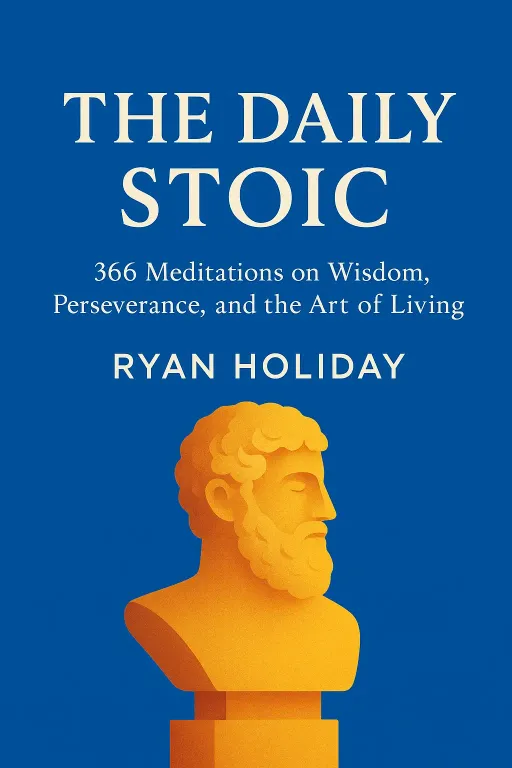
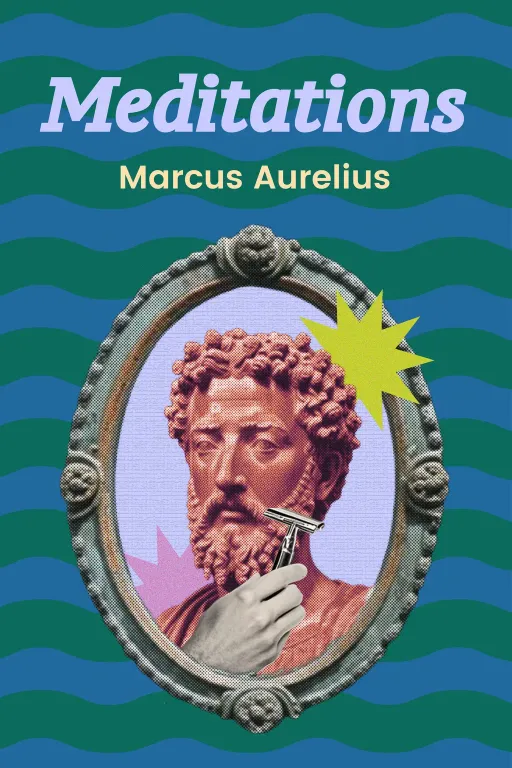
Nova: Absolutely, Atlas. It's a deeply ingrained cultural narrative. And that's exactly what we're challenging today by diving into some truly timeless wisdom. We're talking about the profound insights found in Marcus Aurelius's and Epictetus's.
Atlas: Ah, the Stoics! I've heard bits and pieces, but I'm curious. These are ancient texts, right? What makes them so relevant to our modern, chaotic lives, especially for someone in a fast-paced world?
Nova: What's fascinating is their origin story. wasn't even meant for us. It was Marcus Aurelius's personal journal, his private thoughts as a Roman Emperor grappling with wars, plagues, and immense political pressure. Imagine having an unfiltered look into the mind of a world leader trying to make sense of suffering and duty. And then there's Epictetus, a former slave, who taught that true freedom isn't about your external circumstances, but about what you control internally. Their lives couldn't be more different, yet their message converges on this powerful idea of inner mastery.
Atlas: That's incredible. An emperor and a former slave, both arriving at similar conclusions about resilience. That definitely sparks my intellectual curiosity.
The Blind Spot - External vs. Internal Control
SECTION
Nova: And that brings us perfectly to what I call "The Blind Spot." In our hyper-connected, always-on world, it's so easy to get swept away by external events. The news cycle, social media trends, career demands, the opinions of others… we constantly react to them, believing our happiness or frustration is directly caused by them. We search for external solutions when, in reality, the answers often lie within our control.
Atlas: Okay, but how does this theory apply to someone in a high-stakes tech environment, where external metrics, deadlines, and user feedback are everything? It feels like ignoring those pressures would be career suicide. Are you saying we should just… not care about our performance?
Nova: Not at all. Think of it like this: you can't control the weather, right? You can't stop a storm from brewing. But you can absolutely control whether you pack an umbrella, wear a raincoat, or decide to stay indoors. The blind spot is when we spend all our energy trying to stop the storm, rather than focusing on our preparation and our response to it. The Stoics teach us to clearly distinguish between what is and what is.
Atlas: That makes sense. It's like trying to control traffic during rush hour versus controlling my reaction to being stuck in it. I can either get furious and honk, or I can put on a podcast, take a few deep breaths, and accept the situation. But that shift, that acceptance… it sounds simple, but it's incredibly difficult. Give me an example of this blind spot in action, something really vivid.
Nova: Absolutely. Consider the anxiety many of us feel before a big presentation or a crucial project deadline. The blind spot here is focusing solely on the outcome – "Will I impress the client? Will this secure my promotion?" – and trying to control every variable outside of your immediate influence. You worry about the client's mood, your colleague's reaction, market forces. This external focus breeds immense anxiety.
Atlas: Oh, I've been there. The need for validation, proving capabilities… it's a huge driver for many of us. That feeling of needing to control every single aspect of a project to ensure a perfect outcome.
Nova: Exactly. The Stoic shift begins when you recognize that the client's mood, market forces, or even your colleague's final opinion are largely within your control. What within your control is your preparation, your effort, your delivery, and crucially, your to whatever happens. You can deliver a brilliant presentation, and the client might still have a bad day. The blind spot disappears when you realize your inner peace isn't contingent on that external outcome, but on the integrity of your effort and your perception of the event.
The Stoic Shift: Mastering Perception and Fortitude
SECTION
Nova: And that naturally leads us to "The Stoic Shift" – moving from that blind spot to a place of inner mastery. Marcus Aurelius famously said, "If you are distressed by anything external, the pain is not due to the thing itself, but to your estimate of it; and this you have the power to revoke at any moment."
Atlas: Are you saying we can just not to be bothered by things? That sounds a bit like denial, or just… pretending everything's fine when it's clearly not. For our listeners who are managing high-pressure teams, and facing real, tangible problems, this might sound a little too ethereal.
Nova: I hear you, and it’s a common misconception. It’s not about denial. It’s about discernment. Epictetus, who experienced true hardship as a slave, taught that our core freedom lies in distinguishing between what is truly —our judgments, our impulses, our desires, our aversions—and what is —our body, property, reputation, external circumstances. Imagine being physically enslaved, yet mentally free. Epictetus found that freedom. He chose how to perceive his situation, how to respond to mistreatment, how to cultivate his inner character, regardless of his chains.
Atlas: Wow, that’s actually really inspiring. To find that kind of inner fortitude in such extreme circumstances… it makes my daily anxieties about emails and deadlines feel a bit trivial, in a humbling way. But for someone in a high-stakes environment, where the consequences of external events are very real, how do you practically 'master' your reaction in a crisis? My job often demands a certain level of emotional intensity.
Nova: That’s a fantastic question, Atlas. And this is where Stoicism offers practical tools, not just lofty ideals. One powerful technique is called "premeditation of evils," or negative visualization. It’s not about dwelling on the worst-case scenario, but about intellectually preparing for potential setbacks. Imagine your presentation going terribly, your project failing, or losing that big client. Not to wallow in it, but to mentally rehearse how you would respond with resilience and acceptance.
Atlas: So, it's like a mental fire drill? Preparing for the worst so you're not completely blindsided? That’s interesting. But doesn't that risk leading to complacency? If I'm always accepting the negative, won't I stop striving for excellence, or fighting for what's right, which is a huge part of being an ethical explorer?
Nova: That’s a crucial distinction. It’s not about complacency; it’s about freeing up energy. When you accept that some things are beyond your control, you stop wasting emotional and mental energy fighting against reality. That conserved energy can then be channeled into what within your control: your effort, your problem-solving, your ethical responses, your continued learning. It allows you to engage with the world more effectively, not less, because your inner calm isn't constantly being hijacked by external turbulence. It allows you to act with purpose, rather than react with panic.
Synthesis & Takeaways
SECTION
Nova: So, the synthesis here is powerful: by recognizing our "blind spot" – our tendency to seek external fixes for internal discomfort – and then making the "Stoic shift" to focus on what we truly control, our perceptions and reactions, we unlock an incredible wellspring of resilience. True freedom isn't the absence of problems; it's the mastery of your response to them.
Atlas: That's a great way to put it. It shifts the entire paradigm from being a victim of circumstance to being the architect of your inner experience. It speaks volumes to the intellectual strength we all possess.
Nova: Absolutely. And this brings us back to the deep question we posed earlier: considering the wisdom of these Stoic masters, what is one external worry you can choose to release by focusing on your internal response instead? It might be a looming deadline, a difficult conversation, or even just the constant pressure to achieve more.
Atlas: That's a challenge I think many of our listeners, especially those driven achievers, can really sink their teeth into. It's not about ignoring the world, but about engaging with it from a position of strength and calm, rather than constant reaction. It’s about trusting your inherent intellectual strength.
Nova: Precisely. It's about finding that unshakeable inner calm, knowing that while the world outside may rage, your inner sage can always find tranquility.
Atlas: That's actually really inspiring. It feels like a profound insight, giving us a blueprint for navigating the chaos.
Nova: This is Aibrary. Congratulations on your growth!