The Resilient Mindset: Building Unbreakable Inner Strength
Golden Hook & Introduction
SECTION
Nova: Atlas, five words. The Resilient Mindset. Go.
Atlas: Stress: embrace it, don't avoid it.
Nova: Ooh, bold. I like it. Mine? Unpredictability is your superpower now.
Atlas: That's a good one! And it really sets the stage for what we're diving into today, which is truly fascinating. We're talking about not just surviving, but actually in chaos.
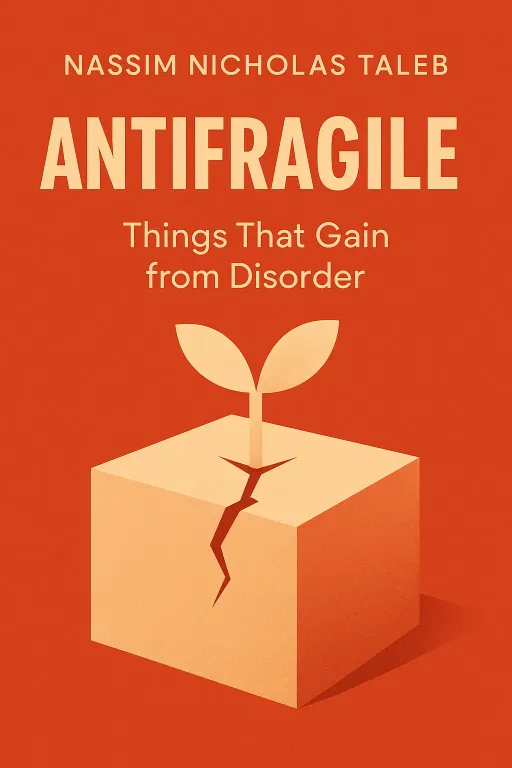
Nova: Exactly! And we're pulling insights from two incredibly powerful, yet very different, sources. First, we have Nassim Nicholas Taleb's groundbreaking work on antifragility. Taleb, a former options trader and risk analyst, saw firsthand how traditional systems failed under unexpected events, leading him to develop this radical idea of things that get stronger from disorder.
Atlas: Oh man, a trader talking about chaos... that makes sense. You can’t predict the market.
Nova: Exactly. And then, completely different, we're also looking at the timeless wisdom of Marcus Aurelius, the Roman Emperor. His 'Meditations' weren't even meant for publication; they were his private reflections, his personal mental operating system, written amidst the immense pressures of leading an empire and constant warfare.
Atlas: So, one is about actively seeking out stress, and the other is about how you deal with the stress that finds you, whether you like it or not. I'm already intrigued, because my gut reaction is always to stress. Isn't that what we're supposed to do?
Nova: That's the blind spot, Atlas, and it's precisely where we need to start.
The Blind Spot: From Robustness to Antifragility
SECTION
Nova: Most of us are conditioned to seek stability, right? We want robust systems, robust careers, robust health. We want things to withstand shocks without breaking. Think of a strong, rigid oak tree. It's robust. It can take a lot.
Atlas: Yeah, that's the goal! For anyone navigating complex professional environments, the aim is always to build systems that don't fail, to process information without errors, to avoid negative outcomes.
Nova: And that's perfectly understandable. But here’s the paradox Taleb identifies: in an inherently unpredictable world, relying solely on robustness can leave you incredibly vulnerable to unseen shocks. That rigid oak tree might seem strong, but one truly massive, unexpected storm can snap it in half.
Atlas: Hold on. You're saying that trying to be stable makes you fragile? That sounds a bit out there. For our listeners who are managing high-pressure situations, avoiding errors seems like the absolute priority, not welcoming them.
Nova: It’s not about welcoming chaos indiscriminately. It's about understanding the of the system. Taleb introduces antifragility as something beyond robustness or resilience. Robust things resist shock; resilient things bounce back to their original state. Antifragile things don't just resist or recover; they with stress, disorder, and volatility.
Atlas: So it's like... an immune system? Small exposures to pathogens make it stronger? Or a weightlifter who gets stronger by stressing their muscles?
Nova: Exactly! Those are perfect examples. The immune system, our muscles, even evolution itself—they thrive on stressors. Taleb argues that many of our modern systems, from economic models to corporate structures, are designed for efficiency and predictability, making them incredibly fragile to anything outside their narrow parameters. They’re built like that rigid oak, too optimized, too fragile.
Atlas: Okay, I’m following the concept. But how do you intentionally introduce 'good' stress without just breaking things? If you're a strategic negotiator, you don't just walk into a negotiation unprepared to 'benefit from disorder.'
Nova: That's where the 'controlled exposure' comes in. In a professional context, it might mean deliberately taking on a challenging project that pushes your skills, cross-training in an unfamiliar department to broaden your perspective, or even engaging in structured debates about your assumptions. It's about creating an environment where small failures or controlled difficulties lead to learning and adaptation, making you more capable for the truly big, unexpected challenges.
Atlas: So basically you're saying, for someone who craves mastery, instead of just perfecting routines, you deliberately throw in a wrench, learn to fix it, and then you're even better than before. That makes sense. It's about building a muscle.
The Stoic Operating System: Mastering Internal Response to External Chaos
SECTION
Atlas: That makes sense for external systems and our professional growth, but what about the internal? What about the stress you control? The difficult inquiries, the unexpected market shifts, the personal setbacks? That's where I imagine Marcus Aurelius comes in.
Nova: Absolutely. While antifragility is about how systems respond to external stressors, Stoicism, particularly as articulated in 'Meditations,' offers a powerful internal operating system for the individual. Aurelius, remember, was literally ruling the Roman Empire during plagues and wars. He wasn't just theorizing; he was living under immense, constant pressure.
Atlas: Wow. That gives it a whole new weight. My Monday mornings feel less dramatic now.
Nova: Exactly! His core teaching is incredibly simple yet profoundly difficult: you control your perceptions and your reactions, but you do not control external events. The Stoics believed that true inner strength, true peace, comes from distinguishing between what is within your power and what is not, and then focusing solely on the former.
Atlas: But is that just 'grin and bear it'? For someone who needs to influence outcomes and drive effective solutions, merely accepting things feels... passive. How does that build strength or mastery, beyond just enduring?
Nova: It’s the exact opposite of passive resignation, Atlas. It's active discernment. It's about building an internal fortress, a mental discipline that allows you to choose your response, even when the world is chaotic. Think of it like a strategic negotiator. They don't control the other party's demands, but they absolutely control their own preparation, their emotional state, their choice of words, and their strategic moves. That's not passive; that's supreme agency.
Atlas: That’s a great analogy. So, if you're facing a difficult patient inquiry, it's not about loving the difficulty, but choosing how you perceive and respond to it? Not letting the external pressure dictate your internal state?
Nova: Precisely. It allows you to approach a difficult situation not as a threat that breaks you, but as an opportunity to practice virtue, to apply wisdom, to demonstrate courage. It transforms the impact of external pressure into a catalyst for internal growth. This aligns perfectly with antifragility; by mastering your internal response, you cultivate an inner state that actually from external pressure, making you stronger, not just resistant. It’s about transforming the nature of stress itself.
Synthesis & Takeaways
SECTION
Nova: So, when we bring these two powerful ideas together, we see a complete picture. Antifragility is about actively engaging with external stressors to grow stronger—it's a proactive strategy. Stoicism is about mastering your internal response so that the of those stressors, whether actively sought or unavoidable, also strengthens you—it’s an internal, adaptive strategy.
Atlas: So, the 'blind spot' is avoiding stress, but the 'shift' is realizing you can either seek out 'good' stress to grow, or master your internal state so even 'bad' stress makes you stronger. It's about agency, not just mere survival. It’s about being truly unbreakable.
Nova: That’s it. It’s about moving beyond just being resilient—bouncing back—to becoming antifragile, which means getting better, smarter, and stronger because of the challenges you face. It’s a profound shift in perspective.
Atlas: And it makes you wonder, doesn't it? Where in your professional or personal life are you currently trying to avoid all stress? What's that one area you shield yourself from?
Nova: And how might a small, controlled exposure to that very stress actually make you more capable, more confident, more... antifragile?
Atlas: Think about that area where you instinctively pull back. What if a controlled dose of that very thing was your path to a truly unbreakable inner strength? It's a powerful question to ask yourself this week.
Nova: Challenge yourself to find one small, safe way to lean into a discomfort you’ve been avoiding. You might just discover a new level of strength you didn't know you had.
Nova: This is Aibrary. Congratulations on your growth!