The Power of Perspective: How Stoicism Builds Unshakeable Mental Fortitude
Golden Hook & Introduction
SECTION
Nova: What if I told you that the biggest threat to your peace of mind isn't out there, in the chaos of your day, but actually right here, inside your own head?
Atlas: Whoa, that's a bold claim, Nova. Most of us feel like we're just reacting to the world throwing curveballs.
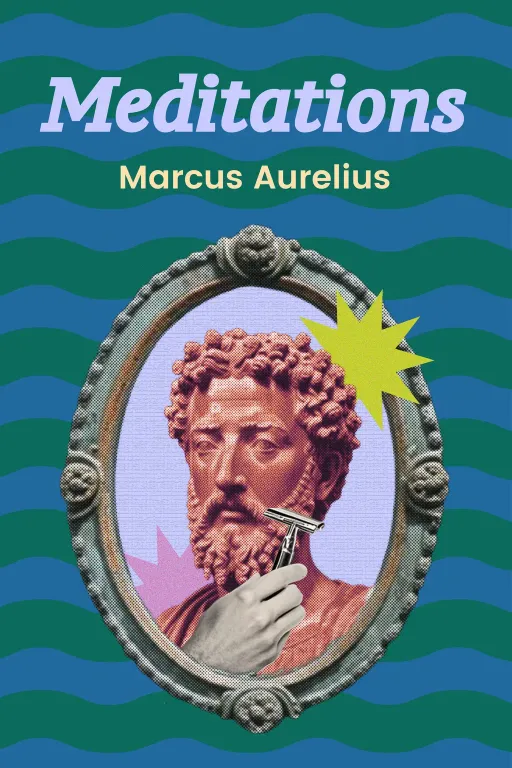
Nova: Exactly, Atlas. And that's where the ancient wisdom of Stoicism comes in, particularly from minds like Marcus Aurelius, the Roman Emperor whose personal reflections in weren't even meant for us to read, and Epictetus, a former slave whose laid bare the path to true freedom. Today, we're diving into how this 'power of perspective' can build unshakeable mental fortitude.
Atlas: An emperor and a slave, both arriving at similar profound truths about inner peace? That's quite a compelling contrast. It makes you wonder how someone with ultimate external power, like Aurelius, and someone with virtually none, like Epictetus, could converge on the same core insight. So, where do we start unraveling this perspective shift?
Nova: We start with what the Stoics called 'The Blind Spot.' It's this fundamental misunderstanding of what truly causes our distress.
The Blind Spot: Our Judgment, Not Events, Causes Distress
SECTION
Nova: Think about it: we often react to external events as if they completely control our inner peace. A traffic jam, a critical email, a cancelled flight – these things happen, and suddenly, our mood plummets. We blame the event. But the Stoics, centuries ago, taught us a radically different truth: our judgments, our interpretations of these events, are the true source of our distress.
Atlas: Oh, I know that feeling! It’s like, my default setting is to catastrophize. Say I get some tough feedback on a major project. My first thought isn't, "Interesting data point." It's, "Oh no, I've failed, my career's over!"
Nova: Precisely the 'blind spot,' Atlas! Let's take that scenario. A leader receives critical feedback on a major project. The is simply a conversation, words exchanged, information conveyed. But the leader immediately interprets this feedback as a personal attack, a sign of failure, or a direct threat to their career. This isn't the feedback speaking; it's their internal narrative.
Atlas: That makes perfect sense. The feedback itself is just… feedback. It’s the story I immediately start telling myself that spins everything out of control.
Nova: Exactly. This judgment then triggers a cascade of anxiety, anger, and self-doubt. Suddenly, they're having sleepless nights, their relationships at work become strained, and they might even start to avoid the project. The? Their performance actually suffers further, creating this self-fulfilling prophecy of distress. The Stoics would say, the event is indifferent; our reaction isn't.
Atlas: So, the actual event is just neutral, and our interpretation is the villain? That seems a bit detached from reality for someone in a high-stakes role, where the feedback have real consequences. It’s hard to just shrug off potential failure.
Nova: It’s not about shrugging it off or ignoring consequences, Atlas. It's about recognizing that the surge of anxiety or anger stems from our the event, not the event itself. The feedback is merely data. It's the we instantly assign to that data—the judgment—that creates the emotional turmoil. The Stoics understood that we can't always control what happens, but we absolutely control how we think about what happens.
Atlas: Okay, so the problem isn't the traffic, it's my internal monologue about how the traffic is ruining my day. That’s actually a pretty radical idea, especially when you're in the thick of a crisis, where everything feels urgent and external. How do we even begin to untangle that, to separate the event from our judgment?
The Shift: Mastering the Dichotomy of Control for Inner Fortitude
SECTION
Nova: That naturally leads us to 'The Shift' – the second key idea: the dichotomy of control. This is the practical strategy. Marcus Aurelius, despite being the most powerful man in the world, was constantly reminding himself in to distinguish what is within his control – his thoughts, his actions, his character – from what is not – external events, other people's opinions, even the whims of fate or the weather.
Atlas: Okay, so applying that to our leader with the critical feedback: what within their control, and what isn't? Because it feels like a lot of external things out of control in the corporate world.
Nova: Exactly! What's in their control? The fact that the feedback was given, the exact content of that feedback, their boss's tone, their colleagues' initial reactions. These are external circumstances. What unequivocally in their control? Their immediate emotional response, their decision to listen objectively, their choice to seek clarification, their plan to improve based on valid points, their commitment to their own integrity and work ethic, and how they show up the next day.
Atlas: That’s a great way to put it. It’s like a mental filter you apply to everything that comes at you. For our listeners who are managing high-pressure teams, this concept might feel impossible to implement when the stakes are so high for outcomes that are often out of their hands. How did someone like Epictetus, a former slave, come to this same profound conclusion about freedom and control?
Nova: Epictetus's life was the ultimate crucible for this philosophy. He had no control over his physical freedom, his circumstances, his body, or how others treated him. He was literally owned by another person for a significant part of his life. Yet, he taught that true freedom lay in the one thing no one could ever take away: his inner faculty of judgment, his choices, his character, his will. He chose how he would respond to his chains, quite literally.
Atlas: Wow, that's actually really inspiring. To find freedom in the most unfree of circumstances. It's not about ignoring the external, but re-prioritizing your internal landscape, realizing that your true self is untouchable by external forces.
Nova: Precisely. This perspective is what Epictetus called 'the chief task in life'—to constantly distinguish what is truly yours from what isn't. Embracing this principle doesn't mean becoming emotionless or indifferent to the world; it means becoming master of your emotions and focusing your energy where it actually makes a difference. It significantly reduces anxiety because you're no longer fighting battles you can't win. You're directing your energy towards your own virtue, your own actions, your own character.
Atlas: And that's where the 'unshakeable mental fortitude' comes from, I imagine. It's not about being tough, but about being wise about where you place your internal energy.
Synthesis & Takeaways
SECTION
Nova: So, the profound insight here is that mental fortitude isn't about having a life free of challenges. It's about cultivating the inner wisdom to recognize that 90% of our suffering often comes from our interpretation, not the event itself. And that, Atlas, gives us immense power because our interpretations are entirely within our control.
Atlas: That's such a hopeful way to look at it, Nova. It puts the control back into our hands. Honestly, that sounds like my Monday mornings, trying to separate the actual tasks from my mental drama about them. It's about reclaiming agency.
Nova: Exactly. For anyone feeling overwhelmed by a current source of worry, I want you to try this: Can you separate what you can control about it from what you cannot? And then, here's the crucial part, shift your focus to the former? What happens then?
Atlas: That's a powerful challenge. I imagine a lot of our listeners are now thinking about their own 'blind spots' and where they can start making that shift. It's about taking that first step to reclaim your inner peace, one judgment at a time.
Nova: It truly is. It's a daily practice, a constant vigilance against our default reactions, but one that promises unshakeable calm and profound inner freedom.
Atlas: A profound journey, indeed. We'd love to hear how you apply this. Share your insights with us on social media.
Nova: This is Aibrary. Congratulations on your growth!