Mastering the Inner Game: Stoicism for the AI Age
Golden Hook & Introduction
SECTION
Nova: Atlas, quick question: What's the one thing everyone they need more of in the AI age, but actually just makes them more anxious?
Atlas: Oh man, that's easy. More apps. Definitely more apps. Or maybe more productivity hacks? Because if I had one more...
Nova: Close! It's actually. The illusion of it, anyway. And that's precisely what we're tackling today, because the more we grasp for external control, the more we often feel overwhelmed.
Atlas: That's a great way to put it. Control feels like the ultimate prize, especially when everything around us is changing at warp speed.
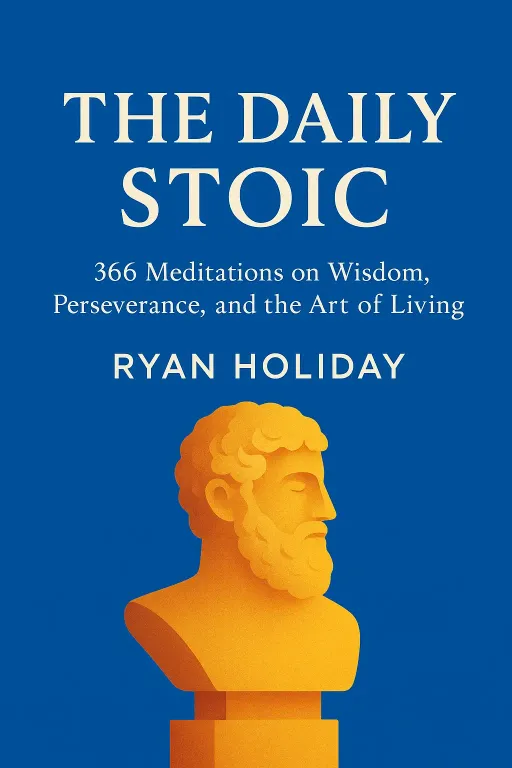
Nova: Exactly. Because today, we're diving into "Mastering the Inner Game: Stoicism for the AI Age," drawing heavily from two ancient giants: Marcus Aurelius's "Meditations" and Seneca's "Letters from a Stoic." You know, Aurelius wasn't just some philosopher in an ivory tower; he was the Roman Emperor, literally writing these reflections while battling plagues, wars, and political intrigue on the frontiers of his empire.
Atlas: Wow, not exactly a peaceful retreat then. That really puts a different spin on "meditations," doesn't it? It sounds less like a quiet contemplation and more like a battlefield strategy.
Nova: Absolutely. And that's why his insights are so potent. He wasn't theorizing in comfort; he was living through chaos, and his philosophy was his shield and compass. Which naturally brings us to the first core idea from these Stoic masters: the radical concept of the dichotomy of control.
The Stoic Compass: Navigating What You Control
SECTION
Atlas: The dichotomy of control. That sounds a bit academic. What does that actually mean for someone trying to navigate their inbox, let alone the future of AI?
Nova: It's surprisingly simple, but profoundly difficult to master. Aurelius, and the Stoics before him, essentially said: divide everything in the universe into two categories. One, things within your control. Two, things not within your control. And here’s the kicker: your peace of mind depends entirely on focusing your energy on the first category.
Atlas: Wait, so is this just about giving up? Like, "it is what it is," and we just resign ourselves to fate? That sounds a bit passive, especially for folks who want to make an impact.
Nova: Not at all! That's a common misconception. It's not about apathy; it's about strategic action and clarity. What's within our control? Our judgments, our opinions, our desires, our aversions, and our actions. What's within our control? Our health, our reputation, the weather, whether our flight is delayed, other people's opinions, and yes, the pace of AI development or the next technological disruption.
Atlas: Okay, but how does "controlling our judgments" work when my social media feed is just an algorithm of outrage, designed to provoke a reaction? It feels like my judgments are being hijacked.
Nova: That's a perfect modern example, Atlas. Aurelius faced similar pressures, just without the digital screens. Imagine him as emperor: facing the Antonine Plague, which decimated populations across the Roman Empire. His generals were dying, the economy was collapsing, borders were under attack. He couldn't control the plague itself, he couldn't control the death toll, or the fear gripping his people. But he control his own response. He could choose to remain calm, to dedicate himself to his duties, to make rational decisions for the good of the empire, and to maintain his integrity.
Atlas: That's incredible. So, he wasn't saying "don't care about the plague." He was saying, "care about what you can about it, and how you to it."
Nova: Exactly. He viewed his mind as an inner fortress. External events, like the plague or political betrayal, were like sieges. He couldn't stop them from happening, but he could prevent them from breaching his inner walls – his judgment, his character. So, when that algorithm tries to hijack your judgment, the Stoic asks: "Am I choosing to be outraged, or am I letting an external event dictate my internal state?" It's a radical act of reclaiming agency.
Atlas: That makes me wonder, how does this apply to, say, the overwhelming pace of AI development? We can't control that, right? We can't stop the advancements.
Nova: Precisely. We cannot control the speed of AI's evolution, nor the innovations coming out of labs globally. But we control our response to it. We can choose to panic, or we can choose to educate ourselves, engage in ethical discussions, advocate for responsible development, and adapt our skills. The Stoic focus shifts from a futile attempt to halt the tide, to mastering our own sailing skills in the storm.
Ancient Wisdom, AI Age Application: Seneca's Practical Toolkit
SECTION
Atlas: That's a really powerful reframing. Once we understand we can control, the next question is do we actually it, especially in our hyper-connected world? Because knowing I should control my judgments is one thing, but actually doing it when I'm doomscrolling is quite another. And that's where Seneca steps in, right?
Nova: Absolutely. Seneca, another titan of Stoicism, was a statesman, a playwright, and an advisor to Emperor Nero – a man whose life was a masterclass in political intrigue and extreme uncertainty, eventually leading to his forced suicide. His "Letters from a Stoic" are essentially a practical operating manual for navigating precisely these kinds of pressures. He wasn't just theorizing; he was living it.
Atlas: That sounds rough, but also incredibly relevant. So, if I'm feeling overwhelmed by the sheer volume of AI news or ethical dilemmas, how does Seneca's "practical toolkit" actually work? What’s a key strategy?
Nova: One of his most powerful tools was "praemeditatio malorum"—the pre-meditation of evils. It sounds grim, but it's incredibly liberating. It's the practice of imagining potential future difficulties or losses, not to dwell on them, but to mentally prepare for them. Seneca would say, "What if AI advances faster than we can regulate it? What if my job is automated? What if this new technology creates unforeseen ethical dilemmas?"
Atlas: So it's kind of like a mental disaster preparedness kit? You're not wishing for bad things, but you're running simulations in your mind to build resilience?
Nova: Exactly! It strips away the element of surprise and reduces the emotional shock when difficult things happen. It helps us distinguish between real, present threats and imagined, future anxieties. Many of our modern anxieties, especially around rapidly advancing tech, are about what happen. Seneca would urge us to confront those "might-happen" scenarios mentally, so we can then focus our energy on what we do in the present.
Atlas: Can you give an example of how Seneca would approach something like, say, the ethical questions surrounding deepfake technology or algorithmic bias? Because those are very real, present concerns for many of our listeners.
Nova: He wouldn't have known "deepfakes," of course, but the principle applies beautifully. When confronted with deepfake technology, for instance, a Stoic approach would involve acknowledging the external reality: the technology exists, it can be misused, and we cannot unilaterally make it disappear. Then, we pivot to what we control: our critical thinking skills, our skepticism towards unverified information, our commitment to truth, and our actions in advocating for ethical guidelines or developing detection tools. It's about focusing on the virtue of wisdom and justice, rather than succumbing to despair about the technology itself.
Atlas: I see. So it's less about stopping the bad thing from existing, and more about strengthening your own internal defenses and proactive responses to it.
Nova: Precisely. And this ties into Seneca’s broader emphasis on virtue in action: courage, justice, wisdom, and temperance. He didn't see these as abstract ideals, but as muscles to be exercised daily. For us, in the AI age, this means constantly updating our mental operating system, debugging our biases, and actively choosing how we engage with technology, rather than passively letting it shape us.
Atlas: But isn't there a risk that this makes us too passive, just accepting things rather than trying to change them? What about impact seekers who want to drive change?
Nova: That's a crucial point. Stoicism is often misunderstood as quietism, but it's quite the opposite. It's about action. If you're an impact seeker, focusing on what you control—like the inherent nature of technological change—is a recipe for burnout. But focusing on what you control—your ethical stance, your advocacy, your personal development, your influence within your sphere—that's where true impact is made. It's about channeling your energy wisely, like a skilled martial artist, not thrashing wildly.
Synthesis & Takeaways
SECTION
Atlas: That martial artist analogy really helps clarify it for me. It's not about being a punching bag for external events; it's about being incredibly skilled at directing your own energy.
Nova: Exactly. In a world accelerating with technological progress, where the external landscape is constantly shifting, the Stoic message rings truer than ever. It's an invitation to stop chasing the illusion of external control and instead, master the one domain that is truly yours: your inner life. It's about building an unshakeable inner core, a personal operating system that allows you to remain calm, clear, and effective, no matter how chaotic the external world becomes. It’s a proactive framework for navigating the "inner game" in a world of accelerating external change.
Atlas: So, for our listeners, who are often wrestling with complex ethical questions, the rapid pace of technology, and a desire to make a real difference, what's one small, actionable step they can take this week to start mastering their own inner game?
Nova: Start with a simple mental exercise: for one challenging situation you face this week, mentally list out what aspects are truly within your control and what aren't. Then, consciously redirect your energy only to those things you can influence. It's a small shift, but it can create a huge ripple.
Nova: This is Aibrary. Congratulations on your growth!