Beyond the Battlefield: What Ancient History Teaches About Modern Leadership
Golden Hook & Introduction
SECTION
Nova: Atlas, I'm going to throw out a few words, rapid-fire. Just say the first thing that comes to mind. Ready? "Ancient History."
Atlas: Dusty textbooks. Long beards.
Nova: "Leadership."
Atlas: Power suits. Quarterly reports.
Nova: Okay, now what if I told you that dusty textbooks and long beards are actually the secret weapon for those power suits and quarterly reports?
Atlas: Oh, I'm listening. That's a bold claim, Nova.
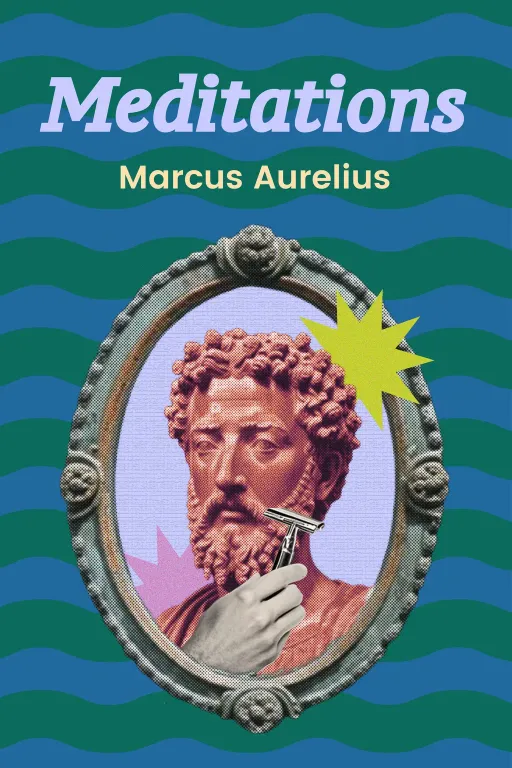
Nova: Today, we're diving into the core ideas of "Beyond the Battlefield: What Ancient History Teaches About Modern Leadership." The premise is simple but profound: our modern problems aren't as unique as we think, and ancient wisdom holds powerful, often overlooked, keys. And we're starting with Marcus Aurelius and his "Meditations." What's incredible is that this wasn't some grand philosophical treatise written for public consumption. This was the personal journal of a Roman Emperor, arguably the most powerful man in the world at the time, writing notes to himself on how to be a better human, a better leader, a better stoic. It's like finding the private playbook of a CEO who ran an empire for decades, filled with raw, unvarnished wisdom.
Atlas: Wow, so it's not a performance, it's actual processing. That makes it instantly more relatable.
Inner Citadel: Self-Mastery Through Stoicism
SECTION
Nova: Exactly. And this brings us to our first core idea: the "Inner Citadel" – self-mastery through Stoicism. Marcus Aurelius taught that while you can't control external events, you have absolute control over your reactions and perceptions. He constantly reminded himself that external chaos is just that – external. The real battle is internal.
Atlas: Okay, but wait. For someone in a high-pressure environment today, with a million things flying at them, deadlines, difficult people... isn't that a bit simplistic? Just "control your reactions"? What does that actually in practice?
Nova: It's far from simplistic; it's a rigorous mental discipline. Think of it like this: Imagine a CEO facing a sudden, catastrophic product recall. The stock is plummeting, the media is in a frenzy, shareholders are screaming. A leader without an 'Inner Citadel' might panic, lash out, make impulsive decisions driven by fear. Marcus Aurelius would advise a different path. He'd say, 'This event is external. It is neither good nor bad in itself. Your perception, your judgment of it, is what matters.' The leader's task then becomes to assess the facts calmly, separate what can be controlled from what cannot, and respond rationally, rather than react emotionally.
Atlas: So it's not about being emotionless, but about not letting emotions dictate your actions. It's about creating mental space between stimulus and response. That's a huge shift, especially in cultures that often reward emotional reactivity or 'passion' in leadership.
Nova: Precisely. It's about cultivating a deep sense of psychological resilience. He literally wrote about reminding himself that even death is a natural process, not to be feared, but accepted. If you can face that, you can face a quarterly earnings report or a difficult negotiation with equanimity. It's about understanding your circle of influence and focusing your energy there, rather than on things outside your control.
Atlas: That sounds incredibly empowering, especially when modern life often feels like a constant barrage of things outside our control. How does he suggest you actually that inner citadel? Is it just positive thinking?
Nova: Not at all. It's about rigorous self-examination, daily reflection, and practicing mindfulness. He’d write down his thoughts, his judgments, his reactions. He'd prepare for the day by anticipating challenges and mentally rehearsing stoic responses. It's a proactive, not reactive, approach to mental and emotional fortitude. It's like a mental workout, building strength over time.
Strategic Advantage: The Art of War for Modern Challenges
SECTION
Nova: And that naturally leads us from mastering the self to mastering the terrain around us. Because once you've got your inner world sorted, you still need to navigate the external world, which brings us to our second profound ancient text: Sun Tzu's "The Art of War." This book, written for military generals, is astonishingly relevant for modern leadership, far beyond just 'defeating your enemies.'
Atlas: Ah, "The Art of War." So, is this where we learn how to crush our competition and dominate the market? Because that's usually how it's portrayed – very aggressive, very 'take no prisoners.'
Nova: That's a common misconception, Atlas, and it misses the profound subtlety of Sun Tzu. While it is a military treatise, its core message is actually about conflict through superior strategy. Sun Tzu famously said, 'The supreme art of war is to subdue the enemy without fighting.' It's about unparalleled clarity, foresight, and understanding the 'terrain' of any challenge so thoroughly that conflict becomes unnecessary.
Atlas: So it's more about strategic intelligence than brute force. Give me an example of how that plays out in a modern leadership context.
Nova: Consider a company launching a new product into a crowded market. A 'brute force' approach might be to outspend competitors on advertising, or aggressively undercut prices. A Sun Tzu approach would involve meticulous intelligence gathering: deeply understanding the competitor's strengths and weaknesses, identifying untapped customer needs, analyzing the market's 'terrain' – its regulations, distribution channels, cultural nuances. It's about finding the 'uncontested space,' or creating a position where your strengths meet their weaknesses, making direct confrontation inefficient or even irrelevant.
Atlas: That's a powerful distinction. It's not about 'winning' in the traditional sense of a head-on clash, but about optimizing your position so effectively that your success is almost inevitable, without a costly battle. So, understanding yourself and your adversary, and then choosing the right ground.
Nova: Precisely. He talks about knowing yourself and knowing your enemy, and that in a hundred battles, you will never be in peril. But also about understanding the 'weather' and the 'ground' – the external conditions that impact your strategy. This applies to everything from negotiating a deal, to managing a team, to even planning your career path. It’s about being adaptable, flowing like water, and striking where you are strongest and your opponent is weakest.
Atlas: That's fascinating. It really reframes 'conflict' as a strategic puzzle to be solved, rather than a fight to be won through aggression. It's about making smart moves, not just forceful ones.
Synthesis & Takeaways
SECTION
Nova: Absolutely. So, when we put Marcus Aurelius and Sun Tzu together, we get a truly holistic picture of leadership. One teaches us to master our internal world, to be resilient and clear-headed amidst chaos. The other teaches us to master our external world, to navigate challenges with foresight, intelligence, and strategic precision.
Atlas: It feels like one gives you the emotional and mental armor, and the other gives you the tactical blueprint. You need both. Without the inner calm, your brilliant strategy might crumble under pressure. Without the strategy, your inner calm might just be passivity in the face of real threats.
Nova: Exactly that. Modern problems might feel unique, but human nature and strategic challenges are constant. Ignoring these ancient insights leaves us, as the book suggests, with a significant blind spot. The most effective leaders aren't just looking forward; they're also looking back, drawing on millennia of accumulated wisdom.
Atlas: So, the challenge isn't just to learn new tricks, but to re-learn timeless principles. For anyone feeling overwhelmed by modern demands, these ancient texts offer a powerful framework for not just surviving, but thriving. It's about building that inner strength and then applying that clarity to your external actions.
Nova: And the deep question for our listeners is: Consider a current challenge you're facing. How might a Stoic approach to your reactions, or a strategic principle from Sun Tzu about understanding your 'terrain,' fundamentally change your perspective and your approach? We invite you to reflect on that. Find your own inner citadel, and then map out your strategic advantage.
Atlas: Powerful stuff. We'd love to hear how these ancient ideas resonate with your modern leadership challenges. Share your thoughts with us on social media; we're always keen to hear your insights.
Nova: This is Aibrary. Congratulations on your growth!