Beyond Self-Help: The Enduring Wisdom of Stoic Philosophy for Modern Life
Golden Hook & Introduction
SECTION
Nova: What if chasing happiness isn't just ineffective, but actually makes you less happy? We're often told to pursue external achievements for fulfillment, but today, we're diving into an ancient wisdom that argues the exact opposite.
Atlas: Whoa, that's a bold statement right out of the gate, Nova. It flies in the face of so much of what modern society tells us about success and what it means to be fulfilled. I imagine a lot of our listeners, the future-focused leaders and practical strategists out there, are constantly pushing for those external goals.
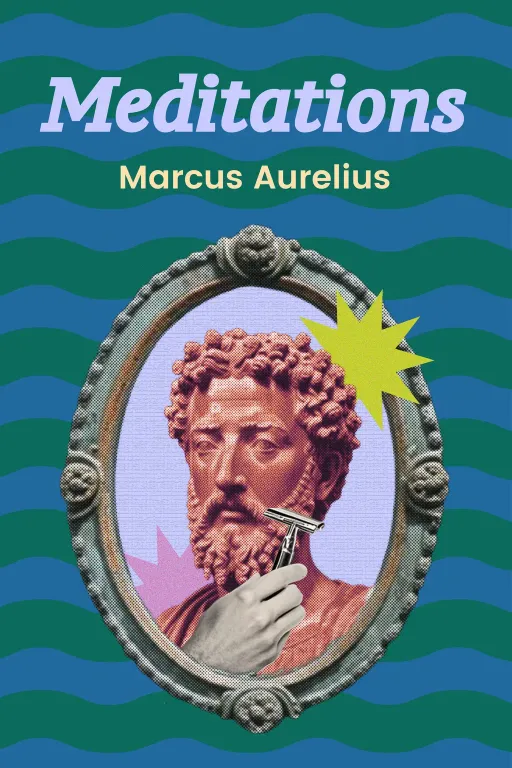
Nova: Absolutely, Atlas. And that's precisely why we're turning to the enduring wisdom of Stoic philosophy today. Specifically, we'll be exploring two monumental works: "Meditations" by the Roman Emperor Marcus Aurelius, and "Letters from a Stoic" by Seneca.
Atlas: Marcus Aurelius, the Emperor? That always blows my mind. He wasn't just some philosopher tucked away in a library; he was literally the most powerful man in the known world, leading armies, managing an empire, and still finding time to write these incredibly profound personal reflections.
Nova: Exactly. His "Meditations" weren't meant for publication; they were his private journal, a guide for his own conduct and leadership. And Seneca, equally fascinating, was a prominent statesman, a celebrated playwright, and even tutor to Emperor Nero. His life was marked by both immense wealth and political exile, and he ultimately faced forced suicide. His advice on handling adversity, written in his letters, comes from a place of profound, lived experience.
Atlas: That context alone makes their insights so much more compelling. It's not just theory, it's wisdom forged in the crucible of extreme pressure.
Nova: Precisely. And a crucial point upfront, because there’s a common misconception: Stoicism isn't about suppressing your emotions. It’s about understanding them, allowing you to respond thoughtfully rather than reacting impulsively to life's inevitable challenges.
Atlas: Oh, I like that distinction. That's going to resonate with anyone who struggles with navigating modern anxieties, because "just don't feel it" certainly isn't a viable strategy. So, how do these ancient texts begin to guide us towards that thoughtful response?
The Internal Fortress: Mastering Self-Control and Perception
SECTION
Nova: Well, it all begins with what Stoics call the 'dichotomy of control'—a concept championed by Marcus Aurelius. It's about rigorously differentiating between what is truly within our power and what is completely outside of it.
Atlas: Okay, so what exactly falls into each category? Because I imagine a lot of things feel like they're outside our control, even if they aren't.
Nova: Absolutely. What's within our control are our thoughts, our judgments, our actions, our intentions, and our perceptions. What's outside our control are external events, other people's opinions, our reputation, wealth, health, and even our very lives.
Atlas: Wait, so you're saying my reputation is outside my control? Or my health? That sounds rough, but I can see how that would be... liberating, in a way.
Nova: It is. Marcus Aurelius, despite being emperor, faced constant plagues, wars, and betrayal. He couldn't control the barbarians at the gates or the political machinations within his own court. But what he control was how he perceived these events, how he judged them, and how he chose to act in response. He constantly reminded himself, and implicitly, us, that it's not the events themselves that disturb us, but our interpretations of them.
Atlas: So it's not the stressful work deadline that's the problem, but my immediate judgment that it's going to ruin my week and my life?
Nova: Exactly. If you perceive a deadline as an insurmountable obstacle designed to crush you, you'll feel overwhelmed. If you perceive it as a challenge to be met, an opportunity to demonstrate your capability, your response shifts entirely. The deadline itself hasn't changed, but your internal experience of it has.
Atlas: That makes sense, but I imagine a lot of our listeners, especially those driven by growth and external achievement, might find that hard to internalize. In today's high-pressure environments, where success is often measured by those external metrics – promotions, revenue targets, public recognition – isn't it almost impossible to ignore those? How does a future-focused leader apply this when their career trajectory seems to depend entirely on external outcomes?
Nova: That’s a crucial question. The Stoics weren't advocating for indifference to achievement or effort. They were advocating for indifference to the of those efforts, once the effort itself has been virtuously applied. A leader can control their strategy, their work ethic, their integrity. They cannot control market fluctuations, a competitor's move, or the whims of an investor.
Atlas: So it's not about being passive or uncaring about the external world, but rather being hyper-focused on the quality of your internal response and effort, regardless of the external result.
Nova: Precisely. True contentment, they argued, comes from within, from aligning your will with reason and virtue, not from the fleeting highs of external achievements. You invest your best self, you perform your duties, and then you accept whatever follows, knowing you did what was in your power. That's the internal fortress.
The Art of Emotional Resilience: Navigating Adversity
SECTION
Nova: And understanding that internal fortress naturally leads us to the second pillar of Stoicism, especially championed by Seneca: the art of emotional resilience when facing adversity.
Atlas: That's a concept I imagine many of our listeners are constantly grappling with. We all face setbacks, disappointments, and outright failures. What's Seneca's secret?
Nova: Seneca's "Letters" are filled with practical advice on managing emotions, handling adversity, and developing mental strength. He believed that much of our suffering comes from our of bad things, or our of what might happen, rather than the events themselves.
Atlas: Oh, I've been there. The anxiety leading up to a difficult conversation can often be worse than the conversation itself.
Nova: Exactly. Seneca encouraged us to practice what he called "premeditatio malorum" – the premeditation of evils. It’s not about being pessimistic, but about mentally rehearsing potential challenges, so we’re not caught off guard. By considering the worst-case scenario, we often realize it's less terrifying than our unexamined fears, and we can mentally prepare our response.
Atlas: I imagine a lot of our listeners, especially those acting as practical strategists, might think this sounds like suppressing emotions or just 'sucking it up.' But you mentioned earlier that Stoicism isn't about suppressing emotions. How does Seneca's approach differ from just ignoring your feelings?
Nova: That's a vital distinction. Seneca wasn't saying to ignore fear or sadness. He was saying to it. Where does this emotion come from? Is it based on a rational assessment of reality, or on a mistaken judgment? Once you understand the source, you can then choose a thoughtful response. For instance, if you're dealing with a difficult colleague, your initial impulse might be anger. A Stoic approach isn't to pretend you're not angry, but to ask: "Is this anger serving me? Is it leading to a productive outcome? Or is it based on my judgment that this person be difficult?"
Atlas: So, it's about separating the event – the difficult colleague – from your judgment and emotional reaction to it. And then choosing a response that aligns with virtue, like patience or clear communication, rather than just lashing out.
Nova: Precisely. And he also emphasized viewing obstacles as opportunities. Every challenge, every setback, becomes a testing ground for your virtues. Losing a position? It's a chance to practice humility and resourcefulness. Facing a personal loss? An opportunity to practice resilience and acceptance.
Atlas: That makes me wonder, if an external event is causing stress – let's say, a significant market downturn for someone in finance, which is certainly out of their control – the Stoic approach isn't to pretend it's not happening, but to identify what part of that downturn is truly within your control, and what isn't. And then to say, 'What virtue can this challenge help me cultivate?' Is that it?
Nova: You've got it, Atlas. The market downturn is an external event. What's within your control are your financial decisions, your investment strategy, your communication with your team, your integrity, and your emotional composure. Seneca would urge you to focus on those, and to use the downturn as an opportunity to practice prudence, courage, and resilience. It's about training your mind to be robust, regardless of the turbulent seas around you.
Synthesis & Takeaways
SECTION
Nova: So, bringing it all together, Marcus Aurelius gives us the 'Internal Fortress' – the wisdom to discern what's truly ours to control: our inner world. And Seneca gives us the 'Art of Emotional Resilience' – the practical strategies to navigate the inevitable storms of life with grace and virtue, by understanding our emotions and choosing thoughtful responses.
Atlas: It sounds like both of these figures offer a kind of operational manual for the mind, particularly for those driven by growth and seeking to lead effectively. It’s not about avoiding stress, but about having a strategic framework for how to engage with it, and even grow from it.
Nova: Absolutely. These aren't just ancient philosophical concepts; they are incredibly potent, practical tools for cultivating inner peace and resilience in our fast-paced modern lives. They empower us to be the architects of our own internal experience, regardless of external circumstances.
Atlas: That’s actually really inspiring. For our listeners today, consider one external event currently causing you stress. Instead of dwelling on the event itself, try to identify one small part of your response to it that you can control.
Nova: Is it your initial judgment? Your tendency to catastrophize? Or simply how you choose to spend the next five minutes after the event occurs?
Atlas: And perhaps ask yourself, 'What virtue can this challenge help me cultivate?'
Nova: That’s a powerful question. Thank you for joining us on this journey into timeless wisdom.
Atlas: This is Aibrary. Congratulations on your growth!