Accessible Mindfulness: From Skepticism to Serenity
Golden Hook & Introduction
SECTION
Nova: Alright, Atlas, quick game. Five words. Describe your initial, gut feeling about the word "meditation."
Atlas: Okay. Uh… Impossible. Too slow. Not for me.
Nova: Perfect. And honestly, that's probably resonating with a lot of our listeners right now. That exact sentiment, that resistance, that feeling that it's just not built for the kind of fast-paced, high-stakes world many of us inhabit.
Atlas: Exactly! It sounds like something I do, but then I picture myself trying to sit still and my brain just starts listing all the things I be doing instead. It’s like a mental to-do list gone rogue.
Nova: Well, what if I told you that two brilliant minds have essentially written the instruction manual for people just like us – the strategists, the innovators, the ones who feel they just "can't meditate"? Today, we're diving into how to move from skepticism to serenity, not by forcing ourselves into uncomfortable stillness, but by understanding our minds better.
Atlas: Oh, I like that. That sounds more like strategic optimization than spiritual surrender.
Nova: Precisely. We're talking about two groundbreaking books that have revolutionized how the world approaches mindfulness. First, Andy Puddicombe's "GET SOME HEADSPACE." Andy, a former Buddhist monk who spent a decade in monasteries in the Himalayas, then returned to the UK to make meditation utterly secular and universally accessible. He literally walked away from the traditional path to build a bridge for everyone else.
Atlas: A former monk making it secular? That's already a contradiction I can get behind. It suggests he understands the traditional path well enough to know what to strip away.
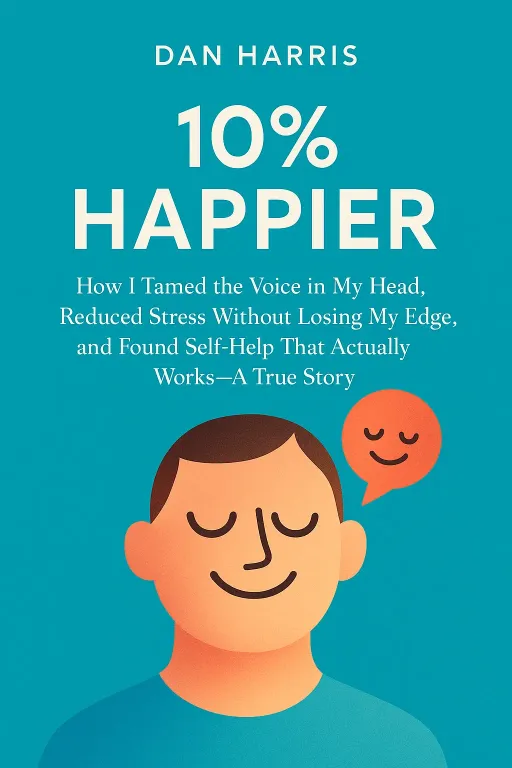
Nova: Absolutely. And then, we have Dan Harris's "Meditation for Fidgety Skeptics." Harris, a well-known news anchor, famously had an on-air panic attack that became his catalyst. He then went on a mission to understand mindfulness, specifically for people who are, well, fidgety skeptics. His journey from a high-stress, high-pressure media environment to championing meditation is incredibly compelling.
Atlas: So, one is a monk who demystified it, and the other is a high-stress journalist who proved it works for the most wired among us. This sounds like the perfect combination for anyone who feels their brain is always running at 100 miles an hour.
Demystifying Mindfulness for the Skeptic
SECTION
Nova: It really is. Let's start with Puddicombe and "Headspace." His core genius was recognizing that the spiritual baggage and perceived complexity of meditation were the biggest barriers for Western minds. He essentially asked, "What's the absolute, bare-bones, secular essence of this practice that still delivers profound benefits?"
Atlas: Okay, so what that bare-bones essence? For someone who's constantly analyzing data and building systems, "essence" is a very appealing concept. Cut out the fluff, give me the core algorithm.
Nova: The core algorithm, Atlas, is startlingly simple: observe your breath without judgment. That's it. No special postures, no chanting, no emptying your mind. In fact, he explicitly tells you to try and empty your mind.
Atlas: Wait, hold on. Not emptying your mind? That’s counterintuitive to everything I thought meditation was. I thought the whole point was to achieve some kind of blank slate, a quiet void.
Nova: Exactly! That's the first misconception he dismantles. He explains that your mind is a thought-generating machine. It's to think. Trying to stop it is like trying to stop your heart from beating. It's futile and frustrating. Instead, he teaches you to be an observer of those thoughts. To watch them pass by like cars on a highway, or clouds in the sky. Your breath becomes your anchor, your home base. When you notice your mind has wandered, you simply, gently, return your attention to your breath. No self-recrimination, no judgment.
Atlas: So it's less about achieving a specific state, and more about developing a of awareness. A muscle you're training to notice where your attention is, and then redirect it. That makes sense. As a strategist, I'm always trying to direct my focus to the most impactful areas. This sounds like meta-focus.
Nova: That’s a brilliant way to put it, meta-focus. He makes it accessible through incredibly simple, guided exercises. Think of it like a GPS for your mind. You just follow the instructions for 5 or 10 minutes. He removes the guesswork, the intimidation. His goal was to make meditation as normal and accessible as going to the gym. And the data backs him up; millions have used his approach to start.
Atlas: I can see how that would appeal to the analytical mind. It’s a clear process, with defined steps, and an achievable goal. My biggest struggle is always the "how." How do I? How do I know if I'm doing it right? This sounds like it answers those questions directly.
Nova: It does. And the beauty is, there's no "doing it wrong." The moment you notice your mind has wandered, and you gently bring it back to your breath, you've succeeded. That act of noticing and returning the practice. It's a continuous process, not a destination. It’s about building a consistent habit of paying attention.
Atlas: That’s actually really liberating. It takes the pressure off. So, the "fidgety" part of me that can't stop thinking about the next project, the next problem to solve… that's not a failure, it's just… my brain doing its thing, and I'm learning to observe it without getting swept away.
Nova: Exactly. It’s about creating a little bit of space between you and your thoughts, so you’re not constantly reacting on autopilot. And that space, however tiny, is where clarity begins to emerge. It’s about cutting through the noise, finding your signal, which I know is a goal for many of our listeners.
Embracing the 'Fidget' in Mindfulness
SECTION
Nova: And that naturally leads us to Dan Harris, who takes that idea of "it's okay to have thoughts" and runs with it, specifically for the most skeptical and, well, fidgety among us. Harris's entry into mindfulness wasn't a gentle curiosity; it was born out of a very public, very harrowing on-air panic attack.
Atlas: Wow. That’s a pretty intense origin story. For someone in a high-pressure environment, that’s a stark reminder of what unchecked stress can do.
Nova: It truly is. And that experience gave him unique credibility when he started exploring meditation. He wasn't some serene guru; he was a cynical, driven journalist who had hit rock bottom due to stress. His book is a direct, no-nonsense conversation with the part of your brain that thinks meditation is a waste of time, or that you're just not "good" at it.
Atlas: That's me. That's my brain. I'm constantly driven by impact, by effective solutions. Sitting still feels like the opposite of that. It feels like, which for a driven innovator, is almost anathema.
Nova: He understands that completely. Harris's revelation was that the struggle the practice. He acknowledges that your mind wander, you fidget, you be bored, you be annoyed. And that's okay. The goal isn't to eliminate those things, but to change your relationship with them.
Atlas: But how does a "fidgety" approach actually make it more sustainable? Aren't we supposed to fidgeting? My mind is constantly mapping options, building order from chaos. That’s my default, my strength even.
Nova: That’s a brilliant question. Harris argues that for people who are naturally restless, trying to force absolute stillness is a recipe for failure and frustration. Instead, he suggests that the fidget, the wandering mind, the internal chatter – these are all. They're opportunities to gently notice, acknowledge, and then return to your anchor. It’s like a bell going off that says, "Okay, your attention has drifted, gently bring it back."
Atlas: So it's not about suppressing the fidget, but using it as a cue? Like, if my leg starts to bounce, instead of fighting it, I just acknowledge it and then use that moment to re-center on my breath?
Nova: Exactly! He calls it "rebooting your brain." Every time your mind wanders and you bring it back, you're strengthening that muscle of awareness. For someone who thrives on building systems, think of it as a feedback loop. Your fidgeting or wandering mind isn't a bug; it's a feature of the system that tells you it's time for a micro-recalibration.
Atlas: That’s actually a powerful reframe. It transforms what I perceive as a weakness – my inability to sit still – into a potential pathway for practice. It integrates my natural tendency rather than demanding I fight against it. That makes it feel much more sustainable for a fast-paced lifestyle, where I can't just drop everything and go to a silent retreat.
Nova: Precisely. It turns the perceived obstacles into part of the path. He makes a compelling case that even just a few minutes of this kind of practice can lead to a significant reduction in reactivity, increased emotional regulation, and sharper focus throughout your day. For someone who wants to maximize their focus and achieve peak output, this isn't a distraction; it's a foundational skill.
Synthesis & Takeaways
SECTION
Nova: So, when you put Puddicombe and Harris together, you get this incredibly powerful message: meditation isn't some esoteric practice for monks; it's a practical, secular skill that anyone can learn, even if you’re the most skeptical, fidgety, or fast-paced individual out there.
Atlas: It’s like Puddicombe opens the door wide, showing how simple it can be, and Harris then says, "And it's okay if you trip on the way in, just get back up." It removes so many of the excuses I think many of us carry.
Nova: Absolutely. And for our listeners who navigate complexity, who are driven by impact, and who seek mental clarity and deep work, this isn't just about relaxation. It's about enhancing cognitive function. It's about creating mental space to make better decisions, to innovate more effectively, to cut through the constant noise of information overload.
Atlas: That’s the real value proposition for me. Not just serenity, but serenity. For those of us constantly mapping options and building order from chaos, what’s the one tangible thing we can today to start integrating this, without feeling like it’s just another item on an already overflowing to-do list?
Nova: The tiny step, Atlas, is exactly what both authors advocate: try a 5-minute guided meditation from either book today. Focus on simply observing your breath without judgment. If your mind wanders, which it absolutely will, just gently bring it back. That’s it. No pressure, no perfection. Just 300 seconds of intentional attention.
Atlas: I can commit to 300 seconds. And the deep question you posed earlier – how might embracing a 'fidgety' approach to mindfulness actually make it more sustainable for my fast-paced lifestyle – I think you’ve answered it. It's sustainable because it doesn't demand I become someone I'm not. It meets me where I am, fidgets and all, and shows me how to leverage that very energy for greater awareness.
Nova: Exactly. It’s not about stopping your internal engine, but learning to drive it with more intention and less distraction. And that, for the focused strategist, is perhaps the ultimate form of optimization.
Atlas: That’s a powerful insight. It takes something that felt like a hurdle and turns it into a tool.
Nova: This is Aibrary. Congratulations on your growth!