

Strategic Scaling: Growth Frameworks for Business Unit Expansion
Golden Hook & Introduction
SECTION
Nova: Most growth strategies, especially when you're thinking about scaling a business unit, focus on the to do. What's the next market? What's the next product? But what if the secret to truly, sustainable scaling isn’t about the next big move, but rather about the very first person you hire, or the one thing you absolutely refuse to do?
Atlas: Oh, I like that. That’s a serious curveball. It immediately makes you question every growth plan you've ever seen that just throws more resources at the problem. Are you saying we've been looking in the wrong direction all along?
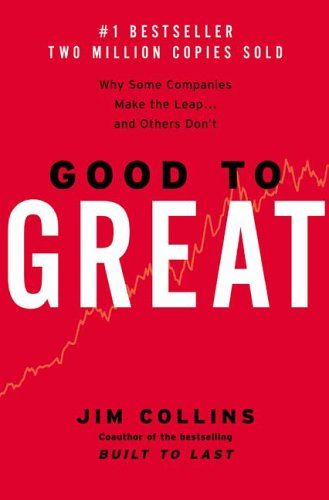
Nova: In many ways, yes! Today, we're diving deep into two seminal works that, when combined, offer a powerful blueprint for true strategic scaling. We're talking about Jim Collins' iconic "Good to Great: Why Some Companies Make the Leap... And Others Don't," a book born from five years of rigorous research into what truly separates the merely good from the genuinely great.
Atlas: Right, and it's a book that challenged so much conventional wisdom when it came out. And then, we'll pair that with John Doerr’s "Measure What Matters: How Google, Bono, and the Gates Foundation Rock the World with OKRs." Doerr, a venture capitalist, was instrumental in bringing Objectives and Key Results, or OKRs, to Google in its early days, setting the stage for its explosive, yet focused, growth. It's a testament to real-world, high-impact application.
Nova: Exactly. Together, these books don't just tell you to scale; they show you how to scale, with intention, leadership, and measurable clarity. It’s about getting better, not just bigger.
The Foundational Pillars of Strategic Scaling – People & Purpose
SECTION
Atlas: That makes me wonder, given the pressure to constantly innovate and expand, how do you even begin to scale "better"? Where do you start?
Nova: You start with the, Atlas. Collins' most counter-intuitive, yet profoundly impactful, finding in "Good to Great" was "First Who, Then What." It’s the idea that great companies first get the right people on the bus, the wrong people off the bus, and the right people in the right seats— they figure out where to drive it.
Atlas: Hold on. That sounds a bit out there for someone trying to hit aggressive quarterly growth targets. Are you telling me I should spend time shuffling people around before I even know my market strategy?
Nova: Absolutely. Think of it like this: if you have a bus full of motivated, disciplined, and talented people, they'll figure out the best route, even if the initial destination changes. They'll adapt, innovate, and thrive. Collins found that companies that prioritized getting the right talent first, rather than focusing on a brilliant vision or strategy with the wrong people, consistently outperformed their peers. These "Level 5 Leaders" at the helm, who combined extreme personal humility with intense professional will, were the ones capable of making those tough "who" decisions.
Atlas: That’s actually really inspiring. It shifts the focus from a top-down, visionary genius to building a team that finds the vision. But how does that apply to a business unit leader who already has a team and needs to scale? How do you implement "First Who" without a complete overhaul?
Nova: It’s about continuous assessment and development. It’s about asking: "Are the people in these key scaling roles truly exceptional? Do they embody the discipline and drive needed?" Sometimes it means making tough calls, but often it means investing in the right people you have, ensuring they're aligned and empowered. And once you have your "who," you need your "what"—your Hedgehog Concept.
Atlas: The Hedgehog Concept. That’s the idea of finding your singular, defining purpose, right? It feels like a beautiful, almost philosophical concept in a world that demands constant diversification. How do you find that one thing?
Nova: It’s not just one thing, but the intersection of three circles: what you are deeply passionate about, what you can be the best in the world at, and what drives your economic engine. Imagine a company that was passionate about books, could be the best at online retail, and had a strong economic engine in low-cost distribution. That’s how Amazon found its early Hedgehog. It’s about brutal clarity, not chasing every shiny opportunity. It’s about saying no to a thousand good ideas to focus on one great one.
Atlas: So basically you’re saying, for an architect of growth, before you draw up blueprints for a new wing, make sure you have the best builders and a rock-solid foundation for the existing structure. Otherwise, you’re just building bigger, not better. That makes total sense, especially for future-proofing against chaos.
The Execution Engine for Measurable Growth – Objectives & Key Results (OKRs)
SECTION
Nova: Exactly! And that naturally leads us to the second key idea we need to talk about, which often acts as the practical engine to drive that focused strategy: OKRs. Once you know your "who" and your "what," how do you actually if you're getting better and staying on track?
Atlas: I’ve been thinking about that. We have our Hedgehog, our singular passion and strength. But how do you translate that into day-to-day action and keep everyone aligned, especially as you scale and teams become more distributed? It's easy for strategy to get lost in the noise.
Nova: That’s where OKRs shine. John Doerr describes them as "a management methodology that helps to ensure that the company focuses efforts on the same important issues throughout the organization." An Objective is you want to achieve – it’s ambitious, qualitative, time-bound, and inspirational. And Key Results are you measure whether you’ve achieved that objective – they are specific, measurable, achievable, relevant, and time-bound.
Atlas: Can you give an example? Because it sounds a bit like traditional goal-setting, but I know there’s a difference.
Nova: A perfect example: an Objective for a growing business unit might be: "Deliver a delightful and seamless onboarding experience for all new customers." That's ambitious, inspiring. Now, the Key Results would be measurable outcomes, like: "Achieve a 90% completion rate for the first 3 onboarding modules," or "Increase first-week feature adoption by 25%," or "Achieve an average Net Promoter Score of 8 on onboarding feedback."
Atlas: Oh, I see. So it’s not just "increase customer satisfaction," which is vague. It’s "increase customer satisfaction." That’s a huge difference. That makes it actionable and accountable.
Nova: Precisely. OKRs have these "superpowers." They bring because you typically only have 3-5 objectives per quarter. They create because everyone's OKRs should cascade up to the company's top-level objectives. They foster because you regularly review progress. And crucially, they encourage because objectives are often aspirational, meant to push teams beyond their comfort zone. This isn't about simply hitting 100%; it's about making significant progress towards an ambitious goal.
Atlas: That makes me wonder, though. For a strategist focused on efficiency, how do you prevent OKRs from just becoming another bureaucratic exercise? Or worse, a rigid system that stifles innovation because everyone is just chasing numbers?
Nova: That’s a critical point, and it boils down to implementation. Doerr emphasizes transparency—everyone's OKRs should be visible to everyone else. This fosters cross-functional collaboration and prevents silos. Also, OKRs should be separated from compensation. They’re a measurement tool for progress, not a performance review system. When done right, they actually innovation because teams have clear boundaries and a shared direction, giving them the freedom to experiment within those guardrails. It's about clarity, not control.
Atlas: So, for our architect listeners, it’s like having a clear, shared blueprint for the building, and then giving the construction teams the autonomy to figure out the best way to lay the bricks, as long as they’re meeting the structural integrity goals. It’s a way to ensure everyone’s efforts are contributing to the same strategic goals for the business unit’s expansion. That’s powerful for impact and efficiency.
Synthesis & Takeaways
SECTION
Nova: Absolutely. When you look at these two frameworks together, it’s like you’re building a complete operating system for strategic scaling. Collins provides the foundational philosophy: get the right people, define your core purpose, and commit to disciplined action. Doerr then gives you the practical, measurable framework—the OKRs—to execute that philosophy with precision and accountability.
Atlas: That’s a brilliant synthesis. It’s not just about getting bigger; it's about being profoundly intentional about you get bigger so that growth leads to greater quality and impact, not just more chaos. It’s about building a future-proof business unit, one that’s not only growing but sustainably.
Nova: Precisely. The deep insight here is that true scaling isn't a linear expansion; it's a qualitative leap driven by internal excellence and disciplined execution. The companies that achieve sustained greatness aren't just lucky; they're meticulously built, person by person, objective by objective.
Atlas: So, for anyone listening who's looking to grow their business unit, here’s one concrete step you can take: Start small. Pick just one ambitious objective for your business unit for the next quarter, and define three to five measurable key results. Then, look at your team and ask yourself: "Do I have the 'First Who' in place to achieve this?" It's a powerful way to begin transforming your approach to growth.
Nova: That’s a perfect way to put it. It’s about making growth intentional, measurable, and ultimately, meaningful.
Nova: This is Aibrary. Congratulations on your growth!