

Unveiling the Future: Breakthroughs in Materials Science
Golden Hook & Introduction
SECTION
Nova: Most of the materials we use today? Honestly, they're basically hand-me-downs from geological processes. We dig them up, we refine them, we shape them. But what if we could custom-build every single atom, every molecule, to perfectly fit our needs? That's not science fiction anymore.
Atlas: Whoa, custom-building atoms? That sounds like something out of a futuristic movie, Nova. Are we really at a point where we can be that precise, or is this still firmly in the realm of theoretical physics?
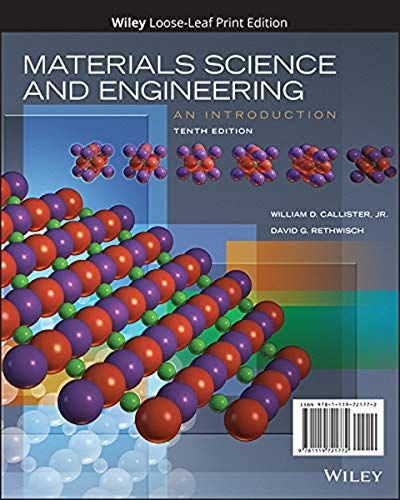
Nova: It’s not just theoretical, Atlas. We're on the cusp of a materials revolution, and it all starts with truly understanding the fundamental principles. And for that, we turn to a foundational text: "Material Science and Engineering: An Introduction" by William D. Callister Jr. and David G. Rethwisch. This book has been the 'Rosetta Stone' for generations of engineers, translating the complex language of materials into something understandable and actionable.
Atlas: That’s a powerful endorsement. And for anyone who's ever wrestled with a design challenge, that foundational knowledge is everything. It sounds like this isn't just about knowing what materials exist, but understanding them so deeply that we can actually push past existing limitations.
The Interconnected World of Materials: Structure, Properties, and Performance
SECTION
Nova: Exactly. Think of it like baking. You don't just throw flour, sugar, and eggs together. The specific ingredients, how you mix them, the temperature you bake them at, all profoundly impact the final cake – its texture, its taste, how well it holds its shape, and ultimately, how it performs as a dessert.
Atlas: That’s a great analogy. So you're saying a material's invisible architecture, down to the atomic level, dictates everything about it?
Nova: Precisely. Let's take steel, for instance. It's not just "steel." The way its iron atoms arrange themselves, its crystal lattice structure, and even the tiny amounts of carbon or other elements we introduce – these are its 'ingredients' and 'mixing instructions.' These structural details dictate everything from its strength and hardness to its ductility and corrosion resistance.
Atlas: I mean, we use steel in everything from skyscrapers to surgical instruments. So, the subtle differences in its internal structure, things we can't even see, are what make it suitable for such wildly different applications? That's pretty mind-bending.
Nova: Absolutely. And then there's the processing. Take a piece of steel, heat it, cool it quickly, or cool it slowly – you've fundamentally changed its internal structure and, therefore, its properties. Quenching, for example, can make steel incredibly hard but brittle. Tempering it afterward can reduce that brittleness while maintaining much of its strength.
Atlas: So, it's not just about what a material, but what you to it. For someone who thrives on optimizing processes, understanding the 'why' behind each processing step, and how it impacts the final product's performance, is crucial. It’s about that meticulous attention to detail at every stage.
Nova: Exactly. And that's where Callister and Rethwisch shine. They lay out these fundamental interconnections so clearly. It's about understanding that if you want a material to perform a certain way – say, to be incredibly strong but also flexible – you need to understand what atomic arrangements and processing methods will give you those specific properties. It’s a delicate dance between structure, processing, and the desired outcome.
Atlas: So, the performance is the ultimate goal, but it’s entirely dependent on mastering those preceding layers of structure and processing. It’s almost like a material has its own DNA that we’re learning to read and, eventually, write.
Engineering Beyond Limits: Designing Materials for a Better Future
SECTION
Nova: That’s a fantastic way to put it, Atlas – learning to read and then that DNA. Because understanding existing materials is just the entry point. The real revolution, and what truly pushes us beyond conventional limitations, is the ability to entirely new materials with bespoke properties. We're moving from selecting materials to creating them.
Atlas: That sounds like a monumental leap. What do you mean by 'bespoke properties'? Are we talking about materials that can do things we previously thought impossible?
Nova: Precisely. Think about graphene. For centuries, carbon was carbon – graphite, diamond. But then, researchers managed to isolate graphene: a single layer of carbon atoms arranged in a hexagonal lattice. This isn't just a new form; it's a material engineered at the atomic level to have properties that are almost contradictory: incredibly strong, yet incredibly light; an excellent conductor of electricity and heat, yet nearly transparent.
Atlas: Wow, that’s actually really inspiring. So, we're not just finding the best existing material for a problem; we're essentially inventing the material for it. For engineers constantly looking for more robust and efficient designs, that’s a game-changer. How does that translate from a lab bench to, say, a factory floor for sustainable manufacturing?
Nova: That's the critical question, isn't it? Take self-healing polymers. Imagine a material that can repair itself when it cracks. Researchers are designing these polymers with microcapsules containing healing agents. When a crack forms, the capsules break, releasing the agent to fill and repair the damage.
Atlas: So, less waste, longer product lifecycles. That definitely ticks the box for sustainable manufacturing, and for the strategic optimizer, it means less downtime, reduced maintenance. But is this just for niche, high-tech applications, or can we see this in everyday products soon?
Nova: It’s rapidly expanding. We’re seeing self-healing coatings for cars, polymers for medical implants, even in infrastructure. The ability to extend product life and reduce material consumption has massive implications for sustainability and efficiency. It’s about building in resilience from the molecular level up. This kind of innovation directly addresses the "Deep Question" the book poses: how a deeper understanding of materials can lead to more robust, efficient, and sustainable designs. We're quite literally pushing beyond conventional material limitations.
Atlas: That gives me chills. The idea that we can engineer materials to actively adapt and repair themselves… it's like giving inanimate objects a form of biological intelligence. It truly redefines what's possible in product development.
Synthesis & Takeaways
SECTION
Nova: And that's the profound insight from material science. It's not just about categorizing what's already out there. It’s about understanding the deep, intricate mechanisms that govern materials, giving us the power to create a future where our tools, our infrastructure, our very world, are built with purpose-designed intelligence.
Atlas: You’ve really illuminated the sheer potential here, Nova. It makes you realize how much potential has been untapped. So, for our listeners, especially those problem-solving engineers and conscious innovators, what's a concrete first step to tap into this uncharted territory of material innovation?
Nova: The book offers a fantastic "Tiny Step": identify a current design challenge you’re facing – perhaps something where an existing material is a bottleneck. Then, research how a novel material, one we've discussed or something entirely new, might offer a superior solution, considering its properties and behavior. It’s about applying this mindset to your immediate world.
Atlas: That’s actionable. It’s about taking that excitement of exploring uncharted territories and channeling it into real-world breakthroughs. Feeling that excitement, knowing your insights can lead to groundbreaking advancements… that's the true "Healing Moment" of this journey.
Nova: Absolutely. The future isn't just built with new ideas; it's built with new materials.
Atlas: This is Aibrary. Congratulations on your growth!