

Personalized Podcast
Golden Hook & Introduction
SECTION
Nova: Imagine standing on the edge of a colossal canyon in the Nevada desert, the air tasting faintly of dust and ozone. Suddenly, the ground shudders. A massive explosion tears through the rock, and trucks the size of three-story buildings begin hauling away thousands of tons of earth. All of this monumental destruction, this gargantuan effort, is happening right now, out of sight, just to extract a tiny speck of gold for a wedding ring. We love to talk about our "dematerialized" digital world, our clouds, our apps, our virtual lives, but the raw, heavy, physical reality of the earth is still pulling the strings behind the scenes.
Princess Dube: It really is a striking paradox, Nova. We behave as if we’ve transcended the physical, yet our entire legal, economic, and social infrastructure is completely anchored to these raw materials. Today, we are going to tackle this fascinating tension from three distinct angles. First, we'll dismantle the myth of the "dematerialized" world and look at the invisible dependencies of our daily lives. Second, we'll dive into the geopolitical and legal friction points of resource extraction, looking at how the green energy transition is sparking a new era of resource colonialism. And finally, we'll explore how we can build a more just, circular economy that respects both human rights and the limits of our planet.
Nova: I love that roadmap, Princess! It really grounds the science in what matters most: human lives and systemic impact. Let's start with that first point, because Ed Conway makes this mind-blowing claim in the book: in 2019 alone, humanity extracted more materials from the earth than we did in the entire history of our species from the dawn of time up to 1950! That is just mind-boggling.
Princess Dube: It is staggering, and it exposes a massive blind spot in how we evaluate progress. We look at GDP, we look at digital services, and we think we are becoming more efficient. But in reality, we’ve just outsourced the physical dirty work to places we don't have to look at. From a legal and regulatory standpoint, this disconnect is incredibly dangerous because it detaches the consumer from the ethical and environmental liabilities of production.
Deep Dive into Core Topic 1
SECTION
Nova: Exactly! It's like we've put a shiny digital curtain in front of a massive, roaring steam engine. Conway illustrates this beautifully by updating the classic economic essay,, by Leonard Read. The original essay showed how a simple wooden pencil requires a global network of people who don't know each other—loggers in Oregon, graphite miners in Sri Lanka, clay diggers in Mississippi—all working together through the "invisible hand" of the market. But Conway takes it a step further and looks at a smartphone or a semiconductor chip.
Princess Dube: Right, and the complexity of a semiconductor chip makes a pencil look like child's play. To get the ultra-pure silicon needed for a microchip, you have to start with high-purity quartz, melt it down with carbon in a massive furnace, and then refine it using highly toxic chemicals derived from—you guessed it—common salt. The legal and logistical contracts governing just one of these steps span multiple jurisdictions, international trade laws, and environmental regulations. If one link in that chain breaks, the entire global supply chain paralyzes.
Nova: Yes! And speaking of silicon, there is this absolutely tragic, beautiful story in the book about how we even figured out how to grow the perfect silicon crystals needed for these chips. It goes back to a Polish chemist named Jan Czochralski in 1916. He was working in a German metal factory, and he was writing at his desk. He got distracted, and instead of dipping his fountain pen into his inkwell, he accidentally dipped it into a crucible of molten tin that was sitting nearby. When he pulled the pen out, he noticed a long, thin, continuous thread of metal hanging from the nib. He realized he had pulled out a single, perfect crystal.
Princess Dube: It’s an incredible story of accidental genius, but the human element of his story is what really strikes me. Czochralski's method was ignored for decades. He went back to Poland, survived World War II, but was later falsely accused of collaborating with the Germans. He died of a heart attack in 1953 during a police raid on his home, completely unrecognized. Just one year later, a scientist at Bell Labs used Czochralski's exact method to grow the first perfect silicon crystals, which literally launched the computer age. He died in obscurity, yet his accidental mistake is the reason we can record this podcast today.
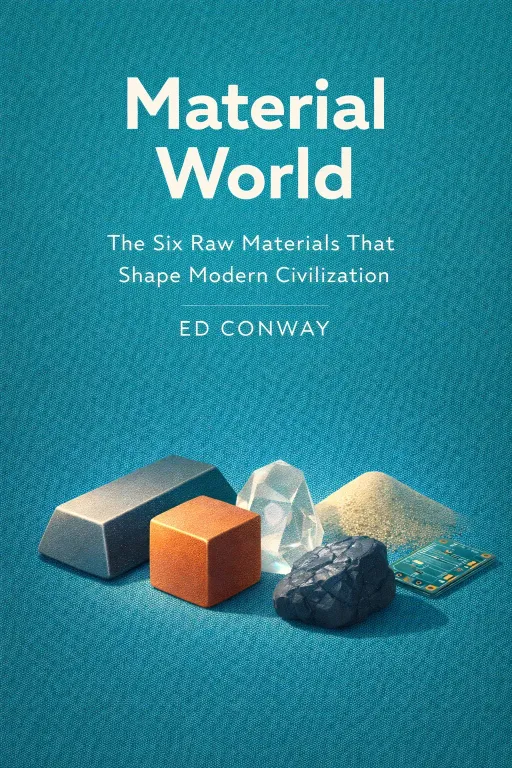
Nova: Wow. That gives me chills, Princess. It really shows that behind every piece of technology we take for granted, there is a human story, often one of sacrifice and systemic injustice. And it’s not just silicon. Conway talks about six key materials: sand, salt, iron, copper, oil, and lithium. These are the "unsung heroes" of civilization.
Princess Dube: And as a student of law and society, what interests me is how these materials dictate power. Historically, whoever controlled the salt routes or the iron mines controlled the empire. Today, it’s no different. We’ve just traded the salt monopolies of imperial China for the lithium and semiconductor monopolies of the 21st century. The legal frameworks we design to regulate these materials will ultimately decide who wins and who loses in the coming decades.
Deep Dive into Core Topic 2
SECTION
Nova: That transition is the perfect bridge to our second topic: the geopolitics of the green transition. Because here is the ultimate irony of our push for green energy: to stop burning fossil fuels, we have to mine a gargantuan amount of metals. We need copper for electric car wiring, lithium for batteries, iron and concrete for wind turbines. Conway points out that replacing a single 100-megawatt gas turbine with wind power requires twenty times the amount of concrete, iron, and copper!
Princess Dube: This is what environmental scholars call the "Green Paradox." We are attempting to solve an atmospheric crisis by accelerating a terrestrial crisis. To build a clean, electric future, we are going to have to dig up more of the earth in the next twenty years than we have in the last five thousand. And the legal and ethical question we have to ask is: is this mining going to happen, and is going to bear the cost?
Nova: Right, because we’ve already seen the devastating cultural and environmental impacts of this rush. Take the Pilbara region in Australia, which is rich in iron ore. In 2020, the mining giant Rio Tinto blew up the Juukan Gorge caves to expand an iron mine. These caves were a forty-six-thousand-year-old sacred site for the Aboriginal Puutu Kunti Kurrama people. It showed a continuous line of human occupation going back to the last Ice Age! And it was destroyed in an instant for iron ore.
Princess Dube: It’s a heartbreaking example of regulatory failure and corporate greed. The legal system in place allowed the destruction of irreplaceable human heritage because the economic value of the iron ore was prioritized over cultural and human rights. This is where the law must step in to create guardrails. If our legal definitions of "property" and "resource rights" don't protect sacred indigenous lands, then our legal systems are complicit in cultural erasure.
Nova: Absolutely. And it’s happening in the lithium market too. The "Lithium Triangle" in South America—Chile, Argentina, and Bolivia—holds the world's largest reserves of lithium, often called "white gold." But extracting it requires pumping millions of gallons of underground brine in some of the driest deserts on Earth, which depletes the water table and threatens the survival of local indigenous communities.
Princess Dube: It’s the classic colonial extraction model, repackaged as "green progress." We see the same pattern in the Democratic Republic of Congo, where cobalt—a crucial ingredient in EV batteries—is mined under horrific conditions, often involving child labor. As global citizens, we have to ask ourselves: is an electric vehicle truly "clean" if its battery was built on the exploitation of children and the destruction of fragile ecosystems? We need international legal frameworks that hold multinational corporations accountable for their entire supply chain, from the mine to the showroom.
Synthesis & Takeaways
SECTION
Nova: Yes, yes, a thousand times yes! We cannot build a sustainable future on a foundation of exploitation. So, Princess, how do we fix this? How do we move forward without repeating the mistakes of the past? Conway talks about the concept of "urban mining" and the circular economy.
Princess Dube: Exactly. The solution isn't to stop innovating; it's to change how we value materials. We need to transition from a linear "take-make-waste" model to a circular model. Companies like Umicore are already doing this—shifting from traditional mining to recycling critical battery materials from old electronics. But to make this the norm, we need policy incentives. We need laws that mandate product stewardship, making manufacturers legally responsible for the recycling and disposal of their products.
Nova: I love that. It’s about shifting the economic incentives so that saving the planet is more profitable than destroying it. If we can use our collective ingenuity to grow perfect silicon crystals from a mistake with a fountain pen, surely we can figure out how to recycle our batteries and protect our ecosystems!
Princess Dube: Absolutely. It starts with curiosity and intention. We have to look past the digital screen and see the physical world for what it is: a finite, precious web of resources and human lives. My challenge to our listeners today is simple: next time you hold your smartphone, don't just see an app or a social media feed. Think about the quartz, the salt, the copper, and the human hands that brought it to life. Let's use our knowledge not just to consume, but to advocate for a more just and sustainable material world.
Nova: Beautifully said, Princess. Thank you so much for bringing your analytical mind and your passion for justice to this conversation. And to our listeners, thank you for tuning in. Let's keep exploring, keep questioning, and keep building a better world together. Until next time!