

Stop Chasing, Start Integrating: The Guide to Effortless Mastery
Golden Hook & Introduction
SECTION
Nova: What if I told you that the harder you try to achieve mastery, the further away it might actually get?
Atlas: Hold on, Nova. That sounds a bit out there. Isn't 'hard work' the mantra we've been fed since birth? Every successful person I know preaches grinding it out, putting in the hours. Are you saying that's... wrong?
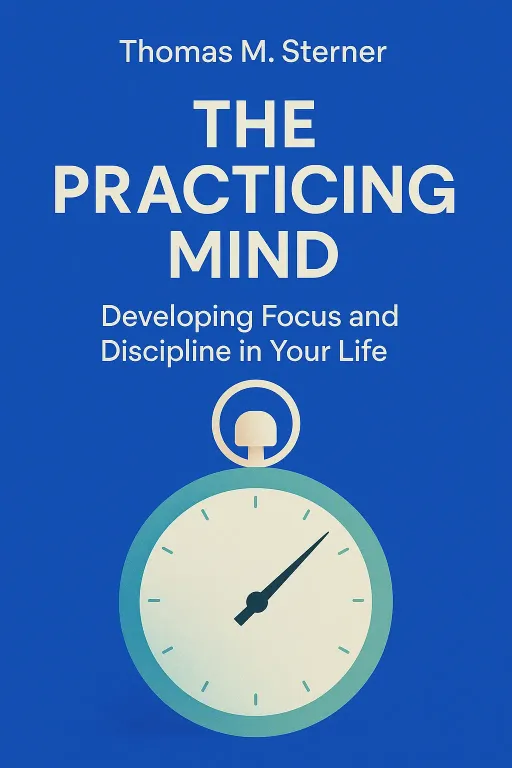
Nova: Not wrong, Atlas, but incomplete. It’s a bit like saying to build a magnificent skyscraper, you just need to lift heavy bricks. You do, of course, but there’s a deeper intelligence at play. Today, we're diving into a fascinating concept: 'Stop Chasing, Start Integrating.' It's about a profound shift in how we approach skill development and knowledge acquisition. We’re drawing insights from brilliant minds like Thomas M. Sterner, author of "The Practicing Mind," who champions the journey over the destination, and Robert Greene's monumental work, "Mastery," which offers historical blueprints for deep, focused practice.
Atlas: Okay, I see. So it's not about ditching effort, but refining it? For our listeners, especially those who process vast information and seek optimized outcomes, the idea of "effortless mastery" might sound almost paradoxical. How do we, as strategic integrators, bridge that gap between relentless pursuit and something that feels... well, effortless?
Nova: Exactly! It’s about understanding the of that effort. True mastery, as Sterner and Greene illuminate, isn't about endless striving; it's about deeply integrating knowledge and skills until they become effortless. This shift actually frees up mental capacity for higher-level thinking, which I know is a huge win for anyone managing cognitive load. It’s about moving from a frantic chase to a calm, profound absorption.
Atlas: That makes sense, but the word "effortless" still feels like a bit of a magic trick to me. We live in a world where results are king. How can something become effortless when the stakes are so high?
Nova: That's the core misconception we're tackling today, Atlas. "Effortless" doesn't mean no effort was expended. It means the effort has been so thoroughly internalized, so deeply integrated, that it no longer like a struggle. Think of a seasoned chef chopping vegetables at lightning speed. It looks effortless, but it's the culmination of thousands of hours of mindful practice. Their mental capacity isn't consumed by the knife's movement; it's free to compose the flavors, to envision the final dish.
The Philosophy of Effortless Mastery: Beyond Striving to Integrating
SECTION
Nova: So let's unpack that first core idea: the philosophy of effortless mastery. We often equate mastery with sheer willpower, with pushing through resistance. But Sterner, in "The Practicing Mind," invites us to consider a different path. He talks about making the journey, the itself, the primary focus.
Atlas: That's a great way to put it, especially for focused practitioners. But how does focusing on the overcome frustration? Because, honestly, when you're trying to learn something new, especially something complex, frustration feels like an unavoidable companion on the journey. I imagine a lot of our listeners can relate to that feeling of hitting a wall.
Nova: Oh, absolutely. That wall of frustration is where most people quit. Sterner argues that it arises when our focus is solely on the – the perfect chord, the flawless code, the completed project. When the outcome isn't immediately achieved, we feel like failures, and that emotional reaction poisons the well of practice. But if you shift your attention to the – the precise movement of your fingers on the keys, the elegant syntax of a line of code, the subtle adjustment of a brushstroke – the frustration dissipates because your goal is no longer the distant, elusive perfection, but the immediate, tangible engagement with the task.
Atlas: So you’re saying it’s like a concert violinist practicing a difficult passage. Instead of thinking "I need to hit this note perfectly," they're thinking "How does the bow feel against the string? What's the exact pressure needed for this tone? How does my wrist move?"
Nova: That's a perfect example! Imagine that violinist. If her entire mental energy is consumed by the anxiety of hitting the 'perfect' note, her playing will be tense, her mental capacity overloaded by self-criticism and future-oriented worry. But if she's deeply immersed in the of the bow, the subtle vibrations, the precise rhythm, then the "perfect" note often emerges naturally, almost effortlessly, as a byproduct of that focused process. That's what Sterner means by "process-oriented practice." It’s about finding joy and presence in the act of doing, rather than the destination.
Atlas: What’s even more interesting is how that frees up mental capacity. For strategic integrators, the ability to shift mental overhead from the mechanics to higher-level thinking, to the behind the music, or the of the code, that's where the real strategic advantage comes in. It’s about optimizing brain cycles, essentially. You’re not just doing the task; you’re thinking about its broader implications.
Nova: Precisely. When the fundamental skill becomes integrated, becomes second nature, your conscious mind is no longer bogged down by the mechanics. You can then think about the audience, the emotional arc of the piece, the systemic impact of your solution. Or, in a business context, you're not just crunching numbers; you're seeing patterns, anticipating market shifts, innovating new solutions. That's the hallmark of true mastery: the effortless execution of fundamentals allows for profound innovation and creativity. It’s where deep work truly begins, because your mind isn't fighting the basics anymore.
Atlas: I still struggle with that myself, the constant pull to focus on the outcome, especially with tight deadlines. How do you consistently redirect your focus back to the process when the pressure is on?
Nova: It's a continuous practice, Atlas, not a one-time switch. It starts with awareness. When you feel that familiar tension of outcome-focus creeping in, simply acknowledge it. Then, gently, deliberately, bring your attention back to the immediate sensation of the task at hand. What are you doing? What's the tactile feedback? What's the immediate next step? It's like a mental muscle you strengthen with each redirection.
The Practice of Deep Integration: Mindful Methods for True Expertise
SECTION
Nova: Building on that mindset shift, the next natural question is: how do we this? How do we cultivate this deep integration? This is where Robert Greene's "Mastery" becomes an invaluable guide. Greene delves into the lives of historical giants, from Leonardo da Vinci to Martha Graham, showing how they dedicated themselves to deep, focused practice, transforming their craft into an extension of themselves.
Atlas: I've always been fascinated by Greene's work. He really peels back the layers of what makes someone truly exceptional. But how does his "deep, focused practice" differ from just, you know, practicing a lot? For our focused practitioners, it's about efficiency and impactful execution. What makes Greene's approach distinct?
Nova: Greene's work isn't just about repetition; it’s about a relentless, almost obsessive dedication to understanding the nuances of one's domain, often starting with intense apprenticeship and observation. Take Leonardo da Vinci, for instance. He didn't just paint; he dissected bodies to understand anatomy, studied fluid dynamics to understand water, observed birds to understand flight. His practice wasn't confined to a canvas; it was an expansive, interdisciplinary quest for understanding that deeply integrated all his observations into his art. He wasn't just chasing a finished painting; he was integrating the very fabric of reality into his being, allowing his insights from one field to illuminate another.
Atlas: Wow, that’s actually really inspiring. So it’s not just about the hours you put in, but the of attention and the of integration during those hours. It sounds like a much more active, investigative form of practice. And I imagine that's where your own take, Nova, on "mindful practice" comes in?
Nova: Absolutely. My take is that consistent, mindful practice, not just raw effort, is the pathway to effortless expertise. It's about bringing intention and presence to every single repetition. Think of it like this: you can practice a musical scale a hundred times while your mind wanders to your grocery list. That's raw effort – often leading to burnout and shallow learning. Or you can practice it ten times, each time paying exquisite attention to the sound, the feel, the subtle corrections, the feedback from your instrument. That's mindful practice.
Atlas: So basically you’re saying it's the difference between doing something versus doing it. For anyone trying to manage cognitive load, that intentionality must be a game-changer. It's about making every minute count, reducing wasted mental cycles by actually engaging with the process.
Nova: Exactly. Mindful practice involves a few key elements: deliberate attention to the present moment, self-awareness of your internal state and external feedback, and iterative refinement based on what you observe. It’s an ongoing conversation with your skill, rather than a monologue of commands. When you practice mindfully, you're not just building muscle memory; you're rewiring neural pathways, deepening your understanding, and truly integrating the skill into your very being. It stops being something you and starts being something you. It’s like the difference between memorizing a map and actually knowing the terrain.
Atlas: That’s a great analogy. It’s about internalizing the terrain so deeply that you can navigate it instinctively, even in the dark. How does someone in a high-stakes, fast-paced environment, say, a software developer, apply this mindful practice to learning new technologies? The pressure to deliver quickly often overrides the luxury of deep, mindful exploration.
Nova: That’s a critical point, and it’s about carving out those pockets of mindful engagement. For a software developer, it might not be hours of deep diving every day, but perhaps dedicating 15 minutes to truly understand a certain framework behaves the way it does, rather than just copying and pasting solutions. It's about stepping away from the immediate problem-solving to explore the underlying principles, to experiment with small, isolated components with full attention, noticing the mental shifts that occur. This focused, quality practice, even in short bursts, builds genuine understanding far faster than hours of frantic, outcome-driven coding. It's an investment in future efficiency, not a detour.
Synthesis & Takeaways
SECTION
Nova: So, bringing these threads together, true mastery is a journey from chasing external achievements to deeply integrating internal capabilities. It’s a shift in perspective, combined with a particular quality of practice. It's about making the fundamental so much a part of you that your mind is free to innovate and lead.
Atlas: I can see how that would resonate with efficiency and clarity. It’s about working smarter, not just harder, and cultivating a deeper relationship with your craft. For our listeners who are results-driven and seek optimized outcomes, what's a tiny step they can take to begin this journey of integration? Something concrete and actionable.
Nova: The tiny step is deceptively simple but incredibly powerful. Choose one skill you're currently developing, anything from coding to cooking, from public speaking to strategic planning. For the next week, dedicate just 15 minutes daily to deliberate, process-focused practice. But here’s the crucial part: during those 15 minutes, actively.
Atlas: Oh, I like that. "Noticing your mental state." That connects directly to managing cognitive load and cultivating mindfulness in decision-making, which are huge for our audience. It's not just about the physical action, but the internal landscape of that action. What are you actually as you practice?
Nova: Absolutely. Are you frustrated? Are you engaged? Are you distracted? By observing your mental state during practice, you gain incredible insight into you learn and you can optimize that process. It's the first step towards truly integrating the skill, making it a part of you, until it becomes effortless. It’s about refinement, not just revolution, allowing you to achieve impactful execution with profound clarity.
Atlas: This isn't just about becoming better at a skill; it's about transforming your relationship with learning itself. It’s about finding that deep, quiet current of mastery that runs beneath all the noise of daily striving.
Nova: It's the path to becoming truly fluent in your domain, where your expertise flows with an almost magical ease, freeing you up for the next level of challenge.
Atlas: This is Aibrary. Congratulations on your growth!









