

The Analyst's Algorithm: Decoding Robert Greene's 'Mastery'
Golden Hook & Introduction
SECTION
Albert Einstein: Welcome, everyone. I want to start with a question. In your career, are you playing checkers or are you playing chess? Are you just making the next logical move for a promotion, a small raise, a better title? Or are you building a strategy for the next twenty years?
Ignatious Satuku: That's a powerful distinction. Checkers is about reacting to the move right in front of you. Chess is about seeing the whole board, and thinking ten moves ahead.
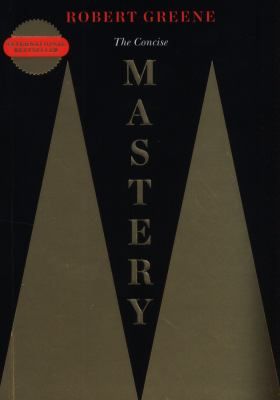
Albert Einstein: Exactly! And that is the central question in Robert Greene's monumental book,. It's not about quick wins; it's about the long, deliberate, and ultimately beautiful game of becoming the absolute best in your field. And today, we're going to deconstruct its blueprint for greatness with someone who lives in the world of systems and analysis, data analyst Ignatious Satuku. Welcome, Ignatious.
Ignatious Satuku: It's great to be here, Albert. I think of less as a self-help book and more as a technical manual for a career.
Albert Einstein: I love that! A technical manual. Today we'll dive deep into this manual from two perspectives. First, we'll explore what we're calling the 'Apprenticeship Algorithm'—the idea of prioritizing learning over earning in your early career. Then, we'll discuss the 'Social Code'—why mastering the human element is just as crucial as mastering your technical craft.
Deep Dive into Core Topic 1: The Apprenticeship Algorithm
SECTION
Albert Einstein: So, Ignatious, as a data analyst, you're all about finding the signal in the noise. Greene argues the first five to ten years of a career are about one signal and one signal only: learning. Not money, not status, but pure, unadulterated learning. How does that resonate with you, being in the early stages of your own career?
Ignatious Satuku: It resonates deeply, but it also goes against every piece of conventional career advice. We're told to climb the ladder as fast as possible. Greene is suggesting we should ignore the ladder and instead focus on building a really, really strong foundation on the ground floor.
Albert Einstein: A strong foundation! That's the perfect segue. Let's talk about one of the greatest foundation-builders of all time: Charles Darwin. When he was just 22, he got a spot on the HMS Beagle, a ship set to circumnavigate the globe. Now, he wasn't the captain. He wasn't even the lead scientist. He was the ship's naturalist, a role with very little prestige. His father actually thought it was a waste of time.
Ignatious Satuku: So his role was essentially... data collector?
Albert Einstein: Precisely! For five years, his entire life was observation. He wasn't trying to prove a grand theory. He was just... looking. He filled notebook after notebook with meticulous drawings of finches' beaks. He cataloged barnacles. He documented fossils and rock formations. He was building, as you said, a database. A massive, rich, and incredibly detailed database of the natural world.
Ignatious Satuku: And the theory of evolution, his grand insight, didn't come on the ship. It came decades later, right?
Albert Einstein: Decades! The theory was the result of him spending years the voyage, poring over the data he had collected. The apprenticeship wasn't the discovery; it was the work that. He had to gather the data before he could see the pattern.
Ignatious Satuku: That is a perfect analogy for the life of an analyst. A junior data analyst, especially in a complex field like healthcare, often feels pressure to produce an immediate, groundbreaking insight. To find the one chart that will change everything.
Albert Einstein: The "Aha!" moment.
Ignatious Satuku: Exactly. But what Darwin's story suggests is that the real value in the early years is building your own internal 'database' of domain knowledge. It's about understanding the quirks of the data, the seasonal trends in patient admissions, the political context behind why a certain metric is even being tracked. That's the real, unglamorous work. The big insights only come from that deep foundational knowledge.
Albert Einstein: So it's about resisting the temptation for the quick 'win'? Resisting the pressure from your boss who wants that one magic chart?
Ignatious Satuku: It is. It's about reframing your own goals. It's optimizing for the long-term learning curve, not the short-term deliverable. It’s a mindset shift from asking 'What do you need me to do?' to asking 'What can I learn here that will be valuable in ten years?' You have to become a patient data collector, just like Darwin.
Albert Einstein: You have to be willing to spend a long time just studying the barnacles.
Ignatious Satuku: Right. Because eventually, you'll be the only person in the room who truly understands the barnacles. And that's when you become indispensable.
Deep Dive into Core Topic 2: The Social Code
SECTION
Albert Einstein: But you know, this deep, focused work—studying the barnacles—it can be isolating. And this brings us to Greene's second, and perhaps more shocking, point. He argues that your technical skill, your brilliant analysis of the barnacles, can be rendered completely and utterly useless if you don't master what he calls 'social intelligence.' It's the hidden variable in the equation of mastery.
Ignatious Satuku: This is the part that I think is hardest for analytical people to accept. We believe the best data, the most logical argument, should win on its own merits.
Albert Einstein: And Greene says that is a dangerously naive belief! He tells the story of the brilliant architect and artist Teresita "Tita" Fernandez. She had incredible technical skill, but early in her career, her work was ignored. She was shy, she didn't like schmoozing, she just wanted to be in her studio and create. But she realized her genius was irrelevant if no one ever saw her work.
Ignatious Satuku: So she had to learn a new skill set.
Albert Einstein: A completely new skill set. She had to learn to navigate the complex, political world of art galleries, critics, and patrons. She had to learn how to present her work, how to talk about it, how to read a room, how to understand the unspoken desires and insecurities of the people with power. She had to master the 'human operating system' of her field. Her technical skill got her in the door, but her social skill got her the commission.
Ignatious Satuku: That's fascinating. It's a different kind of analysis.
Albert Einstein: Tell me about that. As an ISTJ, an 'Inspector,' you value facts, systems, and logic. This world of emotion, hidden agendas, and politics can seem... well, inefficient. Messy. How do you, as a data analyst, approach this 'messy' human data?
Ignatious Satuku: You have to treat it as another dataset. It's just a qualitative dataset, not a quantitative one. When I prepare to present a finding, the data on my screen is only fifty percent of the equation. The other fifty percent is the audience.
Albert Einstein: You're analyzing the audience.
Ignatious Satuku: Absolutely. Who is in the room? What are their individual priorities? Is the head of finance there? If so, my argument needs to be framed around cost savings. Is the head of patient care there? Then it needs to be framed around outcomes. What was the last big project that failed in this department? That failure will make them cautious and skeptical, so I need to have data that addresses those potential fears preemptively.
Albert Einstein: So you're running a psychological simulation in your head before the meeting even starts.
Ignatious Satuku: It's a threat and opportunity analysis. My brilliant analysis is completely useless if I can't frame it in a way that bypasses their inherent biases and speaks directly to their goals and fears. It's not about manipulating them; it's about effective communication. It's about translating the pure language of data into the applied language of human motivation.
Albert Einstein: Ha! I love that! So you're analyzing the people you analyze the data them! It's a two-step process.
Ignatious Satuku: Precisely. You have to understand the system you're trying to influence. And a system is made of processes, and it's made of people. You can't ignore half of the equation and expect to get the right answer.
Synthesis & Takeaways
SECTION
Albert Einstein: So, when you put it all together, the path to mastery, this 'analyst's algorithm' we've been discussing, is this beautiful duality. On one hand, you have the deep, almost monastic focus on your craft, like Darwin patiently collecting his specimens for years on end.
Ignatious Satuku: The technical, quantitative part. The apprenticeship.
Albert Einstein: And on the other hand, you have the sharp, pragmatic, and clear-eyed understanding of the human world you operate in. The social code.
Ignatious Satuku: The qualitative analysis. And you need both. They're not separate; they're intertwined. Your technical skill gives you the credibility to be in the room, and your social skill allows you to be effective once you're there.
Albert Einstein: So if you were to give one piece of practical advice to another young analyst, another scientist or engineer just starting out, what would it be?
Ignatious Satuku: I'd say that in your first few years, you should consciously seek out two types of mentors, or at least two areas of focus. First, find the best technical person in your organization, the 'Darwin' who truly understands the craft, and learn everything you can from them. Absorb their skills.
Albert Einstein: The technical mentor.
Ignatious Satuku: Yes. But at the same time, identify the most politically savvy, most effective communicator in your organization. The person who isn't necessarily the smartest, but who always gets their projects approved. And study them. Watch how they run meetings, how they write emails, how they frame arguments. You need to learn from them, too. You need to master both the science of your job and the art of getting things done.
Albert Einstein: Wonderful. The science and the art. So the final question for our listeners is this: Look at your current role. Are you just doing the job, or are you an apprentice? And are you only analyzing the data on your screen, or are you also analyzing the people in the room? The answer to those questions might just define the entire trajectory of your career. Ignatious, thank you for decoding the algorithm with us today.
Ignatious Satuku: It was my pleasure, Albert. A fascinating thought experiment.