Personalized Podcast
Golden Hook & Introduction
SECTION
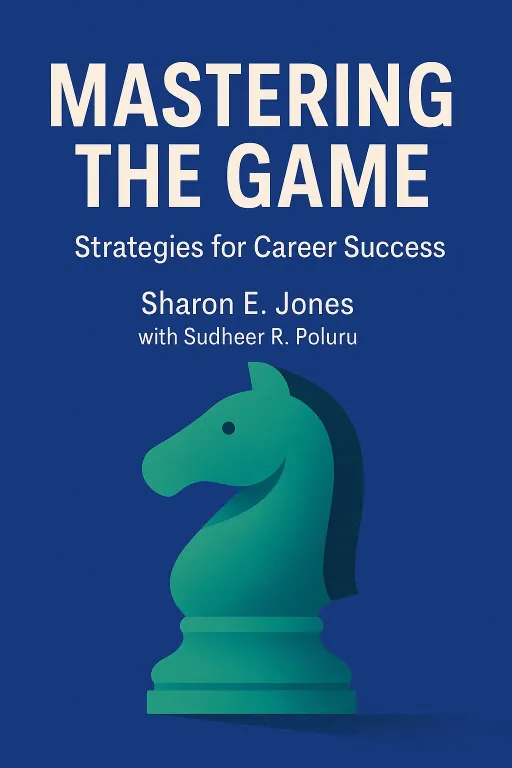
Nova: Imagine sitting down to play a board game with your family. You study the board, you plan your moves, you execute your strategy perfectly, and just as you are about to declare victory, your opponent smiles and says, "Oh, actually, you lose. There is a special rule that says you can't make that move on a Tuesday." You would feel incredibly frustrated, right? Well, according to Sharon E. Jones and her book,, this is exactly what happens to women and people of color every single day in the professional world. They are playing a game where the most important rules are completely unwritten. Welcome to the show! I am Nova, and today we are diving deep into how we can decode these hidden systems. Joining me is Rokib Uddin, an engineer with a brilliant analytical mind who loves looking at how complex systems work. Rokib, it is so wonderful to have you here with us today!
Rokib Uddin: Thanks, Nova. It is great to be here. You know, when you mentioned that board game analogy, it immediately clicked for me. In engineering, if you try to run a simulation or build a physical system without accounting for all the boundary conditions and hidden constraints, the system fails. It doesn't matter how beautiful your design is on paper. And that is exactly what Sharon Jones is talking about in her book. The workplace is a complex, legacy system. If you don't understand the undocumented code—the unwritten rules—you can't optimize your career.
Nova: Oh, I love that! "Undocumented code." That is such a perfect way to put it. We are basically reverse-engineering the corporate machine today! And the book actually starts with a real-life story that perfectly illustrates this. The author, Sharon, was playing a game with her nine-year-old niece, Liz. Liz and her friends had made up this game, and every time Sharon thought she was winning, Liz would suddenly reveal a new, previously unmentioned rule that completely wiped out Sharon's progress. Sharon realized she could never win because she didn't know the rules. And that was her lightbulb moment about the corporate world. Many organizations were built by and for a specific demographic—historically, White men—and so the cultural norms, the communication styles, and the promotion criteria are naturally based on those cultural standards. If you come from a diverse background, you are starting the game without the manual.
Rokib Uddin: Exactly. And as an INFJ, I tend to look at the deeper, underlying patterns of human behavior. It is not just about the rules themselves, but how they affect people on a psychological level. When you are constantly running into these hidden barriers, it creates a massive cognitive load. You start questioning your own competence. The book talks about "stereotype threat," which is a huge psychological tax. It is like running a background process on a computer that constantly eats up CPU cycles. You are trying to do your job, but you are also constantly worrying about confirming negative stereotypes about your identity.
Nova: Yes! That background process analogy is so spot on, Rokib. It drains your energy! And the research on stereotype threat is fascinating and honestly a bit heartbreaking. The book points to a famous Stanford University study from the 1990s by Claude Steele and Joshua Aronson. They gave difficult verbal tests to Black and White college students. In the control group, they just took the test. But in the experimental group, they asked the students to identify their race right before starting. Just that tiny, subtle cue—asking them to check a box for their race—activated the stereotype threat. The Black students in that group performed significantly worse than their peers, even though they were just as capable. It shows how easily our minds can be tripped up by these invisible cultural pressures.
Deep Dive into Core Topic 1
SECTION
Nova: So, how do we start debugging this system, Rokib? If the playing field isn't level, and these biases are baked into the organizational code, what is our first step?
Rokib Uddin: Well, first, we have to acknowledge that the system is biased, but we can't let that paralyze us. We have to build mental toughness. In engineering, we talk about resilience—how a material or a system handles stress and bounces back. Jones redefines resilience in a really beautiful way. She says it is not about just enduring hardship or working yourself to the bone. True resilience is about your recovery time. It is about how quickly you can reset your system after a setback.
Nova: Oh, I find that so incredibly encouraging! It is not about being a superhero who never gets hurt; it is about how we take care of ourselves so we can heal and get back in the game. We have to build in that recovery time, both internal recovery—like taking short breaks during the day to breathe—and external recovery, like actually using our vacation days! Did you know the book mentions a study showing that people who use all their paid time off actually have a six and a half percent higher chance of getting a promotion or a raise? It sounds counterintuitive, but resting makes us better decision-makers.
Rokib Uddin: It makes total sense from a systems perspective. A machine that runs at one hundred percent capacity indefinitely will eventually overheat and suffer catastrophic failure. We need downtime for maintenance. And as an analytical thinker, I also look at how we communicate under pressure. When we face vague, subjective criticism, we have to analyze it objectively rather than internalizing it. The author shares a story about a supervisor who criticized her writing on a group project, calling it "poorly written," but couldn't give any specific examples of what was wrong. Instead of immediately believing she was a bad writer, Sharon did some debugging. She checked with a peer who had provided the template, confirmed the work was solid, made a few minor tweaks, and resubmitted it. It was accepted without any issues. She realized the criticism was likely driven by unconscious bias, not her actual performance.
Nova: That is such a powerful lesson. She didn't let that vague feedback corrupt her self-image! She gathered data, verified her sources, and realized the error was in the supervisor's compiler, not her code! And speaking of communication, the book talks about "executive presence" as a major unwritten rule. It is how we project confidence and authority. There is another great story about Justice Ruth Bader Ginsburg. Back in the nineties, she accidentally interrupted Justice Sandra Day O'Connor during an oral argument. The next day, a newspaper headline literally called her "Rude Ruth." But when a reporter confronted her, she pointed out that the male justices interrupted each other constantly, and no one ever wrote headlines about them! The reporter actually went back, watched the recordings, and admitted he had never even noticed the men doing it. It is a classic double standard. Women are often expected to be reserved and polite, while men are praised for being direct and assertive.
Rokib Uddin: It is a classic case of fundamental attribution error. People attribute a woman's assertiveness to a personality flaw, like being "rude," while attributing a man's assertiveness to the situation or just natural leadership. To navigate this, we have to be incredibly intentional about how we present ourselves. We have to learn to "act like a winner" and project gravitas, even when we are feeling unsure inside. There is a story in the book about a woman named Jasmine who had two job offers. One was her dream job but paid less, and the other paid much more but was less appealing. The dream job company told her the salary was absolutely non-negotiable. But a friend's husband, who was a corporate executive, told her to negotiate anyway. He told her to "channel her inner White male." She did, she confidently asserted her value, and guess what? They found the money and matched the higher salary!
Nova: I love that story! "Channel your inner White male." It is about stepping into that room with the assumption that you belong there and that your value is unquestionable. We have to give ourselves permission to ask for what we deserve, even when the unwritten rules tell us to just be grateful for whatever we get.
Deep Dive into Core Topic 2
SECTION
Nova: Now, let us move to another critical part of the system: the metrics. In engineering, you can't optimize what you don't measure. And Chapter Three of the book is all about how "The Numbers Matter." But as Sharon points out, the numbers that actually matter aren't always the ones listed in your job description!
Rokib Uddin: This is where a lot of high-performing, diverse professionals get tripped up. We think that if we just put our heads down, work incredibly hard, and produce high-quality work, the system will naturally reward us. But that is a faulty assumption. The system is not a pure meritocracy. You have to identify the key performance indicators—the KPIs—that the leadership actually cares about. And sometimes, those metrics are hidden.
Nova: Yes! The author shares her own experience from her first year at the U. S. Attorney's Office. She was so excited to get trial experience, so she poured all her energy into preparing for and winning trials. She thought she was crushing it! But when her performance review came around, her supervisors were disappointed. Why? Because the office's key metrics weren't actually about trial wins; they were about the number of cases filed, defendants indicted, and how quickly they cleared the docket. She was optimizing for the wrong variable! Once she realized that, she adjusted her strategy in her second year, hit the office's metrics first, and still got her trial experience. It was a total win-win, but only because she aligned her efforts with the system's actual priorities.
Rokib Uddin: That is a perfect example of system alignment. You have to understand the organizational goals. And we also have to talk about the subjective side of metrics. Performance reviews are never purely objective. Unconscious bias heavily influences how managers perceive our work. The book references a study on venture capital funding where applications were dismissed for fifty-three percent of female entrepreneurs compared to thirty-eight percent of males. And when women did get funding, they received only twenty-five percent of their requested amount, while men received fifty-two percent. The language used to describe them was completely different. Men were described as "assertive" and "visionary," while women were described as "inexperienced" or "emotional."
Nova: It is so frustrating to see those numbers, but it is why we have to be proactive. We can't just wait for our annual review to find out how we are doing. We need to acquire the evaluation forms early, track our own accomplishments in a dedicated folder throughout the year, and regularly check in with our managers to calibrate our performance. And that leads us to what might be the most challenging unwritten rule for many of us: strategic self-promotion.
Rokib Uddin: Oh, absolutely. For many of us, especially from certain cultural backgrounds or if you have an introverted personality like mine, self-promotion feels incredibly uncomfortable. It feels like bragging. But in U. S. business culture, if you don't talk about your achievements, they effectively don't exist. Perception is reality in this system. If you don't control the narrative of your success, someone else will, or it will simply be ignored.
Nova: Exactly! Sharon uses a great quote from Muhammad Ali: "It's not bragging if you can back it up." And she teaches two brilliant strategies she learned from a senior trial partner: the "victory lap" and "laying a mattress." I think these are so clever! Can you explain how you see those working, Rokib?
Rokib Uddin: The "victory lap" is all about proactively sharing your wins. When you hit a major milestone or solve a complex engineering problem, you don't just quietly move to the next task. You send an update, you loop in your manager, and you highlight the team's success and your specific contribution. You are logging the data of your success into the system's memory. "Laying a mattress," on the other hand, is about risk management. If you see a project heading toward a failure due to external factors beyond your control, you don't wait for it to crash. You proactively communicate the challenges early on. You "lay a mattress" to cushion the fall, so when the failure happens, the system understands it was due to environmental variables, not your incompetence.
Nova: That is brilliant! It is all about information management. You are controlling the telemetry of your career. And we also have to build our network to help us disseminate this positive information. We can't do it alone. We need mentors to give us advice, but even more importantly, we need sponsors. The book makes a very clear distinction between the two: mentors advise you, but sponsors advocate for you when you are not in the room. They are the ones with the systemic power to pull you up.
Rokib Uddin: Yes, and the data shows a massive sponsorship gap. Men are forty-six percent more likely to have a sponsor than women, and White professionals are sixty-three percent more likely to have one than professionals of color. Because of affinity bias, leaders naturally sponsor people who remind them of themselves. So, as diverse professionals, we have to be very intentional about recruiting a diverse "board of directors" for our careers—mentors and sponsors both inside and outside our organizations who can help us navigate the politics and open doors.
Synthesis & Takeaways
SECTION
Nova: This has been such an eye-opening conversation, Rokib. We have covered so much ground today—from decoding the hidden architecture of unwritten rules, to debugging our performance metrics, to managing our professional image and building our sponsorship network. As we start to wrap up, what is the ultimate system optimization we can make?
Rokib Uddin: I think the ultimate goal is not just to play the game successfully for ourselves, but to become "Power Players" who can actually change the rules of the game for the next generation. Once you climb to a position of influence, you have a responsibility to pay it forward. You have to actively build a diverse pipeline, mentor junior colleagues, and speak up when you see systemic bias. As the beautiful quote in the book says, "Our lives begin to end the day we are silent about the things that matter." We have to use our power to make the workplace culture more equitable and multicultural.
Nova: That is so beautiful, Rokib. We have to use our success to rewrite the code of the entire organization so it works for everyone! And for our listeners today, if you are feeling overwhelmed by all of this, remember that career success is a marathon, not a sprint. Maintain your career flexibility, keep updating your skills, and don't be afraid to revise your plan as you grow.
Rokib Uddin: Absolutely. Treat your career as an iterative design process. You test, you gather feedback, you make adjustments, and you keep optimizing. You have the agency to shape your own path.
Nova: You absolutely do! You matter, you are a value-added player, and you can achieve anything you dream of. Thank you so much for joining us today, Rokib, and sharing your incredible analytical insights with us!
Rokib Uddin: It was my absolute pleasure, Nova. Thanks for having me.
Nova: And to all our listeners out there, go out there, master the game, and then change the rules! Until next time, keep growing, keep supporting each other, and we will talk to you soon!